LIBRO CON CD

JAZZ PENTATONICS-advanced improvising concepts for guitar BRUCE Saunders CD LIBRO TABLATURE

JAZZ PENTATONICS, advanced improvising concepts for guitar. Saunders. SHEET MUSIC BOOK WITH CD & GUITAR TABLATURE. 

LIBRO METODO DI MUSICA JAZZ CON CD. 

SPARTITI PER CHITARRA CON: 

ACCORDI, PENTAGRAMMA E TABLATURE. 

Jazz Pentatonics is for intermediate to advanced players wishing to expand their melodic and harmonic vocabulary. The music is in standard notation as well as tablature and a CD is included in which the more difficult exercises are played at a slower as well as faster tempo. The CD was recorded with live drums, acoustic bass and guitar. All the exercises are included on the CD as well as play-along tracks that enable the student to play with a rhythm section. The book covers the minor 7, dominant 7, minor 7(b5) and major (b6) pentatonics and gives the student many etudes and exercises from which to draw improvisational ideas.

Contents:

Chapter one: minor seventh pentatonic scale
Five perpendicular fingering exercises
Lateral fingerings
Harmonic uses of minor seventh pentatonic
Exercises, Study No. 1
Melodic voice leading introduction
Study No. 2
Practice starting notes

Chapter two: minor seventh flat five pentatonic scale
Harmonic uses of minor seventh flat five pentatonic
Five perpendicular fingerings
Minor ii-V-I patterns
Study No. 3
Ex. 15, delayed application of pentatonic
Ex. 16 Phyrgian chord use

Chapter three: dominant seventh pentatonic scale
Harmonic uses of dominant seventh pentatonic
Combination lateral/perpendicular fingerings
Ex. 18 & 19/major ii-V-I sequences
Study No. 4/F major blues
Study No. 5/C minor blues
Study No. 6/Solarize changes study

Chapter four: major flat sixth pentatonic scale scale
Harmonic uses of major flat sixth pentatonic
Ex. 20 & 21/ii-V-I sequence using skips
Study No. 7/Love changes with skips

Appendix: practice tracks & answer key
Practice track No. 1 Leaves key of G, minor seventh suggestions
Practice track No. 2 Leaves key of Bb, minor seventh suggestions
Practice track No. 3 Love changes, mixed pentatonic suggestions
Practice track No. 4 Solarize changes, mixed pentatonic suggestions
Practice track No. 5 F blues key of Bb, mixed pentatonic suggestions
Pracitce track No. 6 Yesterdaze, mixed pentatonic suggestions
Answer key for page 18
Answer key for page 19

Prezzo: €27,99
€27,99

JAZZ RHYTHM GUITAR JACK GRASSEL BOOK CD LIBRO CHITARRA METODO

JAZZ RHYTHM GUITAR. JACK Grassel. SHEET MUSIC BOOK WITH CD & GUITAR TABLATURE.

LIBRO METODO DI MUSICA JAZZ CON CD. 

SPARTITI PER CHITARRA CON: 

ACCORDI, PENTAGRAMMA, TABLATURE. 


The Complete Guide
Series: Guitar Educational
Medium: Softcover with CD
Author: Jack Grassel

This book/CD pack by award-winning guitarist and distinguished teacher Jack Grassel will help rhythm guitarists better understand: chord symbols and voicings; comping styles and patterns; equipment, accessories and set-up; the fingerboard; chord theory; and much more. The accompanying CD includes 74 full-band tracks. 80 pages


Inventory #HL 00695654
ISBN: 9780634032752
UPC: 073999956542
Width: 9.0"
Length: 12.0"
80 pages

Prezzo: €21,99
€21,99

FAST FORWARD JAZZ GUITAR IMPROVISATION LIBRO CD TABLATURE be-bop scale-advanced techniques

FAST FORWARD, JAZZ GUITAR IMPROVISATION. CD TABLATURE

LIBRO DI MUSICA PER CHITARRA CON CD E TABLATURE

So you want to play jazz and improvise like a real pro? This book will show you how, fast! First learn a few basics: the all-important scales, fingering and chord sequences, starting with a simple Bossa nova solo. then move on to arpeggios and more complex patterns such as the be-bop scale. Experiment with melodic shapes and discover the jazz-based blues progression used at most standard jazz gigs. The music examples then demonstrate rhythmic and free flowing ideas with lots of tips on the advanced techniques used by professional jazzers. In no time at all you will be creating your own solos in the style of such great jazz legends as Wes Montgomery, Charlie Christian, Sonny Rollins and Jim Hall.
Five complete solos are included in the book in easy-to-follow tab.
On the CD you'll find a matching audio track to every music example in the book. Each track is recorded twice: first with the guitar, the with backing track only so you can play the guitar part.

Playing A Solo
Imagine you're in a recording studio. The red
light is on; there's a session in progress. You can
just about make out the faces of the engineer and
the other band members behind the glass. You're
holding a guitar, and through your headphones
you're listening to the tracks for a newly-recorded
song. Verses and choruses pass by, and soon ...
very soon ... it will be time to record a solo. How
confident would you feel about playing the
session?

FastForward Jazz Guitar Improvisation will
give you the confidence to create awe-inspiring
jazz solos and breaks. No-one can teach you how
to improvise - however, you can learn a lot about
technique and musical sense to give you a better
chance of being able to playa great solo when
the time comes!
The book is divided into five sections. Each
section represents a different recording session
and a different style of playing, including Bossa
Nova, and Blues and Jazz progressions. Before
each solo, you get to playa few simple phrases at
a slow tempo and practise some scale patterns
and some other ideas that you could use in a solo
of your own.
Then it's your chance to learn a solo (usually 24
bars) that fits the chord sequence and is
accompanied by a 'Spotlight on Technique' which
focuses on some of the ideas featured in the solo.
Later, you can use the backing tracks to
improvise your own lead breaks. Each backing
track is twice the length of the solo track, to give
you more time to get your creative juices going!
Along the way this book will answer some of the
common questions players have about soloing:
What scales should I be using?
Do I have to change the scale when the chord
changes?
Which scales go with jazz? Are these the same as
for other styles of music?
What is syncopation?
Which scales go with which key?
How do I build a whole solo?
How do I make the scales I know sound more
like a solo?

Each example is given in musical score and in
guitar tablature. With the latter each number
indicates the fret at which the note is played,
each line is a string. If you find it hard to
remember which way up they go, think always of
pitch: high notes are above low notes, therefore
the high-sounding string (1st E) is at the top.
Each musical example is played once with the
lead guitar, and once without. The first is for you
to learn by listening, the second 'play-along' track
is for you to practise.
The examples have a one-bar count-in.
TRACK I Tuning notes

Guitar Tablature Explained
Introduction
Playing A Solo

Chapter 1: The Big Bossa
Bossa Nova Scale Shapes
Arpeggio Chord Tones
Five-note Scale
Scale Patterns
Spotlight On Techniques
The Big Bossa (solo)

Chapter 2: Where's Montgomery?
Blues Scales
Blues Arpeggios
Arpeggio Impro
Solo Patterns
Spotlight On Techniques
Where's Montgomery? (solo)

Chapter 3: Tune For Toots
Scale Shapes
Repeating Patterns
Arpeggio Shapes
Classic Chord Sequence
Spotlight On Techniques
Tune For Toots (solo)

Chapter 4: Bygones
The Circle Of Fifths
Half-scale Patterns
Arpeggios In Fifths
D Minor Arpeggio Patterns
Spotlight On Techniques
Bygones (solo)

Chapter 5: Song For Sonny And Jim
Standard Scale Shapes
Repeated Scale Patterns
Standard Arpeggio Shapes
Chord Tone Patterns
Spotlight On Techniques
Song For Sonny And Jim (solo)
Conclusion
 

Prezzo: €18,99
€18,99

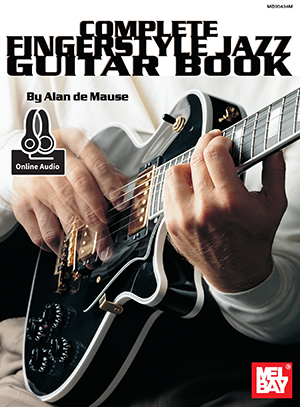
COMPLETE FINGERSTYLE JAZZ GUITAR BOOK ALAN De MAUSE CD TABLATURE CHITARRA LIBRO METODO

COMPLETE FINGERSTYLE JAZZ GUITAR BOOK. ALAN DE MAUSE. SHEET MUSIC BOOK WITH CD & GUITAR TABLATURE .

LIBRO METODO DI MUSICA JAZZ, CON CD .

SPARTITI PER CHITARRA : 

ACCORDI, PENTAGRAMMA, TABLATURE. 

METODO  

Product Description:
This book is complete in the sense that there is something for everyone: beginners, intermediate players and professionals. Along with learning the basics, this book teaches fingerstyle guitar players to play two-string harmonies, accompaniment styles and much more. Alan De Mause has filled the companion CD to capacity with 90 examples of music from his landmark text. The recording features nylon-string guitar throughout in both solo and midi-accompanied settings. A full range of jazz guitar stylings is offered, starting from square one and proceeding through advanced fingerstyle solo material. 184 PAGES

Format: Book/CD Set
Series: Complete


About the author
Alan de Mause performs, teaches, and manages his Guitar Power!correspondence course in NewYark City. He has twelve jazz guitar music books to his credit, and is a contributor to a variety of magazines like Just Jazz Guitar and Fingersty/e Guitar Magazine. He studied with Jim Hall, Jimmy Raney, Johnny Smith, Sal Salvador, Albert-Valdes Blain, Barry Galbraith, and William Matthews, among others. When he is not doing musicianly things he works in the computer graphics and design world.

From the author


Thanks to:
Those I studied or studied with Students at the Guitar Study Center and Teachers College, Columbia University
Dewey Dellay, audio engineer, musician, friend Christine Sotmary and Pam Parker far their help with the manuscript
Peekamoose, New York City, for keeping my guitars up and running Sandy Santana, electronic wiz who configures the un-configurable and stuffs it into a guitar Richard Cocco of O. Mari/La Bella Co. for keeping me strung up instead of out Robert Benedetto, Miguel Luciano and Jose Mercado, luthiers


INTRODUCTION

Being your own band

The Complete Fingerstyle Guitar Book is divided into three Sections. It is complete in the sense

that there is something for everyone: beginners, intermediate players, and professionals. The sections are related, but not strictly sequential. Both standard notation and guitar tablature are used throughout. If you are not yet a fingerstyle player, welcome to the club. This is the place to learn. Not only will you have a whole new realm of musical possibilities, you will have the experience of plucking the strings directly instead of through the intermediary of a pick. With fingerstyle guitar it is possible to accompany oneself by playing melody, chords and bass simultaneously.


SECTION ONE

Beginning fingerstyle guitar

If you are just beginning to play, Part 1 of Section One is for you. You don't have to know anything about guitar other than the side of the guitar with strings on it should not be resting against your chest. Having a teacher who plays fingerstyle helps too. In this section you will learn how to hold the guitar, use the proper hand and finger positions, and play both open strings and fretted notes. Learning material is set in the context of blues and jazz. By the end of the this section you will have played several blues tunes using your fingers to self-accompany.


SECTION TWO

Creating fingerstyle jazz guitar solos

If you have been playing fingerstyle but had erratic results with trying to arrange solos for yourself, start with this section. The underlying techniques of arranging are presented in workbook-like exercises. After laying basic groundwork you will play completely self-arranged self-accompanied solos. Topics include preparing a fingerstyle jazz solo, working from chord symbols, using a variety of bass accompanying devices, writing notation, using, major and minor thirds, accompanying with arpeggios, harmonizing a melody with thirds, tenths, and sixths. All material in this section is placed below the sixth fret.


SECTION THREE

Professional fingerstyle jazz guitar

Earl Klugh, Ralph Towner, Howard Alden, Tuck Andress, Luiz Bonfa, Ron Eschete, John and Bucky Pizzarelli, Charlie Byrd, George Van Eps, Fred Fried, Ted Greene, Howard Morgen, Joe Pass, Bill Harris, Lenny Breau and many others all.play(ed) wonderful fingerstyle jazz guitar. If you want to join their ranks, this is where you, an advanced player can learn. Topics cover jazz harmonic background, self accompanying, accompanying others, expressive devices of jazz, the cycle of fifths, introductions, endings, turnarounds, tags, modulations, and several full length pieces in the final Section, Fun Jazz


Contents:

SECTION ONE: Getting Started with Fingerstyle Jazz Guitar

INTRODUCTION
Being your own band
About the author
Acknowledgments

SECTION ONE/PART 1: Guitars, hand positions, fingerstyle strokes
Your guitar
Centering the guitar
Naming fingers
Right arm and hand position
Melody playing with the rest stroke
When hammering your nails
Let two fingers do the walking
On the other hand, the left--
Restrain the wayward thumb
May I presume--?
Open strings: E, B, and G
Three notes on open strings
Music, meter, and measures
Three beats per measure
Time signatures: 3/4
Time signatures: 4/4
Four beats per measure
Picking pairs of alternating fingers: m-a
Quarter notes, half notes, and whole notes
Matching right hand fingers with strings
Rematch
Open choice on open strings
Thumbing along freely
E, A, and D
Digging deep
Fingers and thumb
Uppers and lowers
Reader's choice

SECTION ONE/ Part 2: Learning the blues: fretted notes, rests
The old open six
The new fretted two
Left-hand technique
B, E, and some friends
The oldies and the newies
Make a blues sound
Blues background
Go form a blues
A and D complete the blues scale
Picking up notes
E blues scale
Time for a rest
Go and Stop
Stopping an open string from ringing
Damping
Thumb work
Strings 'n things
Accuracy in notation
Something simple
Too simple?
Music in two parts
Rests in two part music
Ties that bind
Not so hard
Try it, you'll like it
Twofers
One more note
Lower ledger lines workout with G
Complete two octave blues scale
Try it two ways
Let it rip blues trip
Sun rhythmics
House of the Rising Sun

SECTION ONE/ Part 3: Rhythming around
Can we talk?
Swimming in rhythm
Find a rhythmic reference
Basic and specific rhythms
Review of whole note, half note, quarter note, and rest equivalents
Take a rest (notes and rests)
Ties that bind
Dots incredible
Equivalent tied and dotted notes
Rhythm in 3/4 time
Two part rhythm
Blues with the whole thing

SECTION ONE/ Part 4: The flow of jazz: Eighth notes
Simple eighths
Counting eighths
Eighth notes and others
Talking to yourself
Mixes bag of note values
Take a rest
Simple ties that bind
Swinging the blues
Doo-ba Doo-ba blues
Eighth notes with mixed rests
Ties in disguise?
Same guise with ties: Eighth-Quarter-Eighth and Tie
Same guys with rests: Half rest-Quarter rest-Eighth rest
The readability factor
Dots and ties incredible
Ties with dotted note equivalents
Dotted quarter notes with eighth notes and eighth note rests
Dot's all in 3/4, folks
Pause to catch your wind and finish up
Rhythmic review
Bop Stop

SECTION ONE/ Part 5: All together, now
Playing to or more strings simultaneously
Two strings and parts, one rhythm, same bass notes
As above, with a variety of bass notes
More note movement
pattern playing
Rhythmic independence in both parts
Independence in 3/4
Blues with a beat
Whompin' the blues
Back to the future
Half note bass
Quarter note bass
Quarter note bass in 3/4 time
Half note plus quarter note in 3/4 time
Refurbishing Twofers
Deja vu: Part 4 review
Slower melody, faster bass
Shuffling Home
It's a wrap!
Further study

SECTION TWO: Creating Fingerstyle Jazz Guitar Solos
SECTION TWO/Part 1: Preparing to create a fingerstyle jazz solo
May I presume--?
Special Note: No TAB or audio here
Selecting a tune
Both melody and chord symbols are on the original sheet music
Lead sheet fragment
It can be played easily as is
It is basically in one key
It is in a good guitar key
It is in a range convenient for adding harmony below the melody
Trial run for tunes
Tune 1
Tune 2
Raising the melody one octave higher
Changing keys by counting steps
TALE OF KEYS (arranged by half step intervals)
You could trace them down
Accidentals
Chord symbols
Tune 2 transposed to D
How high is high enough?
Setting up the tune for arranging
Conventions of notation for fingerstyle guitar
Tune 2 in G, stems up
It's a singer's world
Tune 3 with original piano lead sheet and vocal part
Tune 3 with stems up, eighth notes beamed

SECTION TWO/Part 2: Accompanying yourself
What's next
Adding to this band of one
Rooting for the root
When to change the bass note
Rhythm changes
Two more
Twofers
Bass notes in 3/4 time
Threefers
Making the bass more independent
Rhythm Changes with quarter notes in the bass
Making repetition less repetitious
Variation on four quarter notes
Rhythm Changes with syncopated bass
Alternating octaves
Alternating Octave Blues
When to use which bass rhythm
Getting it down on paper

SECTION TWO/Part 3: Oom-pah power
Root/fifth
Great Scott!
Finding the root/fifth of a scale
Root/fifth of the C major chord
Oom-pah Rhythm Changes
Putting some oomph into the oom-pah
Lowering the oom-pah
The not-so-perfect fifth
Let's all root for the fifth
View of Blues
Your turn

SECTION TWO/Part 4: Marking major and minor
Distinguished notes
Locating thirds using scales
Using the C major scale to locate major thirds
finding minor thirds
Using the C melodic minor scale to locate minor thirds
Absolute measuring: the chromatic scale
The chromatic scale spelled in sharps
The chromatic scale spelled in flats
Juggling thirds
Exercise A
Exercise B
Building chords by stacking thirds
Two plus two
Using major and minor thirds in arranging
Mandatory thirds
Rhythm Changes with thirds
An OK Place to Be
Sequences
Answers to Exercises A and B

SECTION TWO/ Part 5: Accompanying with arpeggios
The Natural
Rhythm Changes with arpeggios
Right-hand fingering
Left-hand fingering
Alternate arpeggiation style
Arpeggio samples
Reality enters
Rhythm Changes with reality
Your turn

SECTION TWO/ Part 6: Harmonizing a melody with a third below
Quick and EZ thirds
Making the top note ring out
Rhythm Changes in thirds
Interval makeup of chord symbols
Perfect matches-- or not
Adjusting the fit
Bringing back the bass
Rhythm Changes in thirds plus bass
Third this blues
Third this blues (completed)
TABLE OF THIRDS

SECTION TWO/ Part 7: Harmonizing with tenths
Tenths: the dropped third
Rhythm Changes with parallel tenths in the bass
Rhythm Changes with mixed intervals
Improvisation on Rhythm Changes
Trippingly, with tenths
Walking tenths
Accompaniment using walking tenths
TABLE OF TENTHS
There's tenthing tonight on the old camp ground

SECTION TWO/ Part 8: Harmonizing with sixths
Another natural
Rhythm Changes déjà vu
Multipurpose sixths
Parallel Me, Baby
Crackers and Muscles
Show Me the Way to Go Sixths
TABLE OF SIXTHS
Crackers and Muscles (completed)
Congratulations!
More is less
Training in A

SECTION THREE: Professional Fingerstyle Jazz Guitar

SECTION THREE/Part 1: Harmonic background
Complete fingerstyle jazz guitar
May I presume--?
Something to play upon
Jazz harmony
Chord qualities
Standard chord voicings
Root position, thirds an octave higher
Root position, thirds and fifths an octave higher
HARMONIC MOVEMENT
Harmonic movement based on scale steps
Diatonic walking tenths
Diatonic walking sixths
Harmonic movement based on the cycle of fifths
Root movement using the cycle
Focusing on fifths
Chromatic harmonic movement
Mixers
Ascending by half step

SECTION THREE/Part 2: Self accompanying
One is company
SINGLE NOTE ACCOMPANIMENT OF MELODY
Root movement
Double bass notes, root movement
Mixes bass rhythms
Repeated figure bass
Root/fifth alternation (simple)
Other alternating bass notes
Non-root movement
Walking bass (diatonic)
Walking bass (chromatic)
Anticipation
Delaying
Folk jazz
More
TWO NOTE ACCOMPANIMENT OF THE MELODY
An abundance of riches
Stomp romp
Alternating bass on hormones
When melody and bass overlap
Oom-pah meets arps
Melody accompanied by tenths in the bass
Autumn Sneeze
Piano movements
Closer voicing
Leading with a two-note comp
Sneezing and comping
More non-root movement
Music in three parts

SECTION THREE/Part 3: Capable accompanist accoutrements
Fingerstyle accompanying
Those other playmates in your sandbox
Accompanying singers
Crush
Guitar and bass comping behind a soloist
Some Day My Prints Will Arrive
Guitar duets
Imagine Nation
Accompanying with one note at a time
My Gummy Valentine
Walking-bass-plus-chord
Bird Adobe Song
Guitar and flute duet
Body and Sole
Guitar and --

SECTION THREE/Part 4: Expressive devices of jazz
Making jazz jazzy
The underlying rhythmic pulse: Quarter note
The feeling of swing
Accented notes on off-beats
Oo-bah oo-bah
Ghosting notes by plucking lightly
Ghosting notes by using slurs
Slides and fall-offs
Bends
Rhythmic displacement
The whole thing
In a Yellow Phone

SECTION THREE/Part 5: Pedaling the cycle of fifths
Why the cycle of fifths is important
Notation conventions
Root movement
V7-I with opposing movement
V7-V7 with mixed movement
V7-I tritone pull
Chords, pieces, and lines
The spread
More tenths
Bassman--the bass, man!
Challenge
Harmony today
Less relentless
Cycled out

SECTION THREE/Part 6: Intros, endings, turnarounds, tags & modulations
Yipes!
An introduction by any other name
The ins and outs of I-V7, V7-I, and IV-I
INTRODUCTIONS
A moving experience
Classic drama
Vamp
II-V7 within one measure
II-V7 over two measures
Purposeful ambiguity
Peaceful, easy feeling
2-in-1 EZ cheap trick
ENDINGS
Cycling to the end
Minor matter
Turnarounds (turnbacks)
Turnaround with modulation
TAGS (Codas)
Tag me if you can
Tag, you're it
MODULATION
Nothing special
Instant modulation: V7-I
Taking time
Back cycling
Smoother moves: II-V7-I
Descending chromatically
Approaching by half step
Mozart's fakeroo

SECTION THREE/Part 7: Fun Jazz
Are we having fun yet?
Blew Moo
Good Evening, Friends
Ain't Miss Bee Haven
Stringing the World Along
Roots in A
Bird Abode Song
3 on 4
Walkdown
Further study

Prezzo: €49,99
€49,99

ADVANCED JAZZ GUITAR IMPROVISATION BARRY GREENE CD LIBRO METODO SPARTITI CHITARRA

ADVANCED JAZZ GUITAR IMPROVISATION, Barry Greene. SHEET MUSIC BOOK WITH CD.

LIBRO METODO DI MUSICA JAZZ, CON CD.

SPARTITI PER CHITARRA CON: 

ACCORDI, PENTAGRAMMA. 

IMPROVVISAZIONE, 

Written for the intermediate to advanced jazz guitarist, this book assumes an adequate knowledge of chord scales and jazz theory. The topics include playing modally, chord substitutions, Coltrane substitutions, diminished and melodic minor scales as well as dealing with pentatonics. Companion CD included.

Prezzo: €23,99
€23,99

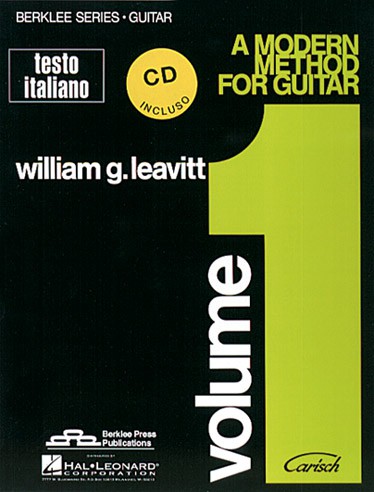
A MODERN METHOD FOR GUITAR VOLUME 1-William Leavitt-Berklee Press-LIBRO CON CD IN ITALIANO

A MODERN METHOD FOR GUITAR VOLUME 1. William Leavitt. In italiano. CD

LIBRO METODO DI MUSICA JAZZ.

SPARTITI PER CHITARRA CON:

ACCORDI E PENTAGRAMMA. 


Questo libro è nato per rispondere a due scopi precisi: 1° Per insegnare allo studente la lettura musicale; I "trucchi" per imparare a leggere e 2° Per il graduale sviluppo dell'abilità di entrambe le mani. È questa la parte fisica dello studio della chitarra. L'acquisizione di una tecnica strumentale è frutto di un processo di accomulazione per cui ad ogni ripasso del materiale già studiato si avrà chiara la sensazione di una maggiore facilità.

METODO MODERNO PER CHITARRA di WILLIAM LEAVITT Volume 1

Traduzione di Mauro Storti
E' importante che il seguente materiale di studio venga affrontato nell'ordine in cui è presentato. L'indice a pag. 126 ha una pura finalità di riferimento e sara utile per il ripasso e per lo studio mirato su tecniche specifiche.

Figure Accordali Mobili
(ACCOMPAGNAMENTO RITMICO, PARTE II)
L'aspetto pilù difficile nell'apprendimento degli accordi sulla chitarra, consiste nel far cadere istantaneamente, e senza uno sforzo cosciente, le dita sulla tastiera con una determinata disposizione o figura. Si tratta di un grande problema fisico la cui soluzione sembra consistere unicamente in un lungo ed adeguato esercizio.
Tuttavia, trovo che presentando allo studente nuove figure accordali con un certo ordine (una successione di diteggiature correlate) il tempo per il loro apprendimento si riduce.
Pertanto, le seguenti figure accordali vengono presentate con un ordine particolare. Useremo tre delle figure gia note, assumendole come figure-base, muovendo o togliendo uno più dita in modo che ogni nuova diteggiatura sia correlata a quella (o quelle) che la precedono. In tal modo, ciascuna figura-base e ciascuna delle figure derivate fungerà da preparazione per un'altra figura accordale.
Non viene data nessuna denominazione agli accordi, ma soltanto il modello accordale e la corda sulla Quale si trova la tonica.

Memorizzate la diteggiatura di tutte le forme accordali nell'ordine in cui compaiono. Non saltare dall'una all'altra. Non modificare la diteggiatura di una figura, anche se già la suonate in maniera diversa. Essa apparirà più avanti con la "vostra" diteggiatura, ma correlata con una nuova serie di figure. Praticare tutte le figure cromaticamente salendo e scendendo lungo la tastiera e le toniche (che danno il nome agli accordi).

FIGURA BASE N. 1
MAGGIORE
tonica 6a corda

FIGURA BASE N. 2
MAGGIORE DOMINANTE7a
(Tonica 2a o 5a corda)
Diteggiature, opzionali

FIGURA BASE N. 3
MAGGIORE
(Tonica 5a corda)

La parentesi significa che benchè la nota appartenga all'accordo, non va suonata obbligatoriamente anzi, in molti casi, l'accordo suona meglio senza di essa.

INDICE
(Parte I)
Informazioni preliminari
Scala di C Maggiore in Prima Posizione-Una Ottava (e Duetto)
Scala di C Maggiore in Prima Posizione-Registro superiore (e ripasso)
"One, Two, Three, Four" (Duetto)
Introduzione all'accompagnamento ritmico
Scala di C Maggiore in Prima Posizione-Registro basso (e ripasso completo)
"Imitation Duet"
Diesis e Bemolli
"Here We Go Again" (Duetto)
Accompagnamento ritmico-Bassi e accordi
Ottavi (con pennata alternata)
Studio n. 1 (Duetto)
Pause, Note legate, Note col punta
Studio n. 2 (Duetto) e "Primo assolo"
Accompagnamento ritmico - Spiegazione dei diagrammi accordali
"Secondo assolo" e Studio n. 3 (Duetto)
Studio di pennata n. 1 (Sviluppo della mana destra)
"Two, Two" (Duetto)
Scala di G Maggiore in Prima Posizione
Accompagnamento ritmico-Diagrammi accordali
Sedicesimi
Duetto in G e Studio di pennata n. 2
Altro Duetto in G
Scala di F Maggiore in Prima Posizione
Accompagnamento ritmico-Diagrammi accordali (compreso il "Gran Barre")
Duetto in F
La Terzina
Valzer in F (Assolo)
Scale in A Minore in Prima Posizione (3 tipi)
Accompagnamento ritmico-Diagrammi accordali
"Pretty Pickin'" (Duetto)
Ottavo puntato e Sedicesimo
Scale di E Minore in Prima Posizione (3 tipi)
Accompagnamento ritmico-Diagrammi accordali
"Take Your Pick" (Duetto)
Accompagnamento ritmico-Principio delle figure accordali mobili

1966, 1997 Berklee Press Publications, Boston, MA 02199

Scala Cromatica e Studi di velocità
Scale di D Minore in Prima Posizione (3 tipi)
Accompagnamento ritmico-Diagrammi accordali (mobili)
"Endurance Etude"-Studio di pennata n. 3 (Assolo)
Scala di Bb Maggiore in Prima Posizione
Accompagnamento ritmico- Diagrammi accordali
"Duetto in Bb" (con nuovi diagrammi accordali)
Studio della pennata alterna rovescia
Scala di D Maggiore in Prima Posizione e "Duetto in D"
"Dynamic Etude" (Duetto)
Scala di A Maggiore in Prima Posizione e "Duetto in A"
Accompagnamento ritmico-Diagrammi accordali
Scala di E b Maggiore in Prima Posizione e "Duetto in E "
Modelli accordali mobili (Riassunto degli Il modelli noti)
Accordi semplificati e Tabella delle sostituzioni
La Pennata-Una tecnica diversa


(Parte II)
Le Posizioni
Scala di C Maggiore in Posizione II-Diteggiatura tipo 1
Studi (Assolo e Duetto)
Studi di lettura (C Maggiore in Posizione II)
"Ballad" (Duetto)
Figure accordali mobili (3 forme-base e spiegazione)
Figure accordali (Spiegazione delle diteggiature derivate)
Accompagnamento ritmico-Tecnica della mano destra
Studio di pennata n. 4
Scala di F Maggiore in Posizione II-Diteggiatura tipo 1 A
Figure accordali
Assolo e Duetto
Studi di lettura (F Maggiore-Posizione II)
"Play It Pretty" (Duetto)
Figure accordali
Studi di velocità (Diteggiature tipo l-lA)
Scala di G Maggiore in Posizione II-Diteggiatura tipo 2
"Waltz For Two" (Duetto) con Armonici Naturali
Figure accordali
Studi di lettura (G Maggiore-Posizione II)
"Blues in G" (Duetto) con effetto Smorzato
"Chord Etude" (Assolo)
Accompagnamento ritmico-Tecnica della mano destra (Ritmo-base Latino)
Studio di pennata n. 5 e "Short and Sweet" (Duetto)
Scala di D Maggiore in Posizione II-Diteggiatura tipo
Figure accordali
Studio ritmo-melodico n. l (Sincope)
"Chord Etude" (Assolo)
Studi di lettura (D Maggiore in Posizione II)
"Dee Oo Ett" (Duetto)
Figure accordali
Studi di velocità (Diteggiature tipi 2-3)
Scala di A Maggiore in Posizione II-Diteggiatura tipo 4
"Chord Etude" (Assolo)
Studi di lettura (A Maggiore-Posizione II)
"Tres Sharp" (Duetto)
Figure accordali
Studio di velocità (Diteggiatura tipo 4)
Figure accordali
Ripasso della Posizione II
Figure accordali
Terzine di Quarti
Scale Maggiori in Posizione m-Bb, Eb, Ab, Db
Ripasso della Posizione III
Figure accordali
Scale Maggiori in Posizione I (Senza corde a vuoto) di Ab e Db
Ripasso della Prima Posizione
Scale Maggiori in Posizione IV-G, D, A, E
Figure accordali
Ripasso della Posizione IV
Figure accordali e Note dell'Autore


Indice tematico

STUDI DI ARPEGGIO
Tonalità di C maggiore
Tonalità di F maggiore
Tonalità di G maggiore
Tonalità di D maggiore
Tonalità di A maggiore

STUDI DI ACCORDI n.l, n.2, n.3, n.4, n.5
FIGURE ACCORDALI (ACCOMPAGNAMENTO RITMICO)
Introduzione
Bassi e Accordi
Diagrammi accordali (posizione aperta)
Principio degli accordi mobili
Accordi mobili
Accordi mobili (accomp. ritmico Parte II)
Diteggiature-base e derivate
Tecnica della mano destra per l'accompagnamento ritmico
Ritmo base Latino

NOZIONI DI TEORIA
Primi elementi
Diesis e bemolli
Ottavi
Pause, note legate, note puntate.
Sedicesimi .
La terzina
Ottavo puntato e Sedicesimo
Terzine di Quarti .
Armonici .
Effetto smorzato .
Staccato, legato.

STUDI DI LETTURA
Duetti con chitarra ritmica "ad libitum"
Studio melodico-ritmico n. l (sincope) .
Ripasso della 2a Posizione .
Ripasso della 3a Posizione .
Ripasso della la Posizione .
Ripasso della 4a Posizione .

ACCOMPAGNAMENTO RITMICO (V. FIGURE ACCORDALI)


SVILUPPO DELLA MANO DESTRA
Studi di pennata n. l, n. 2, n. 3, n. 4, n. 5
Studio sulla pennata alternata e rovescia
Studio di dinamica (duetto)
Una diversa tecnica di pennata
Studio in terzine .
Studio in Ottavi puntati e Sedicesimi ,
Ritmo-base latino
Studio melodico-ritmico n. 1.
Studio in Sedicesimi .
Vedere anche: (primi elementi) Ottavi, Sedicesimi, la terzina,
Ottavo puntato e Sedicesimo, terzine di Quarti; studi di velocità, arpeggi e assoli contrassegnati (*)

SCALE IN PRIMA POSIZIONE (APERTA)
C maggiore .
G maggiore
F maggiore .
Bb maggiore.
D maggiore .
A maggiore .
E b maggiore .
A minore (3 tipi) .
E minore (3 tipi) .
D minore (3 tipi) .
Scala cromatica .

SCALE - DITEGGIATURE MOBILI (POSIZIONI)
C maggiore - Diteggiatura tipo l (Posizione II)
F maggiore - Diteggiatura tipo lA (Posizione II)
G maggiore - Diteggiatura tipo 2 (Posizione II)
D maggiore - Diteggiatura tipo 3 (Posizione II)
A maggiore - Diteggiatura tipo 4 (Posizione II)
Bb magg. - tipo 4, Eb magg. - tipo 3, (Posizione III)
Ab magg .. tipo 2, Db magg. - tipo l, (Posizione III)
Ab magg. - tipo 4, Db magg. - tipo 3, (Pos. I, senza corde a vuoto)
G magg. - tipo lA, D magg. - tipo l, (Posizione IV)
A magg. - tipo 2, E magg. - tipo 3, (Posizione IV)

ASSOLI
"Primo assolo"
"Secondo assolo" .
(*) Studi di pennata n. l, n. 3, n. 4, n. 5
(*) Duetto in F (parte della 1a chitarra)
Valzer in F
(*) Pretty Pickin' (parte della 1a chitarra) .
(*) Take Your Pick (parte della la chitarra)
Studi di accordi n. l, n. 2, n. 3, n. 4, n. 5
"Ballad" (parte della Ia chitarra) .
STUDI DI VELOCITÀ


Figure Accordali
La tonica di questa figura si trova un tasto prima di ciascuna nota tastata. Essa ha 4 nomi possibili, come l'accordo di 7a diminuita.
DOM 7a ( b9)

11mX281"X
DOM 7a ( b5)
(Tonica 6)
m2X'''IX
DOM 7a
7 a ( +5) (Tonica 6)
tI!~mm
rlX2"'X
ESERCIZIO

Tutte le figure accordali presentate in questo libro che impiegano la 6a corda (e pertanto suonano in parte nel reale registro basso) hanno la tonica 1° grado o il 5° grado al basso. Questi sono i gradi "forti" degli accordi e SUONANO SEMPRE GIUSTI.

Avete probabilmente visto altrove alcune di queste figure chiamate in modo diverso. Teoricamente, anche tali altri nomi sono corretti, tuttavia, i bassi sono gradi accordali "deboli" che necessitano di un trattamento speciale. Di ciò si discuterà profondamente più oltre; fino ad allora state attenti a quelle figure che impiegano la 6 a corda ma non hanno la tonica o la quinta al basso, poiché NON suonano sempre bene. In una partitura ritmica orchestrale, i simboli accordali usati solitamente, indicano le totali o complete strutture armoniche, ma non è necessario (né possibile) suonare tutti i gradi tutte le volte. Naturalmente, dovrete cercare di suonare al meglio le sequenze scritte ma, di fatto, una semplificazione OMETTENDOalcuni gradi accordali, viene fatta di "norma". (È meglio, per ora, omettere i gradi più alti).

Esempi: per C7+5(b9)
per G7+(13 -9)
per F9(sus4)
si può suonare: C7(+5) (omettendo la b9a ) o C+
si può suonare: G7(-9) (omettendo la 13a ) o G7
si può suonare: F7(sus4) (omettendo la 9a )
State molto attenti alle sostituzioni, in quanto esse devono essere COMPLETAMENTE compatibili con l'accordo o gli accordi indicati. (Torneremo più oltre sull'argomento ... ).

A questo punto, oltre a conoscere cinque tonalità maggiori in seconda Posizione, vi dovrebbero essere famigliari le più usate scale maggiori nelle Posizioni I, II e IV. Dovrete tuttavia leggere molto in questi campi per conoscerli veramente bene. Non posso che sottolineare quanto sia importante imparare bene i quattro tipi di diteggiatura delle scale maggiori, poiché essi sono la base per altri tipi di scale. Verranno aggiunte gradualmente formule (maggiori) di diteggiature (fino ad averne dodici: una per ogni tonalità in ciascuna Posizione), mentre allo stesso tempo imparerete come UTILIZZAREle figure maggiori già praticate, nel Jazz Minore, Armonico Minore ecc ... Il nostro prossimo progetto (Metodo Moderno per Chitarra, Parte II) consisterà nell'imparare le note su tutta la tastiera usando tutti i modelli di diteggiatura NELLA STESSATONALITÀ.Ciò richiederà lo spostamento da una Posizione all'altra scorrendo fra le diverse formule. La sequenza delle formule (diteggiature-tipo) varierà a seconda delle alterazioni in chiave. Acquisire la conoscenza della tastiera in questo modo presenta un grande vantaggio in quanto le dita "conosceranno le formule" e voi potrete concentrarvi sulle note. Ricordate: per imparare a suonare la chitarra il miglior metodo è il processo di accumulazione. Pertanto, il ripasso regolare e completo è assolutamente necessario per un progresso regolare e il perfezionamento tecnico.
 

Prezzo: €27,99
€27,99

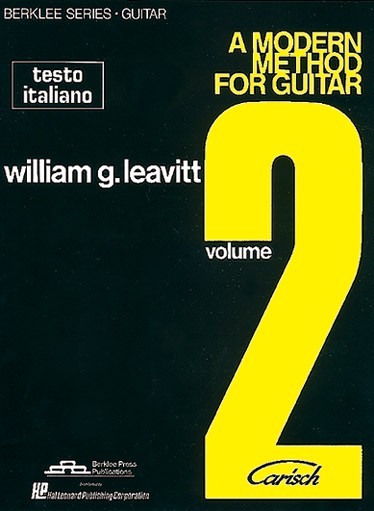
A MODERN METHOD FOR GUITAR VOLUME 2 William Leavitt Berklee LIBRO CD EDIZIONE ITALIANO SPARTITI

A MODERN METHOD FOR GUITAR VOLUME 2. William Leavitt. senza Tablature. In italiano con CD 

LIBRO METODO DI MUSICA JAZZ CON CD.

SPARTITI PER CHITARRA CON:

ACCORDI E PENTAGRAMMA. 

LIBRO IN ITALIANO. 


Questo libro è la continuazione del I volume. La maggior parte della terminologia e delle tecniche rappresenta una diretta evoluzione del materiale presentato nel primo. Anche qui tutta la musica è originale ed è stata creata specificatamente per presentare e perfezionare ogni lezione.

È importante che il seguente materiale di studio venga affrontato nell'ordine in cui è presentato. L'indice a pagina 118 ha una pura finalità di riferimento e sarà utile per il ripasso o per lo studio mirato su tecniche specifiche.

Questo libro è la continuazione del I Volume del "MetodoModerno per chitarra". La maggior parte della terminologia e delle tecniche rappresenta una diretta evoluzione del materiale presentato in quello. Per esempio, con lo studio della scala in C maggiore in cinque Posizioni si percorre tutta la tastiera, e ciò grazie alla connessione delle quattro formule fondamentali di diteggiatura (tipi l, 2, 3, 4) e una derivata (tipo lA) cheè auspicabile siano state assimilate nel primo libro (la successione dei tipi di diteggiatura può variare da Posizione a Posizione lungo il manico, a seconda della tonalità). Si studi tutto il materiale nell'ordine presentato poiché ho cercato, per quanto possibile, di correlare tutte le novità tecniche (pratiche e teoriche) a cose già precedentemente imparate. Anche qui tutta la musica è originale edè stata creata specificamente per presentare e perfezionare ogni lezione. Voglioavvertire che le pagine riservate alla teoria non mirano a sostituire uno studio serio di questa materia sotto la guida di un insegnante competente, ma solo a stimolare lo studente più curioso e forse a gettare qualche raggio di luce nei misteriosi meandri della musica per i chitarristi in generale. Comeprima, buona fortuna e buon divertimento.

William G. Leavitt "Nei paesi di lingua anglosassone sono in uso sigle diverse dalle nostre per designare gli accordi. Potrà tornare utile conoscerne l'equivalenza:
A = La
B = Si
C = Do
D = Re
E = Mi
F = Fa
G = Sol
Per le varie specificazioni non vi sono differenze degne di nota.
Esempio: C7dim Fm6 = D07dim Fam6
B5+ = Si5+
D9 = Re9 etc."

Teoria - Relazioni Scala/Accordo PER IMPROVVISARE)
Accade raramente che una canzone rimanga armonicamente diatonica dall'inizio alla fine. Ogni accordo non conforme alle strutture diatoniche è in realtà una modulazione ad un'altra tonalità (o scala) per il tempo della sua durata. Talvolta, una serie di accordi non diatonici modifica completamente la tonalità per un certo tempo. È questa la ragione per la quale in alcuni discorsi che seguiranno sui rapporti scala/accordo, verranno fatti riferimenti alla "tonalità del momento". Poiché solitamente la melodia rimane pressoché diatonica lungo tutta una canzone, l'orecchio, quasi sempre, desidera il ritorno alla tonalità originale. Inoltre, si ricordi che "l'orecchio ha memoria ma non ha occhi", perciò il suono di ciò che si è già udito ha una certa influenza sul senso di appartenenza di taluni accordi a determinate scale in situazioni particolari (anche se ciò che sta suonando non ha alcuna relazione).

ACCORDI NON DIATONICI DI 7a MINORE E ACCORDI MAGGIORI
1) Ogni accordo di 7a minore fuori dalla tonalità (del momento) tende a suonare come un II7, quale che sia la tonalità di appartenenza della struttura di 2a diatonica (un accordo non diatonico di min.7a in effetti svolge la funzione di modulare* più efficacemente che gli accordi di dom.7a.). Impiegare la scala maggiore a partire da un tono sotto il nome dell'accordo non diatonico min.7a.

ACCORDO- C Cm7 Dm7
SCALA - Cmaj. Bbmaj Cmaj

(* La modulazione consiste nel cambiare la tonalità in una composizione o in un arrangiamento). 2) Ogni accordo maggiore fuori dalla tonalità (del momento), non preceduto da una modulazione, con una tonica non diatonica, tende a suonare come un accordo IV, quale che sia la tonalità di appartenenza della struttura di 4§.diatonica. Impiegare la scala maggiore sul 5° grado accordale dell'accordo maggiore con la tonica non diatonica.

ESEMPIO:
ACCORDO- C Eb(ma7) Dm7
SCALA - Cmaj Bbmaj Cmaj Ebmaj Abmaj Cmaj

3) Ogni accordo maggiore fuori dalla tonalità (del momento), non preceduto da una modulazione con una nota della scala per tonica, tende solitamente a suonare come un I (tonica). Impiegare la scala maggiore sul nome dell'accordo maggiore non diatonico sulla tonica della scala.

ESEMPIO:
ACCORDO- C E(ma7) G9susC G7
SCALA - Cmaj Emaj Cmaj
(Nota: La scala maggiore costruita sul 5° grado accordale può essere usata con qualsiasi accordo maggiore in qualunque momento, ma la relazione scala/accordo con quelli su toniche diatoniche risulterà meno perfetta e suonerà "più distante"). (Notare inoltre: Gli accordi di 7a minore sono talvolta accordi tonali mascherati, pertanto è bene non sottovalutare l'eventualità che un accordo non diatonico di 7a minore possa esser in effetti un IIm7 o VIm7 di un I (vedi pago71). 


(Parte I)
Quattro formule fondamentali di diteggiatura (spiegazione)
Scala ascendente in C maggiore - 5 Posizioni.
Scala discendente in C maggiore - 5 Posizioni.
"Getting Up There" (Duetto).
"Chord Etude n. 6" (Assolo)
Studio melodico-ritmico n. 2 (<re 2/4).
Triadi (Accordi di 3 note di C Maj. Min. Dim. Aug.)
Scala ascendente in F maggiore - 5 Posizioni.
Scala discendente in F maggiore - 5 Posizioni.
"Another Waltz for Two" (Duetto)
Figure accordali e Studio di velocità.
Triadi (Accordi di F Maj. Min. Dim. Aug.).
Tecnica ritmica della mano destra (414 e Tempo in 2).
"Chord Etude n. 7" (Assolo)
Scala ascendente in G maggiore - 5 Posizioni.
Scala discendente in G maggiore - 5 Posizioni.
"Sea-See-Si " (Duetto).
Figure accordali.
Triadi (Accordi di G) e esercizi di Finger Stretching.
Scala ascendente in D maggiore - 5 Posizioni.
Scala discendente in D maggiore - 5 Posizioni..
"MelodieRhythm Study n. 3" (Duetto).
Intervalli.
Triadi (Accordi in D; per traverso e lungo la tastiera)
Scala ascendente in A maggiore - 5 Posizioni.
Scala discendente in A maggiore - 5 Posizioni.
"Chord Etude n. 8" (Assolo)
Chitarra ritmica - La mano destra (Rock Style Ballad)
Figure accordali. 34
Figure accordali. 35
"Tranquility" (Duetto) 36
Triadi (Accordi di A; per traverso e lungo la tastiera).
Scala ascendente in Bb maggiore - 5 Posizioni.
Scala discendente in Bb maggiore - 5 Posizioni.
"Waltz in Bb" (Duetto)
"MelodieRhythm Study n. 4" (6/8)
Esercizi di Finger Stretching
Triadi (Accordi di Bb; per traverso e lungo la tastiera).
Scale pentatoniche ,
Studio Tremolo .
Scala ascendente in Eb maggiore - 5 Posizioni. .
Scala discendente in Eb maggiore - 5 POsizioni.. , .
Figure accordali.
Ripasso delle scale maggiori - Posizioni II, III, V .
Costruzione delle scale maggiori (spiegazione) .
Triadi (Accordi di Eb; per traverso e lungo la tastiera) .
Teoria - Triadi diatoniche nelle Tonalità maggiori (spiegazione) .
Triadi diatoniche - Tonalità di G maggiore (scale e arpeggi) .
Triadi diatoniche - Tonalità di F maggiore (scale e arpeggi) .
Triadi diatoniche - Tonalità di Bb maggiore (scale e arpeggi) .
Triadi diatoniche - Tonalità di Eb maggiore (scale e arpeggi) ,
"5th Position Study" (Duetto) .
Esercizio sulle Triadi maggiori (lungo la tastiera - tutte le corde) .
Esercizio sulle Triadi minori (lungo la tastiera - tutte le corde) .

(Parte II)

Triadi arpeggiate di una ottava (in G). "Glissando" (spiegazione) .
Scala minore "Real Melodic" o Jazz (spiegazione) .
C minore "Real Melodic" - 5 Posizioni.. .
Chitarra ritmica - La mano destra (ritmo "Shuffle") .
Studio di velocità .
Figure accordali. .
"Melodic Rhythm Study n. 5" (Duetto) .
Triadi arpeggiate di una ottava (in D e C) .
F minore "Real Melodic" - 5 Posizioni.. .
"5th Position Study n. 2" (Duetto) .
Triadi arpeggiate di una ottava (in A e F) .
Forme accordali e legature (spiegazione) '
Trillo (spiegazione) .
Teoria - Accordi di 7. diatonica nelle tonalità maggiori (spiegazione) .
Arpeggi - Settime diatoniche (in G) .
Arpeggi - Settime diatoniche (in C) .
G minore "Real Melodic" - 5 Posizioni. .
Figure accordali. .
Arpeggi di due ottave - C maggiore. Triadi sulla tonica .
"Chord Etude n. 9" (Assolo) .
"The Wanderer" (Duetto) .
Chitarra ritmica - La mano destra (Waltz) _
Arpeggi - Settime diatoniche (in F) .
Teoria - Relazioni scala-accordo. Strutture diatoniche (spiegazione) .
D minore "Real Melodic" - 5 Posizioni. .
Figure accordali - 3. al basso .
Arpeggi di due ottave - G maggiore. Triadi sulla 3 .
Arpeggi di due ottave - F maggiore. Triadi sulla 5 .
Chitarra ritmica - La mano destra (Jazz Waltz) .
Mordente e Mordente rovesciato (spiegazione) .
Arpeggi - Settime diatoniche (in Bb) .
A minore "Real Melodie" - 5 Posizioni .
Figure accordali.
Arpeggi di due ottave - Triadi in C minore sulla tonica .
Appoggiatura e Gruppetto (spiegazione) .
"Melodie Rhythm Study n. 6" (Duetto) .
Chitarra ritmica - La mano destra (Cha Cha Cha e Béguine) .
Arpeggi - Settime diatoniche (in Eb) .
Teoria - Relazioni scala-accordo (Min. 7 e Maj. Non Diatonico) .
"7th Position Study" (Duetto) .
"Solo in G" .
Bb "Real Melodie" - 5 Posizioni.. .
Figure accordali - 7 al basso .
"Chord Etude n. 11'' (Assolo) .
Arpeggi di due ottave - Triadi in G minore sulla 3 .
Arpeggi di due ottave - Triadi in F minore sulla 5 .
Alterazioni in chiave (spiegazione) .
Teoria - Moto degli accordi (breve esposizione) .
Scala Cromatica .
E minore "Real Melodie" - 5 Posizioni.. .
Figure accordali e "Chord Etude n. 12" (Assolo) .
Studio di velocità .
Arpeggi di due ottave - Triade diminuita in C sulla tonica .
G diminuito. Triade sulla 3. F diminuito. Triade sulla 5 .
"Melodie Rhythm Study n. 7" (Duetto) .
Scale a toni interi. .
Chitarra ritmica - La mano destra (Bossa Nova) .
Arpeggi di due ottave - Bb, F# e D, triadi aumentate .
Relazioni scala-accordo - (Teoria) - Non diatonico .
Accordi di 6, minore e di Dom.7 (non alterato) .
"Solo in D" .
Indice tematico . 


ARPEGGI
Triadi diatoniche
Triadi di 1 Ottava - In Posizione
7e diatoniche - Accordi a 4 parti -
In Posizione
Triadi di due Ottave (Attraverso e lungo la tastiera)

STUDI DI ACCORDI (Assoli) -
N.6, 7, 8, 9, lO, Il, 12
FIGURE ACCORDALI (Vedi anche Triadi)
Minor, Min. (ma 7), Min 6 e Minor,
Min (+5), Min 6 sequenze
Prima presentazione di figure con Fondamentali date
Generalità
3 al basso
7 al basso
Presentazione della notazione con accordo sul Basso
Dim.7 con gradi acuti (anche Dom.7b9)

ESERCIZIDI FINGER STRETCHING

FONDAMENTALI(Vedi anche Teoria)
Costruzione delle Triadi accordali e Rivolti.
Indicazioni di Tempo tagliato, Due Quarti, Tre Ottavi
Sei Ottavi.
Intervalli.
Studio tremolo
Glissando
Legato
Trillo
Mordente.
Acciaccatura, Appoggiatura, Mordente e Gruppetto
Alterazioni in Chiave 101

STUDI RITMO-MELODICI (DUETTI CON SINCOPI)
N. 3, 5, 6, 7

CHITARRARITMICA - LA MANO DESTRA
Quattro Quarti e Due Tempi.
Rock Style Ballad
Ritmo "Shuffle"
Valzer
Jazz Valzer
Cha Cha e Béguine
Bossa Nova

SCALE
Quattro formule fondamentali di diteggiatura
delle Scale Maggiori.
Studi sulle Scale Maggiori su 5 Posizioni
C, F, G, D, A, Bb, Eb
Pentatonico
Ripasso delle Scale Maggiori (Pos. II, III, V)
Scala Minore "Real Melodie" o Jazz - 5 Posizioni
C, F, G, D, A, Bb, Eb
Scala cromatica
Scala esatonale

ASSOLI E DUETTI (VEDI ANCHE STUDI DI ACCORDI E STUDI RITMO-MELODICI)
"Getting Up There"
"Another Waltz for Two"
"Sea-See-Si"
"Tranquility"
"Waltz in Bb"
"5th Position Study"
"5th Position Study n. 2"
"The Wanderer"
"7th Position Study"
"Solo in G"
"Solo in D"

STUDIDI VELOCITÀ
TEORIA
Costruzione delle Scale Maggiori.
Costruzione della scala minore "Real Melodie" (o Jazz)
Triadi diatoniche - Tonalità maggiori.
Accordi diatonici di 7.- Tonalità Maggiori.
Relazioni scale/accordi
Con strutture diatoniche
Con accordi Min.7 e Maj. non diatonici. f
Con accordi Min.6 e Dom.7 non diatonici. Il
Moto degli accordi.

TRIADI
Maj. Min. Dim. e Aug
Attraverso la tastiera
Maj. Min. Dim. e Aug
Attraverso e lungo la tastiera
Esercizi Maggiore e Minore
Su e giù per la tastiera E


I SUSSIDI AUDIO AI GRANDI METODI BERKLEE PER CHITARRA DI BILL LEAVITT
La validità dei testi per chitarra della Berklee verrà ulteriormente accresciuta con l'aggiunta di nuovi sussidi audio. Assoli, studi scelti, duetti e trii, tratti da cinque delle più note pubblicazioni della Berklee, sono stati registrati per creare queste avvincenti guide audio che rappresentano l'ideale "maestro sostituto" capace di guidare l'allievo nei suoi esercizi tra una lezione e l'altra. Per gli insegnanti di chitarra, i sussidi costituiranno un mezzo didattico di inestimabile valore, in grado di fornire per ogni allievo tutta l'attenzione necessaria al raggiungi mento graduale del dominio completo dello strumento.

Prezzo: €22,99
€22,99

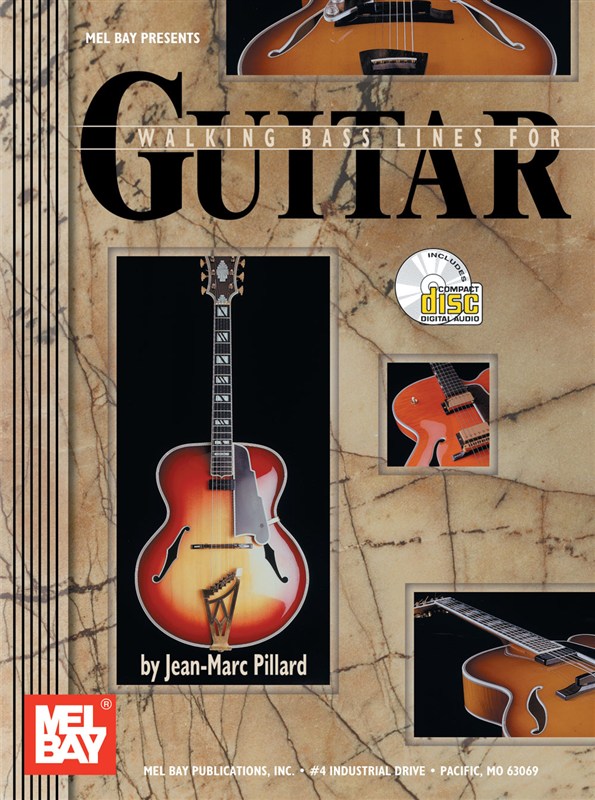
WALKING BASS LINES FOR GUITAR-PILLARD CD LIBRO SPARTITI ACCORDI TEORIA METODO CHITARRA JAZZ

WALKING BASS LINES FOR GUITAR. Jean-Marc Pillard. BOOK WITH CD & TABLATURE

LIBRO MANUALE DI MUSICA JAZZ. 

SPARTITI PER CHITARRA CON:

ACCORDI, PENTAGRAMMA, TABLATURE.

TEORIA, ARMONIA, ACCORDI, STUDIO, METODO, 


Product Description:
This book and CD teaches excellent techniques to use for walking bass lines on guitar when playing in a duet format, either with another guitar player or with a singer or other instrumentalists. The idea of this book is to give a few answers to the question, "How do I harmonize walking bass lines when I've never done it before?". We will take the principal chords, major 7, 6, dominant 7, minor, diminished, and minor 7 flat 5 and walk bass lines on the sixth or fifth string. Written in notation and tablature.
Pages: 56

Contents:

Harmonization of the Walking Bass
How to Harmonize the Chords
Major 7th Chords
Dominant 7th Chords
Dominant 7b9 Chord
Diminished 7th Chords
Minor 7th Chords
Minor 7b5 Chords
Alternative Positions on String 5
Different Rhythms
Examples with Syncopated Rhythms
Example of Walking on G7
Major II-V-I Cadence (String 6)
Major II-V-I Cadence (String 5)
Minor II-V-I Cadence (String 6)
Minor II-V-I Cadence (String 5)
Example on II-V-I Cadence
Blues
Autumn Trees
Days of Water and Tulips
Walking by Moonlight
Tune-Down
Lunar
Rodeo

Prezzo: €26,99
€26,99

SOUL JAZZ GUITAR RANDY JOHNSON BOOK & CD GUITAR TABLATURE CHITARRA LIBRO SPARTITI

SOUL JAZZ GUITAR, by Randy Johnson. SHEET MUSIC BOOK WITH CD & GUITAR TABLATURE .

LIBRO DI MUSICA JAZZ CON CD. 

SPARTITI PER CHITARRA : 

ACCORDI, PENTAGRAMMA, TABLATURE. 

Product Description:
Soul Jazz Guitar is a collection of Randy Johnston's tunes and solos specifically designed for the intermediate student. Rather than merely transcribing solos from his CDs, he plays material at a reasonable tempo specifically with the student in mind. There are tunes ("Downtime," "The Philadelphians," and "Rolling at the Summit") that appear on his commercial CDs, but included here are versions that are new and totally unique to this project. There are also some improvisations on some familiar "standard" progressions to help the student deal with these changes when he or she encounters them at jam sessions etc. Randy has tried to present his take on the Jazz language as clearly and faithfully as possible to make the solos easy to learn. He hopes that this will lead the student not just to imitation but also to develop his or her own approach to these progressions just as he developed his own approach from listening to the playing of his role models over the years.

Product Number: 20033BCD
Format: Book/CD Set
ISBN: 0786668083
UPC: 796279088961
ISBN13: 9780786668083
Series: Non-Series
Publisher: Mel Bay Publications, Inc.
Date Published: 6/4/2003

Song Title: Composer/Source:
Down Time Randy Johnston
It Couldn't Happen to Me Randy Johnston
Killer Jane Randy Johnston
Medium Tempo Blues Randy Johnston
Minor Blues Randy Johnston
Polkadots Randy Johnston
Rolling at the Summit Randy Johnston
Slow Blues Randy Johnston
Soul Air Randy Johnston
Speak High Randy Johnston
The Philadelphians Randy Johnston
Tune Down Randy Johnston

Prezzo: €27,99
€27,99

TAYLOR MARTIN GUITAR METHOD LIBRO CD TABLATURE CHITARRA JAZZ FINGERPICKING

TAYLOR MARTIN, GUITAR METHOD. CD TABLATURE

LIBRO D MUSICA, SPARTITI PER CHITARRA CON CD E TABLATURE. 

Product Description:
The Martin Taylor Guitar Method offers you the chance to study with one of the giants of jazz guitar. Hailed by guitar legend Chet Atkins as "One of the greatest and most impressive guitarists in the world today..." and celebrated by New York's Jazz Times as "Europe's finest guitarist," Martin shares the secrets of his style for the first time in this amazing tutor.

Learn how Martin creates solo guitar arrangements of jazz standards via a series of progressive studies aimed at introducing guitarists of intermediate level and beyond to the world of arranging and solo performance.

All music examples are transcribed in standard notation with tablature and played by Martin himself on the accompanying CD. You won't get a better chance to study with one of the instrument's true masters!

Foreword
Introduction

Chapters
Quick Start Jazzy
Tuning
Fretboard Geography
Don't Call Them Chords
Tenths
Basslines
Right Hand Technique
Left Hand Technique
Phrasing
Rhythm
Tone
Special Effects
The 'Danny Boy' Variations
Bhai Bhai Blues

Appendices
i) Guitar Design
A look at Martin Taylor's gear and signature guitar.

ii) Jive Talking
An interview with Martin Taylor about improvisation and how he built up his legendary chord melody chops.

Martin Taylor
MARTIN TAYLOR, MBE

"There is a touch of genius in Martin Taylor's playing." - CLASSICAL GUITAR MAGAZINE

The virtuoso guitarist Martin Taylor first came to prominence in the late 1970's through his collaborations with the jazz violin legend Stephane Grappelli, and now tours the world's concert halls with his dazzling live performances.

He began playing at the age of four when his father, jazz bassist Buck Taylor, gave him a small acoustic guitar as a present. A totally self taught guitarist, he learned to play by listening to his father's records and trying to imitate what he heard. Seven years later he was playing in local bands and gained the respect and admiration of professional musicians who were amazed by the young boy they called "The Guitar Wizard." Although inspired initially by the Gypsy guitarist Django Reinhardt, it was to be piano players, most notably Art Tatum, that caught his imagination and set him on the path of developing his own individual style of solo playing.

In 1978 he made his debut album Taylor Made for Wave Records and the following year received a call from Stephane Grappelli inviting him to play on a series of concerts in France. Shortly after those concerts he joined Stephane on a coast-to-coast tour of the U. S., including New York's Carnegie Hall and the Hollywood Bowl. It was the beginning of an eleven year collaboration which took in numerous world tours, and over 20 albums including recordings with Michel Legrand, Peggy Lee, Yehudi Menuhin, Nelson Riddle and several film soundtracks including the Louis Matle movie Milou en Mai and Dirty Rotten Scoundrels starring Steve Martin and Michael Caine.

Alongside his work with Grappelli, Martin was also pursuing his own solo career and in 1987 had great commercial success in America with his Los Angeles recorded album Sarabanda. In 1993 he made his first solo album for Linn Records Artistry, which topped the UK jazz charts for six weeks and made him the biggest selling British jazz artist in the UK. The following year he formed his group "Spirit of Django," and their first recording for Linn Records also proved to be a best selling jazz album and was nominated best album in the British Jazz Awards and Martin was voted best guitarist for the seventh time in a row. Even people who are not familiar with Martin's work will have heard him many times with his version of Robert Palmer's Johnny and Mary, which was used on the famous cult TV ads with "Nicole-Papa" for the Renault Clio. In 1999 he signed a recording contract with Sony Jazz, making two critically acclaimed albums Kiss and Tell and Nitelife. He has also collaborated with many musicians outside of jazz including Yes guitarist Steve Howe and country guitar legend Chet Atkins. He was also featured on the Prefab Sprout album Andromeda Heights, and has recorded with George Harrison, Eric Clapton, Chris Rea, and ex-Rolling Stone Bill Wyman.

In 1998 Martin founded the Kirkmichael International Guitar Festival in his home village in Scotland, which has now become one of the biggest guitar festivals in the world. He also founded Guitars For Schools, which promotes the teaching of guitars in primary schools. Through his work he has raised money to pay for guitars and tuition for hundreds of school children throughout South West Scotland. Over the years he has received many awards and honours including The Freedom of the City of London, the Gold Badge Of Merit from the British Academy of Composers and Songwriters, and was made an Honorary Doctor of the University of Paisley, Scotland in celebration of 25 years in music. In 2002, on the recommendation of the British Prime Minister Tony Blair, Martin was made a Member of the Order of the British Empire (MBE) for Services to Jazz Music, in the Queen's Jubilee Birthday Honours List, making him the first jazz guitarist ever to receive an honour from the Queen. His autobiography for Sanctuary Publishing "Kiss and Tell" is available worldwide.

Prezzo: €29,99
€29,99
Condividi contenuti