LIBRO CON CD

REINHARDT DJANGO, UNDISCOVERED INEDIT. CD TABLATURE

REINHARDT DJANGO, UNDISCOVERED INÉDIT. CD TABLATURE

Registrazioni originali.

5 original "Swing" pieces: 

- montagne Sainte-Geneviève

- Gagoug

- Chez Jacquet (A la petite Chaumière)

- Choti

- Djalamichto 


DJANGO REINHARDT

Jé sur le carrelage de la cuisine d'un café à Liberchies en Belgique le 23 janvier 1910, Django Reinhardt,

après avoir révolutionné le folklore "manouche", s'est éteint le 16 mai 1953 à l'hôpital de Fontainebleau
des suites d'une congestion cérébrale.
Dès l'âge de 12 ans, c'est en virtuose du banjo que Django se produit dans les bals parisiens en compagnie
des grands accordéonistes, Guerino, Jean Vaissade ou Maurice Alexander.
L'incendie de sa roulotte en 1928 va l'obliger à une longue et douloureuse rééducation. Handicapé de la
main gauche avec deux doigts inutilisables, Django Reinhardt atteindra à la guitare une technique
époustouflante, une virtuosité encore plus étonnante qu'au banjo. Notons au passage que Django était
également un excellent violoniste et un peintre remarquable.
La musique de Django Reinhardt, quintessence des musiques marginales nées des rues de Varsovie
(tzigane), Paris (musette), Harlem (jazz), est inspirée, parfaitement originale, identifiable dès la première écoute.
Dominant les cordes, Django Reinhardt virtuose inimitable a composé plus de deux cents mélodies dont
la plupart sont devenues des standards (plus de mille enregistrements). Django Reinhardt était un
improvisateur intarissable.
Ne sachant ni lire, ni écrire, il dictait sur sa guitare ses compositions et ses arrangements à ses partenaires.
Il est "Le" Guitariste source d'inspiration pour tous les guitaristes, tous les musiciens d'aujourd'hui.
Plus que chef d'école Django est "Le Jazz Manouche" et aussi le Fondateur de Jazz Européen.
Frank Hagège.

Compositions remarquables:
Pour découvrir Django:
Note de l'editeur:
Nuages, Minor Swing, Tears, Dinah, Belleville, Blue Drag,
Swing Guitare, Djangology, Manoir De Mes Rêves, Etc ...
- La Djangologie EMI (coffret 10 CD)
- Imagine - RDC Records
- Django Swing Nuages - UNE Musique (Triple CD)
- Django les Improvisations (Inédit) - VOGUE (Double CD)

En réalisant ce recueil de cinq pièces swing de Django Reinhardt, notre souhait était de rendre accessible
aux guitaristes de tous bords, cinq oeuvres typiques du maître de la guitare manouche.
Il nous semblait indispensable de joindre les enregistrements existants, car l'interprétation, le jeu,
l'improvisation, sont des éléments transmis oralement, difficilement traduisibles sur papier. Les quatre
premiers enregistrements «Montagne Sainte Geneviève», «Gagoug), «Chez Jacquet - A la Petite
Chaumière) et «Chotü) qui ont servi de bases aux transcriptions - sont ceux de Matelo Ferret, qui a cotoyé
Django dans de nombreux concerts. Django ne les a apparemment jamais enregistré lui-même.
La cinquième pièce, «Djalamichtûl> ne figurait sur aucun enregistrement. Grâce à Frank Hagège, père des
.Django D'Or) il nous a été permis de réenregistrer cette pièce méconnue avec le guitariste
Patrick Saussois, qui par bonheur l'avait joué quelques années auparavant aux côtés de Matelo.
Jean Yves Cases (Guitariste) et Pierre Adenot (Arrangeur) ont mis en lumière le détail note après note de
ces cinq pièces.

Conseils techniques par Jean Yves Cases
Le style:
Quatre de ces cinq pièces de Django Reinhardt sont des valses (mesure à trois temps), mais trois d'entre
elles ne comportent pas d'indication de mesure, car leur interprétation est libre. Il est indispensable
d'écouter les enregistrements pour comprendre quel doit être le rythme donné à ces phrases "improvisée ..
dont une transcription vous est donnée ici. Notez aussi que pour «Gagoug» et (,Chotü>, les altération n
sont que dans un seul groupe de notes.
Le jeu:
- Soigner les trémolos - très nombreux - et très utilisés dans les interprétations de Matelo Ferret.
- Travailler les arpèges, qui font le charme des chorus typiques de Django Reinhardt.
- Ces titres se jouent rapidement, mais il est indispensable de travailler dans un premier temps le
différentes parties de façon isolée, et de les exécuter lentement afin d'avoir les "notes dans les doigts".
- Ne vous fiez pas à la simplicité apparente de ces titres. Les doigtés et la rapidité d'exécution en font des
morceaux relativement difficiles.

Born on the kitchen fioor of a café in Liberchies, Belgium, on 23rd January 1910, Django Reinhardt, the
man who introduced revolutionary changes ta traditional "gipsy" music, died of a stroke in
Fontainebleau's hospital on 16th May 1953.
From the age of 12 he was a banjo virtuoso, playing in Parisian dance halls alongside great accordionists
such as Guerino, Jean Vaissade and Maurice Alexander.
After suffering serious injuries when his caravan caught fire in 1928, he experienced a long and painful
recovery during which he developed a new fingering technique. Despite injuries to his left hand which left
him with two disabled fingers, Django Reinhardt achieved an astaunding guitar technique, becoming even
more virtuosic than he had been on the banjo. Django was also an excellent violinist and an accomplished
paimer.
Django Reinhardt's music, epitomizing the fringe music heard on the streets of Warsaw (tzigane), Pari
(musette) and Harlem (jazz), is full of soul, totally original and recognizable on the very first hearing.
A master of the guitar and peerless virtuoso, Django Reinhardt composed more than two hundred
melodies, many of which became standards and have been recorded over a thousand times. As an
improviser he was incomparable.
He could neither read nor write, so he would dictate rus compositions and arrangements ta his sidemen
from his guitar. He is "the" guitarist, a source of in piration ta ail guitarists and musicians taday.
More than father of a genre, Django is "Gypsy Jazz" and the founder of European Jazz.
Frank Hagège

Prezzo: €18,99
€18,99

VIGNOLA FRANK RHYTHM CHANGES VOLUME 1 CD TABLATURE LIBRO CHITARRA ACCORDI SPARTITI

RHYTHM CHANGES, VOLUME 1. Frank Vignola. SHEET MUSIC BOOK WITH CD TABLATURE

LIBRO METODO DI MUSICA JAZZ CON CD.

SPARTITI PER CHITARRA CON: 

ACCORDI, PENTAGRAMMA E TABLATURE.

The Frank Vignola Play-Along Series contains solos which have been written and recorded over blues and rhythm changes in many different keys. Learn more about commonly used chord changes by having the opportunity to jam on them extensively. Some of these etudes have been recorded both at a slower tempo for learning and at performance tempo. The performance-tempo recordings of the solos include numerous choruses of rhythm section only. This allows for individual practice of the written solos or practice of original ideas with a "live" rhythm section. Occasionally, during these "rhythm only" sections, Frank Vignola will play an improvised solo for four, 12, or 24 measures. This allows the student to interact with the recording by copying ideas, building upon what has just been played, or practicing the chords to the piece. The Frank Vignola Blues and Rhythm Changes series gives any student of jazz guitar great ideas for playing solos over two of the most popular musical forms in jazz. It is recommended that the student be able to play the jazz standard "I Got Rhythm" before using this book/CD set. 32 pages.
 

About the Author

Frank Vignola is considered to be among the top rank of guitarists on the music scene today. Born on December 30, 1965, in Long Island, New York, he began playing guitar at the age of five. As his proficiency grew, he spent many hours listening to the music of legendary guitarists, Django Reinhardt, Joe Pass, and Johnny Smith. Frank not only gained a spiritual sort of inspiration from these guitarists recordings, he also made an intricate study of the complexities of these guitar masters styles, slowing down his records to analyze many a solo.

Frank’s first teacher was his father, a semi-professional banjo player. Later, Frank became the star pupil of guitarist Jimmy George, who was one of the original Dion and the Belmonts. At age 12, Frank took up the tenor banjo and swiftly burst upon the music scene in a way that would portend many of the accolades and milestones to come in his career as a jazz guitarist.

Though obviously steeped in the traditional schools of jazz, especially in the formative years, Frank would ultimately take inspiration from a wide arc of the musical spectrum. Guitarists such as Django, Charlie Christian, Wes Montgomery and Lonnie Johnson are obvious influences, but one might be surprised to learn that rocker Jimi Hendrix has also received the close scrutiny of Frank’s ear. Louis Armstrong, Lester Young, Thelonius Monk, Charlie Parker, Sonny Stitt, Antonio Carlos Jobim, Thad Jones and Duke Ellington have all had inspirational impact on the music of Frank Vignola.

While still in his teens, Frank experienced the most effective music education possible—right on the bandstand as a working musician. Soon named among the top ranked musicians in New York, Frank performed and toured with such headliners as Max Morath and Leon Redbone. At age 23, he decided to lead his own group and formed his version of the famed Quintet of the Hot Club of France. Their debut at the New York cabaret, Michael’s Pub, was a smash success and launched his career as a guitarist ‘in the spotlight.’ Tours of Europe, recording sessions, and an exclusive recording contract with the Concord Jazz label would all follow in short succession in a few short years. Frank would perform and/or record with such varied artists as Chet Atkins, Madonna, Jon Faddis, Woody Allen, Ringo Starr, Manhattan Transfer, Frank Wess, Elvin Jones, Lionel Hampton and countless legends from the golden age of jazz.

Currently, Frank Vignola is the guitarist with the Mark O Conner Trio’s tribute to Stephane Grappelli and also performs every Monday night with the Les Paul Trio at the Iridium in New York City. Frank is also the new guitarist in John Lewis’ new group Evolution.

Prezzo: €39,99
€39,99

REINHARDT DJANGO THE BEST OF GUITAR STYLES AND TECHNIQUES OF A JAZZ GIANT SIGNATURE LICKS CD TABLATURE

REINHARDT DJANGO, THE BEST OF, STYLES AND TECHNIQUES OF A JAZZ GIANT. Ain't Misbehavin' -Belleville -Daphne -Dinah -Djangology -Honeysuckle Rose -Limehouse Blues -Marie -Minor Swing -Nuages -Old Folks At Home (Swanee River) -Rose Room -Stardust -Swing 42 -Swing Guitar -Tiger Rag (Hold That Tiger). CD TABLATURE

LIBRO DI MUSICA PER CHITARRA CON CD E TABLATURE.

The Best of Django Reinhardt A Step-by-Step Breakdown of the Guitar Styles and Techniques of a Jazz Giant
Series: Signature Licks Guitar
Format: Softcover with CD - TAB
Artist: Django Reinhardt
Author: Joe Charupakorn

Explore the groundbreaking style of one of the most unique and influential guitarists in jazz! This book/CD pack explores 16 of his signature tunes: Ain't Misbehavin' - Belleville - Daphne - Dinah - Djangology - Honeysuckle Rose - Limehouse Blues - Marie - Minor Swing - Nuages - Old Folks at Home (Swanee River) - Rose Room - Stardust - Swing 42 - Swing Guitar - Tiger Rag (Hold That Tiger). The CD includes full demos of each.
Inventory #HL 00695660
ISBN: 9780634034312
UPC: 073999549607
Width: 9.0"
Length: 12.0"
96 pages 
 

INTRODUCTION
Just about a half century after his death, Django Reinhardt still remains a towering
figure in the annals of jazz guitar. To this day, his incendiary playing stands up to that
of later virtuoso jazz guitarists such as Joe Pass, Pat Martino, and George Benson. Author
James Lincoln Collier, in his book The Making of Jazz, calls Django "the most important
guitarist in the history of jazz"; when you take into account the hordes of jazz guitarists he
has influenced, he may very well be. His groundbreaking style of playing-marrying
European-influenced scales and harmonies with jazz rhythms-was unheard of during his
time. He was among the first of the European jazz musicians who could cop the jazz feel
correctly, and he left an indelible stamp on the world of jazz guitar. His major influence was
session guitarist Eddie Lang (the first major jazz guitarist). He absorbed Lang's Europeanbased
harmonic concepts and took them one step beyond.
Born Jean Baptise Reinhardt to LaBelle Reinhardt and Jean Vees (his assumed
father) on January 23, 1910 in Liverchees, Belgium near the French border, Django was
raised in true gypsy fashion, travelling around in a caravan and living like a vagabond. He
spent much of his formative years travelling across Europe, eventually settling just outside of Paris.
Django did not attend school and was illiterate-he could neither read nor write.
He did, however, have a passion and a gift for music and eventually received a banjo from
a neighbor named Raclot when he was twelve. He never took formal lessons, but learned
from his father and other musicians in the area, and shortly thereafter began playing with
his father in cafes. By age fourteen he had become a fixture on the Parisian club scene,
and by age eighteen he recorded his first session as a sideman, accompanying an accordion on banjo.
On November 2, 1928, tragedy struck. Django heard some noise and thought it
was a rat scurrying around his wagon. He grabbed a candle, which unexpectedly fell out
of the candleholder and onto a pile of highly flammable artificial flowers that immediately
burst into flames, setting the wagon on fire. Django used a blanket to carry his wife out of
the burning caravan, but his exposed legs and left hand were severely burned. Because
of the severity of the burn, doctors suggested amputating Django's legs, but he vehemently
refused. He would later regain the use of both legs.
His left hand did not have the same good fortune, and his music career appeared
to be doomed. Django was resilient, however, and trudged along, trying to play guitar
again while in the hospital. He eventually regained the use of his thumb, index, and middle
fingers, but never the full use of the ring and pinky fingers. Over a year later, he was
able to play again using his functioning left-hand fingers.
In 1928 Django met Stephane Grapelli, a violinist with whom he would have a
career-long relationship. They were both struggling young musicians trying to make their
way in the jazz scene. In 1933, they finally had the chance to play together in the Quintet
of the Hot Club of France (which also featured Django's brother Joseph on rhythm guitar),
an incarnation of the Hotel Claridge Orchestra. The Ultraphone Record Company gave the
group a record deal in 1934, and their first recording sent shockwaves throughout the
European jazz scene. This spawned a series of group recordings that would elevate the
group's popularity and allow them to play concert halls.
When World War II started, the group was on tour in London. Django and company
retreated to Paris, but Grapelli chose to stay behind in London. As a result of the
German invasion of France, Django became a god in the eyes of the French. He was a national hero who represented a unique and free spirit that stood tall against the repressive, stifling nature of the German invaders.

AIN'T MISBEHAVIN' Words by Andy Razaf
Music by Thomas "Fats" Waller and Harry Brooks
Django Reinhardt's solo on "Ain't Misbehavin' ,"with its motivic and rhythmic development,
is an exemplary model of solo construction. After the opening quote of the theme,
Django weaves through the chord changes with primarily scalar runs based on the D
major scale (D-E-F#-G-A-B-C#). In measure 7 he introduces a triplet motive that is
repeated for three consecutive measures. The motive begins on the root and hammers
and pulls back and forth up a half step. This lick is transposed up a perfect 4th in measure
8 to correspond to the chord change (Bm-Em). In measure 9 the pattern begins on the
9th of the D chord and hammers onto the minor 3rd (Fq), creating a bluesy effect. Notice
how the pattern gets rhythmically displaced in the following measures, starting on beat 3
in measure 7, beat 2 in measure 8, and back to beat 3 in measure 10. This figure is recalled in
measures 39-40.
Another motive is introduced in measure 25, comprised of a note followed by a
higher note, which is bent up a half step. Django leaps from A to E and bends up to Fq,
the bluesy b3rd of the D chord. This is followed by a bend from G# to A, the 5th of the D
chord. Some arpeggiated lines follow in measures 30-32, and in measures 33-36 Django
continues to develop the bending motive, this time starting with a bend from E#to F#, the 3rd of the D chord.
Chromaticism is abundant throughout the solo and used primarily in one of two
ways: as neighbor tones and passing tones. For example, the triplet motive (mentioned
above) in measures 7-9 uses a chromatic upper neighbor trill. In measure 58, chromatic
passing tones fill the gap from A down to F#.Measure 59 has an A# passing tone between
A and B, measure 61 also has an A# passing tone between A and B (this time an octave
lower), and in measure 62 there are chromatic passing tones from A# to ct


Table of contents:

Ain't Misbehavin'
Belleville
Daphne
Dinah
Djangology
Honeysuckle Rose
Limehouse Blues
Marie
Minor Swing
Nuages
Old Folks At Home (Swanee River)
Rose Room
Stardust
Swing 42
Swing Guitar
Tiger Rag (Hold That Tiger)

96 pages

Ain't Misbehavin' - WORDS: RAFAZ - MUSIC: WALLER, BROOKS - 1929
Belleville - DJANGO REINHARTD - 1944
Daphne - DJANGO REINHARDT - 1938
Dinah - WORDS: LEWIS, YOUNG - MUSIC: HARRY AKST - 1925
Djangology - DJANGO REINHARDT, STEPHANE GRAPELLI - 1937
Honeysuckle Rose - WORDS: ANDY RAFAZ - MUSIC: FATS WALLER - 1929
Limehouse Blues - WORDS: FURBER - MUSIC: BRAHAM -
Marie - IRVING BERLIN - 1928
Minor Swing - DJANGO REINHARDT, STEPHANE GRAPELLI - 1938
Nuages – DJANGO REINHARDT, JACQUES LARUE -
Old Folks At Home (Swanee River) - STEPHEN C. FOSTER -
Rose Room – WORDS: HARRY WILLIAMS - MUSIC: ART HICKMAN -
Stardust – WORDS: PARISH – MUSIC: CARMICHAEL - 1928
Swing 42 – DJANGO REINHARDT - 1941
Swing Guitar - DJANGO REINHARDT, STEPHANE GRAPELLI - 1937
Tiger Rag (Hold That Tiger) - WORDS: HARRY DECOSTA - MUSIC: DIXIELAND BAND -

Violin arranged for guitar
 

Prezzo: €25,99
€25,99

REINHARDT DJANGO REAL ACOUSTIC GUITAR LIBRO GYPSY JAZZ CD BASI TABLATURE Belleville Minor Swing

REINHARDT DJANGO, REAL ACOUSTIC. SHEET MUSIC BOOK WITH CD & GUITAR TABLATURE .

LIBRO DI MUSICA GYPSY JAZZ CON CD,

SPARTITI PER CHITARRA CON :

ACCORDI, PENTAGRAMMA E TABLATURE . 


Titoli nel Libro :

- Minor Swing (1937) - CON BASE SU CD

- Minor Swing (1947)

- Minor Swing (1949) 

- Swing Guitars - CON BASE SU CD

- I'll See You In My Dreams - BASE SU CD

- Django's Tiger

- After You've Gone

- Djangology

- Blues Clair

- Blues En Mineur

- Belleville


Titoli nel CD :

Demo Play Minor Swing
■Lesson 1:
■Lesson 2:
■Demo Play Minor Swing

■Lesson 3:Minor Swing
■Lesson 4:
■Lesson 5:
■Demo Play Belleville
■Demo Play Nuages

Prezzo: €99,99
€99,99

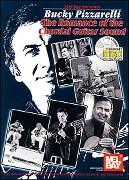
PIZZARELLI BUCKY THE ROMANCE OF THE CHORDAL GUITAR SOUND Mel Bay CD TABLATURE LIBRO

PIZZARELLI BUCKY, THE ROMANCE OF THE CHORDAL GUITAR SOUND. SHEET MUSIC BOOK WITH CD & GUITAR TABLATURE . 

LIBRO METODO DI MUSICA JAZZ CON CD.

SPARTITI PER CHITARRA :

ACCORDI, PENTAGRAMMA E TABLATURE.

Product Description
Bucky Pizzarelli is a giant on today's jazz guitar scene. He has played with virtually every big name in the business. Along the way, he has been a staff musician with NBC, ABC, Skitch Henderson, and Doc Severinsen, has appeared at Carnegie Hall with George Barnes and Les Paul, has performed at the Boston Pops with Stephane Grappelli, and has played a solo concert at Town Hall in New York city. He has countless albums and jazz tours to his credit. In this fine new text, Bucky presents five original solos written specifically to explore the chordal jazz sound unique to the guitar. In notation and tablature. The accompanying CD has 8 samples and 5 original guitar solos as written and played by one of the world's jazz greats, Bucky Pizzarelli.

Foreword
At the same time Andres Segovia was elevating the classical guitar to its proper place, another guitar with metal trings was becoming the "new" instrument in the orchestra, replacing the banjo. Strummed with a pick, the arch-top plectrum guitar made a beautifully subtle, woody acoustic sound. The best of these handcrafted instruments were made by the Gibson and Epiphone Companies and John D' Angelico, a private custom maker. The best players were also emerging. Eddie Lang, backing Bing Crosby; duets by Carl Kress and Dick McDonugh; and solos by George Van Eps were also listened to. These first pioneers were soon to be followed by the likes of Charlie Christian, George Barnes, Les Paul, Johnny Smith, Tony Mottola, etc.
With the advent of the amplifier, favorite guitarists were put into single-string and chordal-style categories and became specialists in one or both fields. Aspiring guitarists were gathering chord formations and single-note runs from every possible means, usually radio, records, teachers, and each other. Published guitar music was not available to all. This guitar was being played chord ally by non-reading guitarists. The hidden beauty of the guitar was being discovered. Opened-string bass notes and chord clusters made the guitar an ideal instrument to accompany another guitar, singer, or any instrument of the orchestra. The guitar range made it possible to duplicate a string quartet. Through the years great melodies have remained the same, only to be harmonized and reharmonized. My quest to find what is inside the guitar has never ended. So give me the harmony to play in a duet setting anytime. There is so much to be explored and discovered. Bucky Pizzarelli

Note
As you work with this exciting material, it would be well to keep a few points in mind. The skeleton chord forms employed will not always contain all of the essential (in contrast to the expendable) ingredients of the chord indicated. These missing notes will usually be present in the melody that follows so that the chord is outlined in the mind's ear. Occasionally this will not be true, but the chord will be a part of a progression where the missing part of the chord is easily imagined. An example of this is the Db dim in the first bar of "I Had Picked You" where the diminished triad is incomplete. When playing a chord, the bass note can usually be held longer than indicated while the other fingers are making the melody. This gives a richer sound and provides a stable anchor for the left hand. Finally, there are places where there are redundant accidentals in the same measure. These are for clarity and do not indicate double sharps or flats. The Publisher

About the Author
John "Bucky" Pizzarelli has enjoyed a career that spans the years from the Vaughn Monroe Orchestra to White House Concerts with Benny Goodman and Frank Sinatra. Along the way, he has been a staff musician with NBC, ABC, Skitch Henderson, Doc Severinson, Mitch Miller, and appeared at Carnegie Hall with George Barnes and Les Paul, performed at the Boston Pops in duet with Stephane Grappelli, and played a solo concert at Town Hall in New York City. An active performer in jazz rooms and college concerts, he is also a Faculty Member Emeritus of William Paterson College in Wayne, in the New Jersey.

Contents
Foreword .
Constructing a Chord Solo .
Smoke Eyes .
Red Beans and Rice .
Over and Over Blues .
Happy Bass Note Waltz .
I Had Picked You .
About the Author .

Prezzo: €199,99
€199,99

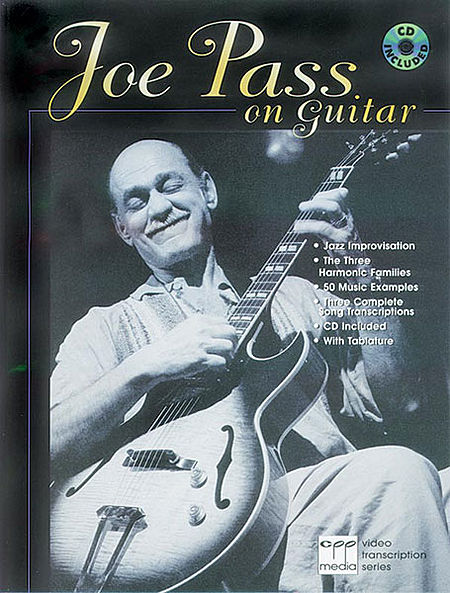
PASS JOE ON GUITAR CD BOOK TABLATURE CHITARRA LIBRO SPARTITI METODO IMPROVVISAZIONE

PASS JOE, ON GUITAR. L'improvvisazione, il caged, le scale con gli accordi, il sol7, tecnica della mano destra e sinistra, 50 esempi, pezzi completi, -all the things you are mine -blues intro -Joe's blues -stella by starlight, con Joseph Passalaqua. SHEET MUSIC BOOK WITH CD & GUITAR TABLATURE.

LIBRO METODO DI MUSICA JAZZ CON CD.

SPARTITI PER CHITARRA CON:

ACCORDI, PENTAGRAMMA, TABLATURE. 


Joseph Passalaqua era nato a New Brunswick nel New Jersey (13 gennaio 1929 - 23 Maggio 1994)  figlio di Mariano Passalaqua, operaio siderurgico nato a Gualtieri Sicaminò in sicilia, crebbe a Johnstown in PennsylvaniaNato in una famiglia non musicali, Pass ha iniziato a suonare la chitarra dopo essere stato ispirato dall'attore Gene Autry, che  vestito da cow-boy suonava la chitarra in un film. Il Padre di Pass ha riconosciuto presto che suo figlio era interessato alla musica e lo ha spinto sempre a suonare brani a orecchio, a non suonare pezzi scritti appositamente per lo strumento, a studiare le scale e a non "lasciare spazi vuoti" - riempire tutto lo spazio sonoro tra le note della melodia e gli accordiDopo essersi trasferito a York City, Joe cade vittima della droga, e trascorre gran parte del 1950 in una relativa oscurità. Pass riuscito ad emergere attraverso un soggiorno al Synanon, un programma di riabilitazione. Durante quel periodo ha suonato la chitarra e affinanto le sue capacità. Poi suonerà con Frank Sinatra, Duke Ellington, Dizzy Gillespie, Ella Fitzgerald, Count Basie e molti altri.

In the music of Joe Pass we see the culmination and perfection of all that preceded him. This gentle giant of Jazz guitar defined the spirit of the music and he did it with grace and style. In this book, Joe explains his musical and guitaristic approch to the easily over - complicated process of Jazz improvisation. The book includes 50 musical examples and 3 complete transcriptions; all of which are contained on the included CD. All the music is written in standard notation and Tablature.

JAZZ IMPROVVISATION
THE 3 HARMONIC FAMILIES
50 MUSIC EXAMPLES
3 COMPLETE SONG

Includes the Following Selection:

Anno - Titolo - Compositore
1939 - ALL THE THINGS YOU ARE MINE - MUSICA: JEROME KERN / PAROLE: OSCAR HAMMERSTEIN II,
1989 - BLUES INTRO - JOE PASS
1994 - JOE'S BLUES - JOE PASS
1946 - STELLA BY STARLIGHT -  MUSICA: VICTOR YOUNG / PAROLE: NED WASHINGTON 

Example pulls together all the principles we have been working on thus far and takes a few steps further in this study on improvising over a static mai7 chord. Check out these points of importance for study:

1. Look into the use of pure diatonic lines and what makes them tick. What chord tones do they begin and end on? What is the shape and range of the line? Finally, how is scalewise movement balanced with skips?

2. Pay close attention to non-diatonic notes. Are they used as ascending/descending passing tones? Do they accent a chord-tone only? Or are they used in the context of a substitution of V7 altered over Cmai7 as discussed? Telltale signs would be the rhythmic placement of the substitution in the bar and especially how the tension is built and released (resolved) to specific chord tones. As you will notice, these lines commonly resolve to the 5th (G) of the Cmail chord.

3. The bracketed or circled notes and phrases will assist you in understanding their harmonic purpose in the line. I stands for Cmai7 while V7 stands for G7 (altered). For example, ''I 3" refers to E, the 3rd of the Cmai7 chord, while "V7:b9" refers to Ab, the b9 of the G7 chord.

Contents


Blues intro

Tuning Notes

"CAGED"

Exampies


Right-Hand Technique

Examples


Left-Hand Technique

Example


Harmonic Families: Maj7, Dom7, Min7

Diminished 7 and Augmented Subfamilies

Major 7

Examples

Example 20: Major Etude

Minor 7

Examples

Superimposing MajorTriads Over Minor Chords

Examples

Dominant7

Examples

Altered Dominant Lines

Examples

The Diminished Scale For Altered Dominant Chords

Examples

The Tri-Tone Substitution For Altered Dominant Chords

Examples

Scales For Altered Dominant Turnarounds

Exampies


Performance Section

All The Things You Are

Joe's Blues

Stella By Starl ight 

Prezzo: €26,99
€26,99

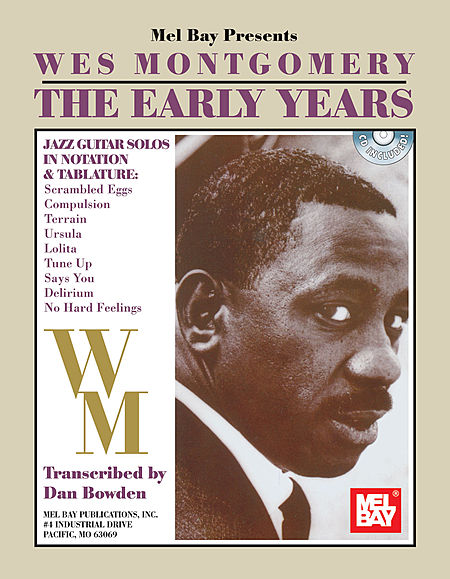
MONTGOMERY WES EARLY YEARS LIBRO CD GUITAR TABLATURE Scrambled Eggs-Ursula-Lolita

MONTGOMERY WES, THE EARLY YEARS. SHEET MUSIC BOOK WITH CD & GUITAR TABLATURE. 

LIBRO DI MUSICA JAZZ CON CD.

LIBRO DI SPARTITI PER CHITARRA CON:

ACCORDI, PENTAGRAMMA E TABLATURE.

The artistry exhibited by Wes Montgomery ultimately led to a redefinition of jazz guitar. These transcriptions from Wes' landmark early recorded work capture him in contrasting settings and roles as a sideman, leader and with various group configurations. All solos were carefully transcribed in notation and tablature from Wes' original Riverside recordings. Selections include: Scrambled Eggs; Compulsion; Terrain; Ursula; Lolita; Tune Up; Says You; Delirium; and No Hard Feelings.

Compulsion by Harold Land
Delirium by Harold Land
Lolita by Barry Harris
No Hard Feelings by Buddy Montgomery
Says You by Sam Jones
Scrambled Eggs by Sam Jones
Terrain by Harold Land
Tune Up by Miles Davis
Ursula by Harold Land


Wes Montgomery
Born in Indianapolis, Indiana March 6, 1925
Died June 15, 1968
Wes Montgomery was a guitarist who developed an incredibly personal style.
He was influenced greatly in his early years by the driving single line jazz guitar solos
of Charlie Christian. Later, tenor saxophonist John Coltrane had tremendous influence
on him. Wes Montgomery possessed a great ear and got one of his first" gigs" playing
Charlie Christian solos by ear with a jazz combo. It was later said that his ear was good
enough to allow him to remember and embellish any piece, no matter how intricate,
after hearing it only once.
Wes Montgomery's style was so unique it can still be recognized by listening to
only a measure or two of one of his solos. Tobegin with, he played with his right hand
thumb. The story goes that he developed this technique trying to practice softly so as
not to disturb his neighbors. His thumb technique was unbelievably adept, amazing in
the words of some observers. This thumb technique gave his playing a warm, gentle
timbre. Thus, when listening to Wes, you would hear wonderfully bluesy, "be-bop"
phrases laid out in a warm, lyrically intimate manner.
Perhaps the most identifiable aspect of his style, however, was his "funky",
virtuosic use of octaves. Many great jazz guitarists have since emulated this stylistic
technique but it was pioneered by Wes Montgomery. He proved that rapid and extended
solos in octaves could be executed technically and musically. While many
others have copied this technique, few seem to obtain Wes' warm, earthy, tone.
Wes' career took a big jump when famed alto saxophonist ,Cannonball Adderly
heard him at an after-hours jazz club in Indianapolis called the Missile Room. A phone
call from Adderly set things in motion and not long after, Wes was signed to a record
contract with Riverside. He later recorded on the Verve and A & M labels. His was the
dominant voice in jazz guitar in the 1960s. His plaudits included winning the Downbeat,
Billboard and Playboy jazz guitar polls. He was awarded a Grammy for his solo
rendition of the song, "Gain' Out Of My Head." Time and Newsweek ran stories on him.
He played with many if not most of the great jazz sidemen of his era.
We are honored to present this collection of some of Wes Montgomery's early
recorded solos from the Riverside collection. We highly recommend the companion
cassette. Also available is an additional printed collection of some of his finest recorded
solos titled Wes Montgomery/Jazz Guitar Artistry.


Notes From the Transcriber
This collection of transcribed performances is a sampling from the early recorded
work of Wes Montgomery on the Riverside label. Wes signed on with Riverside in the
autumn of 1959and remained with the label through 1963.
These transcriptions capture Wes in contrasting settings and roles; as sideman,
leader and with various group configurations. As a sideman, Wes improvised concisely,
offering exactly suitable, to-the-point solos. On his own recordings, he was more
expansive, developing his solos over a number of choruses with utmost craft.
The artistry exhibited by Wes was ultimately to lead to the redefinition of jazz
guitar. His influence has, and continues to reach the oncoming generations of guitarists
within, and outside the jazz world. Being on the faculty of Berklee College of Music for
several years, I have seen first hand how the music of Wes Montgomery continues to
inspire guitarists in pursuit of excellence. Even those not versed in jazz get excited
about Wes' playing because it simply feels so good.
When working with these transcriptions, keep the recordings close at hand and
refer to them continually. What can be communicated on the printed page is limited,
but your listening to the recordings will help to make the written notes come to life.
A word about the tablature fingerings. When deciding fingerings I considered
the following factors:
1. Playability - Where does the particular phrase lie well on the fingerboard?
2. Harmonic relation - What chord shape or shapes does this phrase imply?
3. Timbre - Does the timbre clearly indicate which string a note was played on?
I have not presumed, nor do I intend to imply, where every note was originally
played by these fingerings. My intention is to provide fingerings that work well with
this music. Due to the nature of the guitar, I also recommend practicing phrases in at
least one other area of the fingerboard.


Here is a brief summary of the transcribed music.
Wes Montgomery - guitar
All tracks
Scrambled Eggs
Nat Adderly - cornet (leader)
Sam Jones - bass
Bobby Timmons - piano
Louis Hayes - drums
recorded January 27, 1960

Scrambled Eggs is from Nat Adderley's highly successful Work
Song album. The Bobby Timmons composition is a bass feature for
Sam Jones who solos during the head breaks. 1have included these
bass breaks in the transcription as a matter of interest. For the
Scrambled Eggs melody, Wes plays octave unison with the cornet.
Taking the last solo for one chorus, Wes appears to be drawing from
the melody by using a great deal of chromaticism in his solo lines.
This technique, that is associated with the bebop jazz style, is characterized
by the resolution of single or double chromatics to chord
tones from above and/ or below.
Compulsion
Joe Gordon - trumpet
Harold Land - tenor sax (leader)
Barry Harris - piano
Sam Jones - bass
Louis Hayes - drums
recorded May 17, 1960

From Harold Land's West Coast Blues LP,Compulsion begins
with trademark octaves from Wes. On the head and solos of his
band mates, Wes shares comping duties with Barry Harris. The A
section of Compulsion has a 1mto IVm chord change that leads to
descending lydian chord structures. Wes takes the second solo and
on his two choruses, skillfully plays through the most active harmonic
segments, melodically weaving through the changes. On the
lydian segments, Wes transposes short musical fragments in parallel
motion with the chord structures. His use of thirds on the final
bridge should also be noted.

Prezzo: €30,99
€30,99

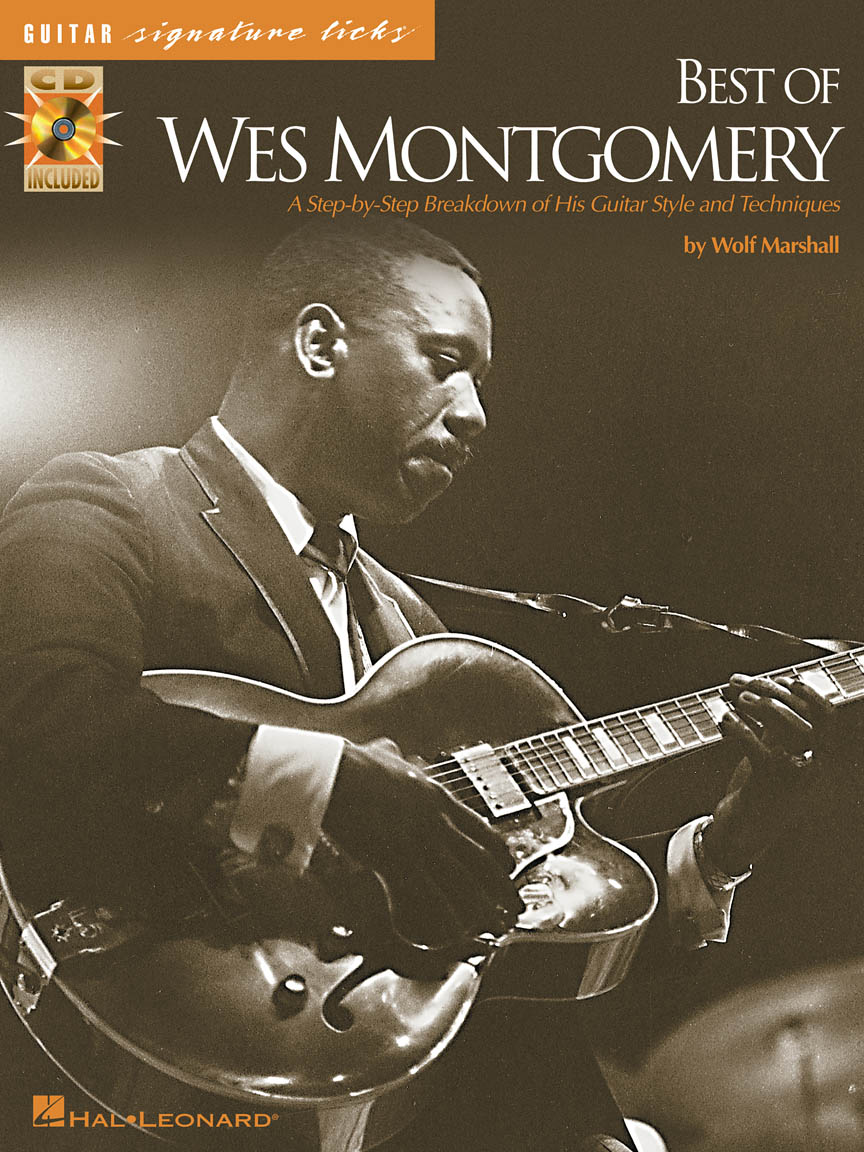
MONTGOMERY WES-BEST Signature Licks Guitar CD TABLATURE besame mucho-Missile blues-SPARTITI

MONTGOMERY WES, THE BEST. LIBRO CON CD E TABLATURE

LIBRO METODO DI MUSICA JAZZ, CON CD.

SPARTITI PER CHITARRA CON: 

ACCORDI, PENTAGRAMMA E TABLATURE. 

Performance notes, equipment, le tecnica del pollice, biografia. Invece di utilizzare il plettro, opta suonare con il polpastrello del pollice. Questa tecnica non ortodossa, affascina i chitarristi di oggi e stupisce per l'efficacia del suono caldo delle single-note. Missile blues -yesterdays -west coast blues -cariba -I¹ve grown accustomed to her face -bésame mucho (Kiss me much) -fried pies -mi cosa -four on six -misty -sundown -O.G.D. 

Guitar
Series: Signature Licks Guitar
Softcover with CD - TAB
Artist: Wes Montgomery
Author: Wolf Marshall

Explore the music of one of the greatest jazz guitarists of all time! This in-depth book/CD pack will guide you through 12 of the best-known tracks from the legendary Wes Montgomery, Features a foreword and introduction by Wolf Marshall, a discography and more.

Inventory # HAL LEONARD 00695387
ISBN: 0634009028
UPC: 73999953879
Width: 9
Length: 12
104 pages

Besame Mucho (Kiss Me Much)
Cariba
Four On Six
Fried Pies
I've Grown Accustomed To Her Face
Mi Cosa
Missile Blues
Misty
O.G.D.
Sundown
West Coast Blues
Yesterdays

Prezzo: €31,99
€31,99

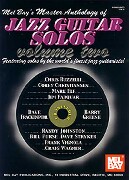
MASTER ANTHOLOGY OF JAZZ GUITAR SOLOS VOL.2 BOOK & CD TABLATURE CHITARRA SPARTITI LIBRO

MASTER ANTHOLOGY OF JAZZ GUITAR SOLOS VOL.2. SHEET MUSIC BOOK WITH CD & GUITAR TABLATURE .

LIBRO DI MUSICA JAZZ CON CD .

SPARTITI PER CHITARRA : 

ACCORDI, PENTAGRAMMA, TABLATURE .  


Product Description:
Mel Bay's Master Anthology of Jazz Guitar Solos Volume Two presents 11 challenging tunes, improvised solos and solo guitar arrangements designed to enhance the repertoire of the intermediate to advanced jazz guitarist. Some of the world's finest jazz guitarists are represented, including Chris Buzzelli, Corey Christiansen, Mark Elf, Jim Farquar, Dave Frackenpohl, Barry Greene, Randy Johnston, Bill Purse, Dave Stryker, Frank Vignola, and Craig Wagner. All of the pieces are in both standard notation and tablature with a biographical sketch of each performer. A companion stereo CD is included, making this an ideal sourcebook for serious students and professionals alike.

Mark Elfhas been on the Jazz scene for over 30 years. He was born in Queens, New York in 1949 and started playing the Guitar at the age of 11. He has played and or recorded with the Jazz Giants: Dizzy Gillespie, Clark Terry, Jimmy Heath & the Heath Bros., Wynton Marsalis & Jon Hendricks just to name a few. His first professional Jazz performance occurred around 1971 as a sideman at the Club Barron in Harlem, New York with Gloria Coleman and Etta Jones. This performance was a double bill with the George Benson Quintet. During the 1970's he toured with Lou Donaldson, Jimmy McGriff, Groove Holmes & Charles Earland and recorded a number of albums with them. He recorded his flrst album as a sideman with Jimmy McGriff & Groove Holmes in 1973 on the Groove Merchant Record label called "Giants of the Organ Come Together". In the late 1970's Mark worked with Junior Cook and Bill Hardman in New York City and also recorded with them on the Muse Label. In the 1980' s he toured Europe with Dizzy Gillespie, Clark Terry and other Jazz Luminaries and also recorded his flrst album as a leader in 1986 called the Mark Elf Trio Volume 1. In 1988 he recorded his second album as a leader ''The Eternal Triangle with Hank Jones, Jimmy Heath, Ray Drummond and Ben Riley. This album would be released in 1996 on Mark's Jen Bay Record Label. In 1993, Mark landed his fIrst overseas record deal with The Alerce Record Label and ''The Mark Elf Trio" was recorded in Santiago, Chile. This recording was marketed to radio in 1996 and went to #7 on The Gavin Jazz Chart. In 1995, Mark recorded for Telarc on the Jon Hendricks CD, Boppin' at The Blue Note with, Wynton Marsalis, Benny Golson, Al Grey & Red Holloway. This recording went to # 1 and opened up some radio doors just before the Alerce recording released in 1996. After forming his own record company in 1995, Jen Bay Records, he stunned the record industry with hit recordings on Jazz Radio. From 1996 to 2000 all seven of his recordings had flnished in the top ten on National Jazz Radio with flve of them going to #1 consecutively from 1997 to 2000! In 1996 he joined the Jimmy Heath band and also worked with the Heath Bros. During this time The Eternal Triangle was released and it went to #4 on The Gavin Jazz Chart. He recorded As We Were Saying with the Heath Bros. for Concord in 1997. This same year Mark's third recording as a leader, A Minor Scramble was released. This was the second for his own company and it hit #1 on The Gavin Jazz Chart. This was the flrst of 5 consecutive Chart Toppers! The other four were 1998 - Trickynometry (#1), 1999 - New York Cats (# 1) and 2000 - Over The Airwaves & Live At Smalls (# I)! From 1970 to the present, Mark has taught guitar and theory at independent studios, colleges and universities in the USA and abroad. His clinics are recognized as some of the fmest in the world as attested to by Clark Terry who hired Mark to teach at several of his jazz camps in the 1980' s and 1990's. Clark says, "The students love his no nonsense practical approach. He's a great clinician." Beside owning his own successful record label he also owns his own publishing company. He is sought after for his lectures on How To Succeed As An INDIE.

Frank Vignola is considered to be among the top rank of guitarists on the music scene today. Born on December 30, 1965, in Long Island, New York, he began playing guitar at the age of five. As his proficiency grew, he spent many hours listening to the music of legendary guitarists; Django Reinhardt, Joe Pass, and Johnny Smith. Frank not only gained a spiritual sort of inspiration from these guitarist's recordings, he also made an intricate study of the complexities of these guitar masters styles, slowing down his records to analyze many a solo. Frank's first teacher was his father, a semiprofessional banjo player. Later, Frank became the star pupil of guitarist Jimmy George, who was one of the original Dion and the Belmonts. At age 12, Frank took up the tenor banjo and swiftly burst upon the music scene in a way that would portend many of the accolades and milestones to come in his career as a jazz guitarist. Though obviously steeped in the traditional schools ofjazz, especially in the formative years, Frank would ultimately take inspiration from a wide arc of the musical spectrum. Guitarists such as Django, Charlie Christian, Wes Montgomery and Lonnie Johnson are obvious influences, but one might be surprised to learn that rocker Jimi Hendrix has also received the close scrutiny of Frank' s ear. Louis Armstrong, Lester Young, Thelonius Monk, Charlie Parker, Sonny Stitt, Antonio Carlos Jobim, Thad Jones and Duke Ellington have all had inspirational impact on the music of Frank Vignola. While still in his teens, Frank experienced the most effective music education possible-right on the bandstand as a working musician. Soon named among the top ranked musicians in New York, Frank performed and toured with such headliners as Max Morath and Leon Redbone. At age 23, he decided to lead his own group and formed his version of the famed Quintet of the Hot Club of France. Their debut at the New York cabaret, Michael's Pub, was a smash success and launched his career as a guitarist 'in the spotlight.' Tours of Europe, recording sessions, and an exclusive recording contract with the Concord Jazz label would all follow in short succession in a few short years. Frank would perform and/or record with such varied artists as Chet Atkins, Madonna, Jon Faddis, Woody Allen, Ringo Starr, Manhattan Transfer, Frank Wess, Elvin Jones, Lionel Hampton and countless legends from the golden age of jazz. Currently, Frank Vignola is the guitarist with the Mark O'Conner Trio' s tribute to Stephane Grappelli and also performs every Monday night with the Les Paul Trio at the Iridium in New York City. Frank is also the new guitarist in John Lewis' new group "Evolution".

Dave Stryker (3/30/57) grew up in Omaha, Nebraska and moved to New York City in 1980. After establishing himself in the local music scene, he joined organist Jack McDuffs group for two years 1984-85. When McDuff wasn't on the road (literally traveling by van all over the country) they worked a steady four-night a week gig at Dude's Lounge in Harlem. His fIrst break, this turned out to be an invaluable experience, paying his dues night after night with the soulful jazz organist. It was at Dude's Lounge that Stryker met tenor saxophonist Stanley Turrentine, who would occasionally sit in. Mter leaving McDuff, Turrentine asked Stryker to join his quintet. From 1986-1995 he played with the legendary saxophonist at all the major festivals, concert halls, and clubs throughout the world. He is featured on two Turrentine CD's (Stanley recorded Stryker's tune Sidesteppin). With Turrentine, Stryker was able to play with such jazz greats as Dizzy Gillespie and Freddie Hubbard. The ten years playing alongside the tenor legend helped Stryker realize the importance of having his own sound. (He continues to play with Stanley on occasion.) Stryker recorded his fIrst CD, First Strike (featuring Billy Hart) in 1988. Guitar on Top (featuring Mulgrew Miller and Victor Lewis) reached #13 on the Gavin Radio Chart and received 4 stars in Downbeat magazine. There have been articles in Downbeat, Guitar Player, Jazz Times, Swing Journal, and Jazz Life on Dave, and he has been awarded three jazz grants from The National Endowment For The Arts. In 1990 Dave began his association with SteepleChase Music. He has released twelve CDs on the label, including: Shades of Miles, Blue to the Bone II, All The Way, Big Room, Blue to the Bone, The Greeting, Nomad, Stardust, Full Moon, Blue Degrees, Passage, and Strikezone. Early on Stryker realized that as much as he loved playing standards and the jazz repertoire he had to have something of his own to give to the music. He feels that his writing combined with his playing is what shapes his musical expression. He has recorded and published over flfty of his own compositions. Eighteen of those compositions (from the flrst flve SteepleChase CD's) are compiled in the book: The Music of Dave Stryker (SteepleChase Music). Some of the other artists who have recorded his music are: Stanley Turrentine, Kevin Mahogany, Victor Lewis, and Steve Slagle. He is currently a featured member of vocalist Kevin Mahogany's working band, having written and arranged music for his Warner Bros. release Another Time, Another Place. Recent gigs have included Europe, Japan, Brazil, Poland and Carnegie Hall. He also works with Blue Note saxophonist Javon Jackson and pianist Eliane Elias. He has appeared on over twenty CD's as a sideman. As a producer, Stryker compiled the CD The Guitar Artistry of Billy Rogers which is the only existing record of the brilliant jazz playing of the late underground legend who was his friend, former teacher and member of the Crusaders. He also co-produced with partner Jim Eigo A Tribute to Grant Green on Evidence Music and is currently involved in producing some new releases. 

Product Number: 99554BCD
Format: Book/CD Set
ISBN: 0786660716
UPC: 796279076661
ISBN13: 9780786660711
Series: Non-Series
Publisher: Mel Bay Publications, Inc.
Date Published: 5/15/2001

Format: Book/CD Set


Song Title: Composer/Source:
Eso Si Que Es - Chris Buzzelli
Got Milk? - Corey Christiansen
Guitar On Top - Dave Stryker
It Happened To Me - Barry Greene
Lenny's Song - Jim Farquar
Pat + Wes - Randy Johnston
Rain Forest - Bill Purse
Spiders - Craig Wagner
Tide Pool - Dave Frackenpohl
Trickynometry - Mark Elf
Vignette #1 - Frank Vignola

Prezzo: €27,99
€27,99

MASTER ANTHOLOGY OF JAZZ GUITAR SOLOS VOL.3. CD TABLATURE

MEL BAY'S MASTER ANTHOLOGY OF JAZZ GUITAR SOLOS VOL.3. CD TABLATURE

Mel Bay's Master Anthology of Jazz Guitar Solos Volume Three presents nine challenging tunes and improvised solos by some of today’s top jazz guitar players for the intermediate to advanced jazz guitarist. Contributors include: Ron Afiff, Peter Bernstein, Joe Diorio, Fred Hamilton, Ken Hatfield, Hank Mackie, Steve Masakowski, Joe Negri, and Rick Stone. All of the pieces are in both standard notation and tablature with a biographical sketch of each performer. A companion stereo CD is included, making this an ideal sourcebook for serious students and professionals alike.

Product Number: 20016BCDEB
Format: eBook
ISBN:
UPC:
ISBN13: 9781610659376
Series: Non-Series
Publisher: Mel Bay Publications, Inc.
Date Published: 1/21/2011 

Born on December 30, 1965, Affif lear ned all about passion, discipline, and endurance from his father, Charlie Affif, a fiercely competitive middleweight boxer who numbered Miles Davis among his fans and close friends.Then there was his uncle, Ron Anthony, a superb guitarist who worked with the likes of George Shearing and Frank Sinatra. "When I was 12, Uncle Ron gave me my first guitar lesson. When I turned 18, I went out to the West Coast to live near him. From and early age, I did all kinds of gigs. I've worked with everybody from AI Martino to Roger Williams, and I learned a ton of old songs from Gershwin on up. That whole working musician vibe really helped me grow as a professional. So, If a singer comes up and wants to do a tune, it doesn't matter what key-because I'm cool. When I first came to New York, Gene Bertoncini gave me some solid advice. He said to let the singers know I did that kind of work, because a lot of the joints they work don't have pianos, and when the jazzgigsdry up for a minute, they'll have work for you." Driven along by Essiet Essiet's crackling bass lines and Colin Bailey'scrisp, unobtrusive timesteps, guitarist Ron Affif launches into his live Ringside recital with the kind of exuberant, aggressive attack you'd expect from a championship boxer pouring it on in the first round, determined to break an opponent's will before he can establish any kind of rhythm. "If I Were A Bell" is a virtuoso workout delivered with the kind of horn-like intensity and pianistic sweep that transcends straight guitar phrasing. For the 31-year old Affif, it's the kind of performance that draws knowing comparisons to the titled elite of jazz guitar such as Joe Pass and Pat Martino No less a personage that fellow Pittsburgh native George Benson has commented that "There's a kid from my hometown, an Italian fellow: his name is Ron Affif.-yeah, he's a bad dude"; and "my favorite type of guitar player is one that plays with fire, and the first thing that becomes evident listening to Ron is that he has plenty of that." Yetin the course of acknowledging all this praise, Ron Affifis already working to distance himself from his earliest inspirations, as he charts future directions and searches for his own special voice. "Cats like Monk had their own little universe. These days guys are improvising too much the same, they're writing tunes too much the same. And man, I'm not claiming to have it all figured out, but I know what direction I have to take. We all kind of know what we're supposed to do, but a lot of people don't listen to their inner voice. A trumpet player friend of mine, Brian Lynch, told me he was in a shop out in California when a CD come on, and he said "Within a few notes I knew it was you." That's the biggest compliment someone can give you."

Rick Stone began playing guitar at age nine in his hometown of Cleveland. He developed an early affinity for the blues, but it was in the mid-seventies that his passion for jazz was sparked by a live performance of saxophonist Sonny Stitt. Rick studied classical guitar and theory at Cuyahoga Community College and then moved on to Berklee College of Music where he earned his Bachelor of Music in 1980. In 1982 he moved to New York to find a fertile and stimulating envitonment in Barry Harris' Jazz Cultural Theatre. While studying with the legendary pianist, Rick honed his craft sitting in alongside veteran players like Tommy Flanagan, Lionel Hampton, Clarence "C" Sharpe, and Junior Cook. Then, under the tutelage of jazz masters Jimmy Heath, Ted Dunbar, Donald Byrd, Tony Purrone and Hal Galper, he earned his M.A. At Queens College in 1991. Rick's recordings Blues For Nobody and Far East have received wide critical acclaim and his group - which has included world-class sidemen like Kenny Barron, Eric Alexander, Vernel Fournier, Richard Wyands, Ralph Lalama, Dennis Irwin and Billy Hart -- has appeared at venues like Carnegie Hall's Weill Recital Hall, The Smithsonian Institute, The Blue Note and Birdland. From 1993-96 he led a series of guitar duos at the Swing Street Cafe (with guests including Mark Elf, Roni Ben-Hur, Peter Leitch and Peter Bernstein), in 1996 his trio toured South America, and from 1997-2001 his trio played regularly at Sette MoMA (in the Museum of Modern Art). A soughtafter sideman, Rick can be heard performing with Irene Reid, Ronny Whyte, Howard Kimbo, David Coss, Carol Sudhalter, Sol Yagedand many others. He is featured on several recent recordings including Carol Sudhalter's It's Time and Last Train To Astoria, and AI Ashley's These Are Them (with Dave Leibman). An active educator, Rick currently teaches at Jazz in July (U. Mass./Amherst), the JazzMobile, Hofstra University and the Brooklyn Conservatory of Music. His clinics have won accolades at numerous colleges and universities as well as the International Association of Jazz Educators and the Music Educators National Conference. He has received two IAJE Awards for Outstanding Service to Jazz Education and several NEA performance fellowships. In recent years Rick's interests in audio and computer technology have led him to build a studio in his home where he produces numerous recording projects. A regular columnist for Just Jazz Guitar magazine, he is cutrently writing a book on jazz guitar technique. Rick's latest CD Samba Novembro (from which this solo is excerpted) features his guitar in duo, trio and quartet settings with pianist Tardo Hammer, bassist Yosuke Inoue and drummer Matt Wilson. Gear: Comins 17" Classic Archtop, Fender amps, D'Addario Chromes and Dugain picks,


Format: Book/CD Set

Song Title: Composer/Source:
Blues Enough - Rick Stone
Charene - Ron Affif
Dragonfly - Peter Bernstein
Narayani - Joe Diorio
Nina's Smile - Joe Negri
One For George - Hank Mackie
Pass Presence - Steve Masakowski
Thanks, Byrl Elvin - Fred Hamilton
The Book of Sands - Ken Hatfield

Prezzo: €21,00
€21,00
Condividi contenuti