LIBRO CON CD

GUITAR SECRETS MELODIC MINOR REVEALED DON MOCK CD TABLATURE LIBRO SPARTITI METODO

GUITAR SECRETS: MELODIC MINOR REVEALED. Don Mock CD TABLATURE


LIBRO DI MUSICA CON CD, SPARTITI PER CHITARRA. ACCORDI, PENTAGRAMMA E TABLATURE. 

CATEGORY: Guitar Method or Supplement
FORMAT: Book & CD

Legendary guitarist and educator Don Mock exposes the closely-guarded "secret" soloing techniques of jazz and rock giants, revealing easy ways to create ultra-cool sounding lines and patterns by substituting simple harmonic minor patterns over dominant 7th chords. These book/CD packages each contain over 60 music examples, lines, licks and patterns. All music is written in standard notation and tablature.

Prezzo: €27,99
€27,99

GUITAR SECRETS SYMMETRICAL SCALES REVEALED Diminished Scale DON MOCK CD LIBRO TABLATURE SPARTITI

GUITAR SECRETS: SYMMETRICAL SCALES REVEALED, (Diminished and Whole Tone Scales). Don Mock. CD TABLATURE

LIBRO DI MUSICA CON CD, SPARTITI PER CHITARRA. ACCORDI, PENTAGRAMMA E TABLATURE. 


CATEGORY: Guitar Method or Supplement

FORMAT: Book & CD
Learning how to play and use scales has always been a large part of every guitar player's practice schedule. Written from a player's perspective, this book doesn't get too in-depth into the history and classical theory of the scales, but focuses on their uses in contemporary styles such as blues, rock, fusion, and jazz. Includes tons of diminished and whole-tone lines, licks, and music examples; soloing and scale substitution from a player's perspective; and new sounds and ideas. Written in standard notation and Tablature.

Foreword
Welcome to Symmetrical Scales Revealed. Learning how to play and use scales has always been a large
part of every guitar player's practice schedule. Playershave spent countless hours practicing scales up
and down all over the guitar, sometimes with great success and sometimes with frustration as the end
result.
Thoseof you who know me from my books and videos or years at the Guitar Institute of Technology (Gin
know I've been involved in guitar education for a long time. I've seen hundreds of students struggle with
the same problems that I faced when going through the process of learning how to play and use scales.
After many years of experience, both playing and teaching, I've become a big believer in cutting through
the nonsense and getting to the point of it all, which is playing music.
The presentation and ideas in this book are definitely from a player's perspective. We're not going to get
too in-depth into the history and classical theory of the diminished and whole-tone scales. We'll focus more
on their usesin contemporary styleslike blues, rock, fusion, and jazz. Don't get me wrong: there will be no
shortcuts here when it comes to modern music theory. As far as I'm concerned, all guitar players must
have a good working knowledge of harmony and theory and the ability to read music, even if it's only simple
chord charts.
Three Steps to Success
Learning to improvise can be thought of as a three-step process. The first step istypically the learning of
scales. Usingeither the key center approach or the modal approach, students should learn at least a few
useful fingerings of the major scale and be able to play them in all keys.Also, in this first step, players need
to learn about harmony and theory to help understand which scale fits over which chord. Armed with
some theory knowledge, students can immediately begin playing over even difficult chord changes by
simply switching to the correct scale or key center for the given chord.
Most players after a period of time will begin to find this first step limiting. They may say that they can't
seem to make their solossound like the chords, that they sound too scalar. Moving on to step two, we
introduce arpeggios as a tool to create chord sounds. Mixing arpeggios with our scales starts making our
solos more harmonically intelligent.
Step three isthe final frontier of improvising, as we now start really learning music. So far we've been using
scales and arpeggios but may not been able to make our solossound melodic. Now it's time to learn
melodies. Most of us need to learn a repertoire of melodic lines to use when we improvise. Almost every
one of our favorite players has, at one time or another, learned linesby copying recordings or transcriptions.
I've met many students who tell me they don't want to sound like anyone else and feel they shouldn't
copy other players. They soon realize that the road to originality goes through the land of copying licks,
phrasing, and concepts used by favorite players. Eventually, these influences merge together into your
own original style.
One last thing: A common misconception about improvising isthe phrase "playing what you hear." Many
players say they do this, leading students to think that they simply make up music on the spot. What they
are really saying isthat they are playing what they know.
Improvising isthe spontaneous performance of ideas that come to you in the midst of soloing. You may
not know ahead of time what you are going to play, but armed with scales, arpeggios, melodic ideas,
and theoretical concepts, you can playa creative and spontaneous improvised solo.


Introduction
This book deals with the two most used symmetrical scales-the diminished and whole-tone. Symmetrical scales are best defined as having repetitive or equal-note spacing that repeats throughout the octave. For example, the whole-tone scale is exactly what the name indicates; it's a scale built entirely of whole tones The symmetry of a diminished scale is a pattern of alternating whole steps and half steps, four times per octave.
One great thing about symmetrical scales is that they are very guitar-friendly and easy to memorize. The fingerboard is a visual, graphic instrument similar to a slide-rule. In most cases, you can get by with just one fingering for each of these scales and then repeat the same fingering every two frets (whole-tone) or three frets (diminished) up or down the fingerboard, Guitar players can easily discover hundreds of unique melodic and harmonic ideas that are not as obvious on other instruments like keyboards, reeds, or brass.
Both of these scales are very useful and creative tools used by improvisers. Their simplicity can be deceptive; it's almost surprising how these simple scales can provide such a complex sound. In traditional jazz, they provide a contrasting flavor against functional dominant chords, Modern players exploit these scales to add an outside sound to contemporary jazz, rock, and even blues. In Symmetrical Scales Revealed you'll learn the most useful scale patterns and explore sequences and arpeggios within the scales. Next we'll learn the secrets of how to best use the scales, followed by several of my favorite melodic lines.
We'll begin each of the two sections by first learning some good fingerings for each scale. If you already know a fingering or two, stick with them or feel free to modify any of the fingerings here to suit your technique and style. The ultimate goal isto be able to play the particular scale anywhere on the guitar in any key.
One more thing about the fingerings: You are limited only by the lowest and highest notes on the guitar. Think of scales as having no beginning and no end. Don't be too concerned with the bottom or top notes of each individual pattern, You'll find that each has a different starting and ending note because of the natural range of the strings.
SCales are simply a row of notes, and you should learn to control the scale by being able to start and end on any note. Eventually, individual scale fingerings will begin to blend together into larger patterns until finally the whole fingerboard is under your control!
How to Get the Most Out of This Book
The best way to get the most out of this book is to scan through each chapter first. Get a feel about where and what the various topics are and if they contain information you already know. You should read every page carefully, but it's okay to start with any section in the book that interests you


Guitar Secrets - Symmetrical Scales Reveale
Contents:

SECTION I: INTRODUCTION
Tuning Notes

Unit 1: Modes of the Diminished and Whole-Tone Scales
Examples 

Unit 2: Static and Functioning Dominant 7ths 
Examples 

SECTION II: THE DIMINISHED SCALE
Unit 3: Fingerings of the Diminished Scale 
Examples 

Unit 4: How to Learn and Practice the Diminished Scale
C7 Practice Track

Unit 5: Diminished Scale Sequences 
Examples 

Unit 6: Diminished Arpeggios,
Examples 

Unit 7: Using the Diminished Scale,
Examples 

Unit 8: Six-Note Diminished Shapes 
Examples 

Unit 9: Major Triads in the Diminished Scale 
Examples 

Unit 10: Using the Diminished Scale Over Static Chords ..
Examples 

SECTION III: THE WHOLE-TONE SCALE

Unit 11: Fingerings of the Whole-Tone Scaie,
Examples 

Unit 12: Whole-Tone Scale Sequences
Examples 

Unit 13: Whole-Tone Arpeggios
Examples 

Unit 14: Using the Whole-Tone Scale
Examples 

Unit 15: Modern Uses of the Whole-Tone - Static Chords 
Examples 

Unit 16: The Fingerboard - Symmetrical Scales Geometric Playground ,
Examples 

Unit 17: Diminished and Whole-Tone Lines 
Examples 

Prezzo: €26,99
€26,99

GUITAR SECRETS HARMONIC MINOR REVEALED DON MOCK CD TABLATURE CHITARRA LIBRO METODO

GUITAR SECRETS: HARMONIC MINOR REVEALED. by Don Mock. SHEET MUSIC BOOK WITH CD & GUITAR TABLATURE. 

LIBRO METODO DI MUSICA CON CD. 

SPARTITI PER CHITARRA CON : 

ACCORDI, PENTAGRAMMA, TABLATURE. 

Guitar Secrets: Harmonic Minor Revealed

By Don Mock
Item: 00-0055B
UPC: 029156658286
ISBN 10: 076920029X
ISBN 13: 9780769200293

Category: Guitar Method or Supplement
Format: Book & CD
Instrument: Guitar

Legendary guitarist and educator Don Mock exposes the closely-guarded "secret" soloing techniques of jazz and rock giants, revealing easy ways to create ultra-cool sounding lines and patterns by substituting simple harmonic minor patterns over dominant 7th chords. These book/CD packages each contain over 60 music examples, lines, licks and patterns. All music is written in standard notation and tablature. 


MOCK REVEALS


SECRETS OF THE THE MASTERS !

FAMED GIT INSTRUCTOR EXPOSES TRICKS OF THE TRADE


Legendary guitarist and educator Don Mock exposesthe closely guarded "secret" soloing techniques of jazz and rock giants, revealing easy ways to create ultra-cool sounding lines and patterns by substituting simple harmonic minor patterns over dominant 7th chords.

Containing over 60 music examples, lines, licks and patterns, this book/CD package approaches the potentially complex topics of soloing and scale substitution from a player's perspective; immediately presenting useful lines and patterns that you can use now. All music is written in standard notation and tablature and all the music examples are contained on the included CD.

• New Sounds! New Ideas!

• Over 60 lines, licks and music examples!

• Learn soloing and scale, substitution from a player's perspedive!

• CD included!

• Standard notation and tablayure!

"I DID IT FOR THEMONEY" MOCK ADMITS


ISBN 0-7692-0029-X

9 780769 200293

WARNER BROS. PUBLICATIOS

15800 Avenue Miami

Coming Soon by Don Mock: Guitar Secrets/ Melodic Minor Revealed


Foreword

Learning how to play and use scales has always been a large part of every guitar player's practice schedule. Players have spent countless hours practicing scales up and down all over the guitar, sometimes with great success and sometimes with frustration as the end result.

Those of you that know me from my books and videos, or years at the Guitar Institute of Technology (GIT), know I've been involved in guitar education for a long time. I've seen hundreds of students struggle with the same problems that I faced when going through the process of learning how to play and use scales. After many years of experience, both playing and teaching, I've become a big believer in cutting through the B.S.in learning, and getting to the point of it all, which is playing music.

The presentation and ideas in this book are definitely from a "player's" perspective. We're not going to get too in-depth into the history and "classical theory" of the harmonic minor scale. We'll focus more on its uses in contemporary styles like rock, jazz and fusion. Don't get me wrong; there will be no shortcuts here when it comes to modern music theory. As far as I'm concerned, all guitar players must have a good working knowledge of harmony and theory and the ability to read music, even if it's only simple chord charts.

Three Steps to Success Learning to improvise can be thought of as a three step process. The first step istypically the learning of scales. Using either the "key center" approach or the "modal" approach, students should learn at least a few useful fingerings of the major scale and be able to play them in all keys. Also, in this first step, players need to learn about harmony and theory to help them understand which scale fits over which chord. Armed with some theory knowledge, students can immediately begin playing over even difficult chord changes by simply switching to the "correct" scale or key center for the given chord.

Most players, after a period of time, will begin to find this first step limiting. They may say that they can't seem to make their solos sound like the chords, that they sound too "scaler." Moving on to step two, we introduce arpeggios as a tool to create chord sounds. Mixing arpeggios with our scales starts making our solos more harmonically intelligent.

Step three isthe "final frontier" of improvising, as we now start really learning music. So far, we've been using scales and arpeggios, but may not have been able to make our solos sound melodic. Now it's time to learn melodies. Most of us need to learn a repertoire of melodic lines to use when we improvise. Almost every one of our favorite players have, at one time or another, learned lines by copying recordings or transcriptions. I've met many student who tell me they don't want to sound like anyone else and feel they shouldn't copy other players.

They soon realize that the road to "originality" goes through the land of copying licks, phrasing and concepts used by favorite players. Eventually, these "influences" merge together into your own original style.

One last thing. A common misconception about improvising isthe phrase: "Playing what you hear." Many players say they do this, leading students to think that they simply make music up on the spot. What they are really saying they are doing is "playing what they know."

Improvising isthe spontaneous performance of ideas that come to you in the midst of soloing. You may not know ahead of time what you are going to play, but armed with scales, arpeggios, melodic ideas and theoretical concepts, you can playa creative and spontaneous improvised solo.


Unit 7: Using Harmonic Minor Arpeggios

How to use arpeggios when improvising can be a pretty big subject. Generally speaking, arpeggios are used to create chordal sounds (one note at a time) and add more melodic variety to musical lines. They're great for breaking up scales and for moving from one register to another. There are basically two approaches to choosing which arpeggio to use at a given time. The first isto use the arpeggio of the chord. For example, if the chord is C7, you simply playa C7 arpeggio; or if the chord isCm 11, use a Cm 11 arpeggio, etc. Thisapproach requires that you know an arpeggio for every chord. Think about how much work that could be. Not a very practical way to go. The other approach only requires that you know triad and seventh chord arpeggios.

The trade off isyou need to became a wizard at chord substitution. By superimposing various arpeggios over the basic chord you can create just about every chord sound imaginable. A quick example, that you may already know, is playing a Cmaj7 arpeggio over an Am7 chord. By doing this, you end up creating the sound of Am9 without actually playing an Am9 arpeggio. Thisconcept can be taken a long way allowing you some very sophisticated harmonic possibilities.

There are many ways to use the arpeggios of the harmonic minor scale. One approach isto think of all seven of the arpeggios as four-note "clusters of sound" that can be used anytime the scale can be used. For example, if you are playing over an E7, resolving to Am, experiment with superimposing all the arpeggios from A harmonic minor over the E7.The trick to this isyou need to be able to phrase the arpeggios in a way that still communicates to your listener the "sound" of E7. With practice, this can be a powerful way to create layers of harmonic minor sounds.

But, before we go crazy, randomly playing a bunch of arpeggios, let's first take a look at the chord sounds that are the result of playing the seven arpeggios over a dominant chord.

An important thing to remember isthat not all dominant 7th chords that we come across in tunes are V7 chords in a minor key. In fact, most dominant 7th chords we deal with are actually in major keys. The harmonic minor scale may not be the best choice in these situations (but feel free to experiment). Harmonic minor sounds best when played over a 7th chord resolving to a minor. The scale has a tendency to "lead" your listener signaling that a minor chord isto follow.

The following list shows the result of superimposing each of the seven arpeggios derived from the harmonic minor scale over a dominant chord. You will find that some sound stronger than others, but by connecting them together and mixing them with the scale, you'll eventually be able to use all seven easily.


Arpeggio Resulting Sound

Am(maj7) E7(#5,11)

Bm7 (b5) E7(b9,11)

Cmaj7(#5) E7(#5)

Dm7 E7(#5, b9, 11)

E7 E7

Fmaj7 E7(#5, b9,11)

G#dim7 E7(b9)


Here are a few useful arpeggio sequences that will help reinforce the two master arpeggio positions. Although I've indicated the name of each arpeggio, these lines are meant to be "thought of" as dominant (all A7).


Guitar Secrets - Harmonic Minor Revealed

Contents:


Unit 1: Harmonic Minor Scale History

Examples 1A - D

Examples 2 - 3


Unit 2: Fingerings of the Harmonic Minor Scale.

Example 4


Unit 3: How to learn and Practice the Scale

Examples 5A - D


Unit 4: Transposing the Scale to Other Keys.

Examples 6A - C .

Example 7 .


Unit 5: The Harmonic Minor Scale Harmony .

Examples 8A - B


Unit 6: Arpeggios From Harmonic Minor .

Examples 9A - G

Examples 10A - G .


Unit 7: Using Harmonic Minor Arpeggios.

Examples 11A - C ".


Unit 8: The Minor II - V - I ,

Examples 12A - F ,


Unit 9: Harmonic Minor in a Blues?

Example 13 .


Unit 10: The IV and VI Chords in Harmonic Minor

Example 14 .


Unit 11: The Diminished 7th Chord in Harmonic Minor .

Example 15


Unit 12: Static and Functioning Dominant 7ths .

Examples 16 - 17 .

Example 18


Unit 13:The Classic Use of the I Chord in Harmonic Minor,

Example 19


Unit 14: Some Special "Thinking" Tricks.

Examples 20A - D .

Examples 21A - B


Unit 15: Horizontal Harmonic Minor Scale Fingerings

Examples 22A - B

Examples 23A - D

Examples 24A - B


Unit 16: The licks .

Examples 25 - 26

Examples 27 - 29

Examples 30 - 31

Examples 32 - 33  

Prezzo: €27,99
€27,99

GATEWAY TO GUITAR IMPROVISATION TONY DECAPRIO CD TABLATURE SPARTITI LIBRO METODO CHITARRA

GATEWAY TO GUITAR IMPROVISATION, A Guitarist's Guide to the Revolutionary Fourth Note Principle.
Tony De Caprio. 84 pages. SHEET MUSIC METHOD BOOK WITH CD & GUITAR TABLATURE . 

LIBRO METODO DI MUSICA JAZZ CON CD . 

SPARTITI PER CHITARRA : 

ACCORDI, PENTAGRAMMA, TABLATURE .

Series: Guitar Educational
Softcover with CD - TAB
Author: Tony DeCaprio

Learn to improvise freely over any chord progression! The -Fourth Note principle is a truly remarkable method for improvising in jazz and other genres, combining ear training, theory and technique to enable students to play with unrestricted creativity. In this book/CD pack, master guitarist Tony DeCaprio shows how to incorporate this technique using -focus notes to anchor your playing within a chord progression through comprehensive, step-by-step instruction with examples for practical application of every new concept. The accompanying CD includes 99 full-demo tracks.

"A totally unique and revolutionary concept for teaching improvisation. There is nothing even remotely similar on the market. The approach is refreshing and brilliant. I highly recommend this book to both students and teachers."
Jimmy Bruno

84 pages

Gateway to Guitar Improvisation

A Guitarist's Guide to the Revolutionary Fourth Note Principle

Inventory #HL 00842058

ISBN: 9780634035623
UPC: 073999420586
Width: 9.0"
Length: 12.0"
84 pages

Prezzo: €29,99
€29,99

THE GUITAR LICK TIONARY Musicians Institute CD TABLATURE Dave Hill Rock- Blues-Jazz-Country-Pop-Acoustic-Fusion Styles

THE GUITAR LICK TIONARY, Musicians Institute. CD TABLATURE

Composer: Dave Hill. Learn the essential lines and techniques of the world's greatest guitarists with this super cool book/CD pack from Musicians Institute! Set up like a dictionary, it provides clear, concise instruction and application tips in standard notation and tab for licks in all styles of music, including rock, blues, jazz, country, pop, acoustic and fusion. The accompanying CD features 99 demo tracks so you can hear how each lick should sound. 72 pages.

The Guitar Lick·tionary
Series: Musicians Institute Press
Publisher: Musicians Institute Press
Format: Softcover with CD - TAB
Composer: Dave Hill

Learn the essential lines and techniques of the world's greatest guitarists with this super cool book/CD pack from Musicians Institute! Set up like a dictionary, it provides clear, concise instruction and application tips in standard notation and tab for licks in all styles of music, including rock, blues, jazz, country, pop, acoustic and fusion. The accompanying CD features 99 demo tracks so you can hear how each lick should sound.

Inventory #HL 00695482
ISBN: 9780634014710
UPC: 073999896435
Width: 9.0"
Length: 12.0"
72 pages

INTRODUCTION
Music is a language, and each language has its own vocabulary. Whether you're speaking
Spanish, French, German, or playing blues, rock, country, or jazz, the richer your
vocabulary, the more creative you can be in expressing your thoughts and ideas. This book
is a tool to help you expand your music vocabulary and provide some insight into the vast variety of
phrases (licks) that make up different styles.
Of course, learning vocabulary alone doesn't teach you the grammar of a language. The skill of
developing and connecting phrases in a spontaneous and inspired way requires a study of the music.
No "one-stop shopping lick book" can substitute for a lot of listening, a lot of transcribing, and a lot of playing. This book, however, can be a great resource, opening your ears to the stylistic tricks and
techniques that can sometimes be elusive.
The Guitar Licktionary will expand your appreciation of music and styles while inspiring new ideas
that will ultimately become your own unique language. Good luck, and enjoy the journey!

HOW TO USE THIS BOOK
Each lick is described and notated alphabetically, and recorded on the accompanying CD, so you
can hear and understand the concepts behind it. Throughout this book, the numbers in the
audio symbols (.) indicate the track where each lick will be found on the CD. (Because of
audio constraints, most licks are doubled up-two to a track.) You can go through them all, find specific licks alphabetically, or use the index to find licks in a specific style.

Learn the Essential Lines and Techniques of The World's Greatest Guitarists
- CD Includes 99 Demo Tracks
- Rock, Blues, Jazz, Country, Pop, Acoustic, and Fusion Styles
- Clear, Concise Instruction and Application Tips
- Standard Notation and Tab

INDEX OF LICKS BY STYLE
Rock
Lick Track
Bach Rock
Blues-Rock
British Blues
Clapton-esque
Classic Metal
Doubled Pentatonic
Early Rock 'n' Roll
Electric Rock
Fast Rock Riff
Flashy Blues
Fours in Threes
Fusion Rock
Fusion Rock
Gigantic Sound
Gain' Off
Hard Rock
Heavy Rock
Heavy Rock
Hendrix-esque
High-Tech Rock
Insane Pentatonic
Interval Idea
Korn-Like
Latin Rock
Metal
Modern Rock
Pentatonic Shifting
Position Shifter
Progressive Rock .
Psychedelic .
Quirky Rock .
Rapid Bends .
Rhythmic Rock .
Rhythmic Rock .
Riffs .
Surf
Technical Rock
Triplet Rock
Two-Hand Tapping
Van Halen-esque
Vintage Rock
Yardbirds
Y2K Rock
Zone Doubles
ZZ Top


Jazz
Lick Track
Altered
Altered Triads
Bebop
Chromatic Jazz
Dorian
Dorian
Dorian Interval
Extended Arpeggio
Extended Dominant
Ending Lick
Ionian Arp
Jazz Altered
Jazz-Blues Turnaround
Jazz Sweep
Legato
Major ii-V-I
Martino-Like
Melodic Minor
Melodic Minor
Metheny-Like
Minor ii-V-I
Minor Seventh
Pattern for Dorian .
Sax Sounds
Swing
Utility Jazz
Wes-Like
Wes-Like ii-V-I
West Coast Blues
West Coast Cool
Whole Tone
Whole Tone
Whole Tone Riff
X-Tended Major 7th


Fusion
Acid Jazz
Altered Sequence
Altered Trick
Ascending Lydian
Blues Mixolydian
Chromatic Altered
Controlled Bends
Diminished Rock
Diminished Symmetry
Funky Blues
Fusion
Fusion Rock
Groups of Fives
Harmonic Minor
Holdsworthian
Hybrid Picking
Inside Outside
Lydian Arpeggio
Nearly Dorian .
Ninth-Chord Run .
Outside Loop .
Phrygian .
Quirky Blues .
Sco Sounds
Smooth and Fast
String Slider
Suspended Dom. Arp
Symmetry
Tritonal
Two Triads
Unidentified Flying Fingers
Very Smooth
Wide Open Spaces
X-Tended Dominant
X-Tending Scale Shapes


Blues
B.B.-ish
Below-the-Box Blues
Blues
Blues Break
Blues Turnaround
Bouncy Blues
British Blues
Chicago Blues
Down Home Blues
Down Home Blues
Fancy Blooze
Fast and Funky
Jump Blues
Louisiana Blues
Modern Blues
Nearly Blues .
Question & Answer Lick .
Quick Lick .
Retro .
Rock Blues
Rootsy Rock
Slick Blues
Soulful Bending
Texas Blues
Triplet Blues
Unusual Bending
Vaughan-Like
Vaughan, Stevie Ray


Country
Bluegrass .
Chicken Pickin' .
Classic Country .
Country .
Country .
Country .
Country Ending .
Country Rock .
Country Rock .
Fast Country .
Fingers and Pick .
Mixolydian Mix .
Pedal Steel .
Rockabilly .
Southern Rock .
Tri-Tone Twang .
Twangy Thirds .


Rhythm Guitar
Chord Punches .
Cropper-ish .
Dance .
Dom. Chord Inversions .
Motown Rhythm .
Power Pop .
Quartal Chord Lick .
Reggae .
Rock 'n' Roll Rhythm .
Ska .
World Beat .


Acoustic / New Age
Celtic .
Folk Rock .
New Age .
New Age .
New Age Acoustic .
Open Sounds .
Open String Ending .
Ragtime .
Travis Picking .


Slide
Slide Melody
Slide Melody
Slide Melody


Pop
Benson-esque .
Sliding and Bending .
Smooth Jazz .
Smooth Slides .
Soulful R&B .
Utility R&B .
 

Prezzo: €21,00
€21,00

FAST FORWARD ROCK GUITAR IMPROVISATION LIBRO CD TABLATURE phrasing-chord changes-string-bending

FAST FORWARD, ROCK GUITAR IMPROVISATION. CD TABLATURE

LIBRO DI MUSICA PER CHITARRA CON CD E TABLATURE.

Description :

So you want to play rock solos improvise like a real pro? This book will show you how, fast! First learn a few basics: which scales and chord patterns to use, the importance of correct phrasing, chord changes, string-bending and slides. Discover how open strings can create a much fuller sound, then experiment with hammer-ons, pull-offs and different chordal/arpeggio ideas. Riffs and licks are included to suit every musical situation, with tips and techniques and playing lead guitar in band.
On the CD you'll find a matching audio track to every music example in the book. Each track is recorded twice: first with the guitar, the with backing track only so you can play the guitar part.

Introduction
Hello, and welcome to FastForward.
Congratulations on purchasing a product that
will improve your playing and provide you with
hours of pleasure. All the music in this book has
been specially created by professional musicians
to give you maximum value and enjoyment.
If you already know how to 'drive' your
instrument, but you'd like to do a little
customising, you've pulled in at the right place.
We'll put you on the fast track to playing the
kinds of riffs and patterns that today's
professionals rely on.
We'll provide you with a vocabulary of riffs and
licks that you can apply in a wide variety of
musical situations, with a special emphasis on
giving you the techniques that will help you in a
band situation.

FastForward Rock Guitar Improvisation
looks at everything from scales, bends, arpeggios
and dynamics, to how to begin and end a solo,
how to use intervals and phrasing, and gives you
a host of other tips for effective rock lead. If
you've been playing for about 6 months to a year,
can change chords reasonably well, and have tried
a few scales, this is the book that will take you
further. If you are a beginner or new to lead
playing, I recommend that you get a copy of
Lead Guitar Licks in the FastForward
senes.

All the music examples in this book come with
full-band audio tracks so that you get your
chance to join in. Practise and learn the examples
and then take off on your own over the backing
tracks!

All players and bands get their sounds and styles
by drawing on the same basic building blocks.
With FastForward you'll quickly learn
these, and then be ready to use them to create
your own style.


Playing A Solo
Imagine you're in a recording studio. The red
light is on, there's a session in progress. You can
just about make out the faces of the engineer and
the other band members behind the glass. You're
holding a guitar, and through your headphones
you're listening to the tracks for a newly-recorded
song. Verses and choruses pass by, and soon ...
very soon ... it will be time to record a solo. How
confident would you feel about playing the
session?

FastForward Rock Guitar Improvisation
will help you to create fantastic lead guitar breaks
and fills. No-one can teach you how to play an
inspired solo - however, you can learn a lot about
technique and musical sense to give you a better
chance of playing one.
The book is divided into five sections. Each
section represents a different recording session
and a different rock number. Before each solo,
you get to playa few simple phrases at a slow
tempo, practise some scale-type patterns and try
some other ideas that you could use in a solo of
your own. Then it's your chance to learn a solo
(usually 24 bars) that fits the chord sequence.
Later, you can use the backing tracks to
improvise your own lead breaks. Each solo is
accompanied by a 'Spotlight on Technique',
which focuses on the lead ideas featured in the
solo.
Along the way this book will answer some of the
common questions players have about lead guitar:
What scales should I be using?
Do I have to change the scale when the chord
changes?
Which scales go with rock? Are these the same
as for other styles of music?
When should I use string-bending?
Which scales go with which key?
How do I make the scales I know sound more
like a solo?
Each example is given in musical score and in
guitar tablature. With the latter each number
indicates the fret at which the note is played,
each line is a string. If you find it hard to
remember which way up they go, think always of
pitch: high notes are above low notes, therefore
the highest sounding string (1st E) is at the top.
Each musical example is played once with the
lead guitar, and once without. The first is for you
to learn by listening, the second 'play-along' track
is for you to practise with. The examples have a
one-bar count-in on the CD.


Guitar Tablature Explained
Introduction

Playing A Solo
Into The Great Wide Yonder
Pentatonic Scale Shapes
Pentatonic Scale Patterns
Slides And Bends
Spotlight On Techniques
Into The Great Wide Yonder (solo)

Interstate Highway
Major Scale Phrases
Major Scale Patterns
Major Pentatonic Patterns
Spotlight On Techniques
Interstate Highway (solo)

The Outsider
Major Scale Shapes
The Mixolydian Mode
Using Open Strings
Spotlight On Techniques
The Outsider (solo)

Summer Girl
Minor Key Phrases
The Natural Minor Scale
Hammer-Ons And Pull-Offs
Spotlight On Techniques
Summer Girl (solo)

Trucker's Delight
Alternating Key Phrases
Pentatonic Major And Minor Patterns
Arpeggio Shapes
Spotlight On Techniques
Trucker's Delight (solo)  

Prezzo: €22,99
€22,99

COMPLETE BOOK OF SCALES & ARPEGGIOS IN TABLATURE FOR GUITAR CD LIBRO DIMINUITE CHITARRA

COMPLETE BOOK OF SCALES & ARPEGGIOS IN TABLATURE FOR GUITAR, Wallach.


LIBRO DI MUSICA CON CD, METODO PER CHITARRA.

ACCORDI, TABLATURE, DIAGRAMMA DELLA TASTIERA.

Centinaia di diagrammi di scale, modi, decine di arpeggi. CD TABLATURE

Prezzo: €34,99
€34,99

THE ROOTS OF ROCK GUITAR LIBRO CD TABLATURE Blue suede shoes-bluejean bop-no particular place to go-Susie-Q-not fade away-walk don't run.

THE ROOTS OF ROCK GUITAR. Fred Sokolow. CD TABLATURE

THE SONGS AND LICKS THAT MADE IT HAPPEN

Blue suede shoes -bluejean bop -no particular place to go -not fade away -Susie-Q -walk don't run. 


Series: Guitar Collection
Softcover with CD - TAB
Author: Fred Sokolow

This comprehensive collection is a great overview of rock guitar. Includes: instruction on the essential playing styles, using six note-for-note transcriptions as examples; notes on the history and development of rock guitar; biographies of the pioneering artists; and more. Songs include: Blue Suede Shoes (Carl Perkins) - Bluejean Bop (Cliff Gallup with Gene Vincent) - No Particular Place to Go (Chuck Berry) - Not Fade Away (Buddy Holly) - Susie Q (James Burton with Dale Hawkins) - Walk Don't Run (The Ventures). The CD features all of the songs, exercises and licks.

Blue Suede Shoes
Bluejean Bop
No Particular Place To Go
Not Fade Away
Susie-Q
Walk Don't Run

56 pages

Prezzo: €29,99
€29,99

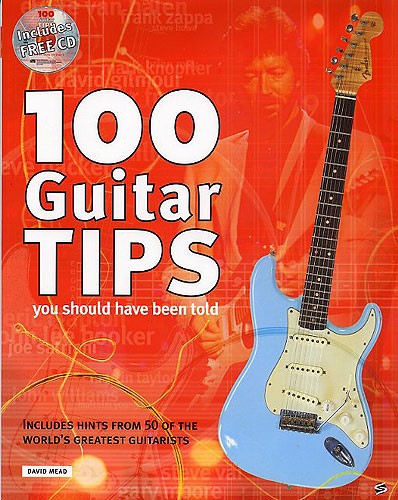
100 GUITAR TIPS MEAD LIBRO CD TABLATURE rhythm lead tecnica scale pentatonic improvisation

100 GUITAR TIPS YOU SHOULD HAVE BEEN TOLD. David Mead. CD TABLATURE

LIBRO DI MUSICA CON CD, SPARTITI PER CHITARRA. ACCORDI, TABLATURE.

100 Tips for Guitar You Should Have Been Told
Series: Music Sales America
Publisher: Music Sales America
Format: Softcover with CD - TAB

Author: David Mead

Essential information and tips to become as great as the professionals. David Mead shares his expert knowledge, revealing the secrets of the playing styles of some 50 great guitar heroes including Eric Clapton, David Gilmour and Peter Green. Lessons include reading tablature, rhythm work, lead techniques and tricks, scales and pentatonics, improvisation, and solo building. An accompanying CD is packed with examples to help along the way.

Inventory #HL 14036723
ISBN: 9781860742958
UPC: 752187438625
Publisher Code: SMT1760
Width: 8.5"
Length: 11.0"
120 pages

Prezzo: €24,99
€24,99

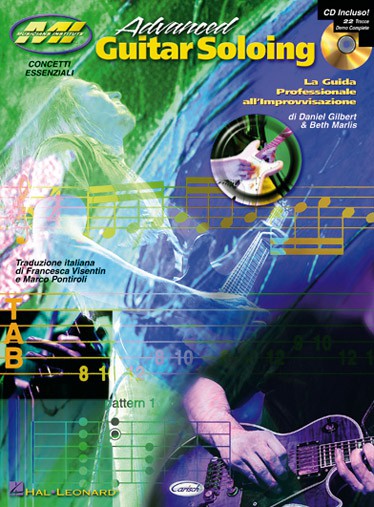
ADVANCED GUITAR SOLOING Professional Improvisation Musicians Institute CD CHITARRA METODO

ADVANCED GUITAR SOLOING, The Professional Guide to Improvisation. Musicians Institute. Daniel Gilbert - Beth Marlis . SHEET MUSIC BOOK WITH CD & GUITAR TABLATURE .  

LIBRO METODO DI MUSICA ROCK JAZZ , CON CD . 

SPARTITI PER CHITARRA : 

ACCORDI, PENTAGRAMMA, TABLATURE . 

IN ITALIANO


The Professional Guide to Improvisation

Series: Musicians Institute Press
Publisher: Musicians Institute Press
Softcover with CD - TAB
Composer: Beth Marlis
Composer: Daniel Gilbert

Designed from MI core curriculum programs, this follow-up to the bestselling Musicians Institute title Guitar Soloing offers advanced players a great guide to mastering the art of melodic improvisation. The CD includes 22 tracks for demonstration and play-along, and the instruction covers scales, modes, arpeggios, technique, creativity and visualization exercises, exploring rock, blues, jazz and other styles of music, as well as sequences, phrases and licks. 96 pages.

Questo libro (continuazione di Guitar Soloing) è un passo successivo, una guida avanzata per imparare l'arte dell'improvvisazione melodica.

Il CD include 22 dimostrative e play-along.

Scale, arpeggi, modi, tecnica, creatività e esercizi di visualizzazione.

Rock, blues, jazz e altri stili.

Sequenze, frasi e licks.

in italiano.

Introduzione
Questa libro è una guida per imparare e approfondire I'arte dell'improvvisazione sulla chitarra a livello professionale. Due dei migliori insegnanti del Musician Institute hanna redatto questa metoda completo e progressivo per sviluppare la musicalita, per essere in grado di suonare assoli di qualità professionale in qualsiasi stile. Ciascun capitola offre diagrammi, esercizi, tecniche, licks e suggerisce come applicare i concetti presentati. Include inoltre sedici licks e sei assoli - uno all'inizio di ciascuna traccia. Questa Iibro offre un approccio avanzato per capire e usare la tastiera in modo creativo! Può essere utilizzato come continuazione dei concetti introdotti nel precedente libra "Guitar Soloing", a come ulteriore insegnamento per il chitarrista esperto. Prendetevi tutto il tempo necessaria e suonate come preferite, capitolo after capitolo. Buon sound.

Continuazione 

Gli Autori

Daniel Gilbert e un chitarrista originario di New York che lavora al Musician Institute dal 1979. Ha scritto la maggior parte del curriculum chitarristico utilizzato nella scuola, come Single String Improvisation, Funk Rhythm Guitar e Applied Technique. Oltre alia frenetica attivita in sala di registrazione, Daniel continua a suonare nei locali, a tenere seminari dalla California al Giappone, dalla East Coast all'Europa. AI momenta sta lavorando al suo secondo album di musica strumentale rock, jazz e blues. (II suo primo album "Mr. Invisible", e distribuito in Europa).

Beth Marlis e la Direttrice Didattica del dipartimento del GIT (Guitar Institute of Technology), di cui e stata istruttrice dal 1987. Ha un Master di Musica dall'USC, una specializzazione (B.A. n.d.t.) dall'UC di Saota Cruz, ed e una laureata ad Honorem del GIT. Durante il suo stage, ha suonato can diversi artisti come Harold Land, Brownie Mc Gee, Louise Bellson, Helen Reddy. Ha partecipato a diversi video musicali, progetti in studi di registrazione e film, mantenendo la sua carriera come professionista a Los Angeles.

Dan e Beth inoltre sona co-autori del libra/CD Guitar Soloing pubblicato dalla Hal Leonard. Li potete inoltre vedere sui DVD didattico omonimo.


Esecuzione di Accordi
Appartenenti alla Scala
Obbiettivi:
• Comprendere e applicare il concetto di scala-accordo su progressioni di accordi.
ESERCIZIO 1: Esercizio di Fraseggio
Una trappola diffusa nell'improvvisazione è l'utilizzo di valori ritmici limitati come base per i fraseggi.
I chitarristi spesso riempiono intere misure con sedicesimi fino alla fine dell'assolo, senza note più lunghe che rompano la monotonia. Per evitare questo inconveniente, focalizzare sull'utilizzo di uno o due passaggi ritmici nei motivi. Provare questo esercizio, che usa modulazione ritmica, per sviluppare l'abilità di passare fluidamente da valori di note brevi a pifl lunghi. Applicare anche delle melodie o usare piccoli segmenti nell'improvvisazione per modulare ritmicamente:

Pensiero Accordo-Scala
Fino ad ora, abbiamo ampiamente utilizzato il centro tonale per improvvisare sulle progressioni - cioè, raggruppando accordi adiacenti in una scala e usandola su tutti gli accordi per produrre melodie.
Interscambio modale e l'armonia dominante secondaria sono varianti dell'esecuzione basata sul centro tonale.
Nell'esecuzione accordo-scala, si sceglie una scala per ciascuna progressione di accordi basata sul suono dell'accordo stesso (estensioni, alterazioni, funzione nella progressione, tipo di suono, ecc.). Questo approccio può funzionare bene quando l'armonia di una progressione non si adatta prontamente in un approccio a centro tonale. Può anche funzionare come modo alternativo per suonare su una progressione di tipo centro tonale. Un sistema non è migliore dell'altro; sono semplicemente due tipi di approccio che portano l'improvvisatore a scelte diverse di note. Idealmente, entrambi gli approcci sono a disposizione del musicista.

Relazioni Accordo Scala
Vi sono diversi testi sull'improvvisazione basati su questo approccio, e cominciano tutti con una tavola di relazioni. Questa tabella deve essere utilizzata come punto di riferimento fino a che la scelta di scale diventa una seconda natura:

Aggiungere un po' di
Sapore: la Miscela Perfe
Obbiettivi
• Imparare a usare l'anacrusi e i fili in modo utile.
• Imparare i modi della scala minore armonica e melodica.

Anacrusi (Pickup)
L'Anacrusi è una o un gruppo di note poste sul tempo debole di una battuta (od in levare) che
precedono quelle di inizio della battuta successiva (poste sul tempo forte). Nella musica leggera sono normalmente utilizzati per creare:
1. Una breve introduzione per iniziare una canzone.
2. Un modo per collegare sezioni diverse di un brano (strofa, ritornello, bridge, ecc.).
3. Un "gancio" ricorrente che si può ripetere in diversi punti all'interno del brano o dell'assolo.
Più spesso, l'anacrusi prepara l'ascoltatore all'idea successiva del brano, anche se a volte agisce da punto di contrasto. Che cosa determina quale tipo di pickup utilizzare? Le considerazioni stilistiche sono importanti per scegliere l'approccio migliore e creare una buona idea.
Ecco allora alcune idee possibili per preparare l'assolo o la melodia che si potrebbe voler suonare sopra una progressione di accordi slash (la progressione di Accordi del Capitolo 16). Le considerazioni stilistiche valgono per sonorità blues e Misolidie. Provare a continuare con un assolo basato sulle seguenti idee:
È inoltre molto comune non suonare l'accordo V7 che precede la tonica (o primo accordo) della frase, sezione o tema. Ecco due esempi: nel primo, si utilizza il Si7 che prepara all'accordo di Mi. Il secondo esempio utilizza un arpeggio diminuito 7b9.


Indice: 

Introduzione 

Gli Autori 
Interscambio Modale 
La Scala Minore Melodica
La Scala Minore Frigia e la Scala Locria 
I "Double Stop" 
La Scala Lidia 
La Scala Lidia Dominante 
La Scala Alterata 
Gli Accordi Dominanti 
Dominanti Secondarie in Tonalita Maggiori 
Dominanti Secondarie in Tonalita Minori 
I Cromatismi 
La Scala Esatonale e l'Arpeggio Aumentato 
I Suoni Diminuiti 
Gli Accordi Slash 
Esecuzione di Accordi appartenenti alia Scala 
Aggiungere un po' di sapore: La Miscela Perfetta 
Come assemblare tutto il materiale presentato .
Epilogo
Notazione per Chitarra
Prezzo: €29,99
€29,99
Condividi contenuti