LIBRO CON CD

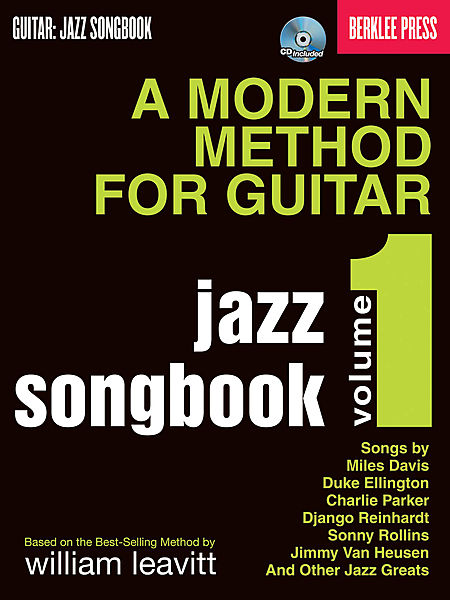
BEGINNING CHITARRA JAZZ JODY FISHER Livello LIBRO CD TABLATURE SETTIMA DOMINANTE-CROMATICA

BEGINNING CHITARRA JAZZ, JODY FISHER. CD TABLATURE

IN ITALIANO

METODO COMPLETO PER CHITARRA JAZZ

LIVELLO BASE, NUOVA EDIZIONE

LIBRO DI MUSICA, SPARTITI PER CHITARRA CON CD E TABLATURE. 


Edizione Aggiornata del testo ideale per muovere i primi passi nel mondo del jazz. I neofiti della chitarra troveranno tutte le informazioni necessarie per iniziare uno studio serio e approfondito del genere; i chitarristi provenienti da altre aree stilistiche (rock, blues ecc.) disporranno finalmente di un metodo chiaro e lineare, che con semplicità e immediatezza aprirà loro le porte del jazz. Gli argomenti trattati sono: teoria fondamentale, accordi (dalle triadi a quelli estesi), il pensiero tonale, i modi derivati dalle scale maggiori. Il tutto sia dal punto di vista armonico, sia da quello solista. In chiusura un capitolo dedicato al corretto metodo di studio.

Per iniziare a suonare la chitarra Jazz. Scale pentatoniche, cromatiche, maggiori, minori, gli accordi in diverse posizioni, il voicing, accordi di sesta, settima, nona, undicesima, tredicesima, diminiuti, aumentati, armonizzazzioni della scala maggiore, scale modali, pezzi completi e esercizi. 


INTRODUZIONE

Il libro che state guardando è il primo di una serie di quattro volumi che insegnano a suonare lo chitarra jazz. Negli anni, solo gli studenti più appassionati e più dedicati sono riusciti a padroneggiare questa forma d'arte musicale molto espressiva. Nonostante le montagne di libri didattici a disposizione, lo maggior parte degli studenti rimane all'oscuro su alcuni concetti basilari che riguardano il jazz e lo chitarra jazz. Credo che questo sia dovuto al fatto che pochi insegnanti o autori forniscono una panoramica adeguata di quello che una persona ha bisogno di imparare. Gli studenti imparano alcune scale, qualche lick, un arpeggio o due, qualche accordo, e finiscono per chiedersi come unire il tutto. Il mio approccio in questa serie è quello di cominciare con alcune informazioni basilari, e poi procedere logicamente, parlando dei concetti armonici, melodici e tecnici, per avere un quadro completo della situazione. Lo studio del jazz è un obbiettivo a lungo termine di tutta una vita, ma non ci vuole tutta lo vita per imparare i concetti fondamentali e iniziare a suonare! Questa serie di libri è per gli autodidatti, ma anche per coloro che studiano con un insegnante. Questi libri possono anche essere usati come fonte di consultazione. Seavete appena cominciato lo studio del jazz, dovreste certamente cominciare con questo libro, e procedere lezione dopo lezione e libro dopo libro. Se invece studiate da un po', potete sentirvi liberi di saltare qui e là, sebbene dovreste cercare di non perdere nessuna informazione importante lungo il tragitto. Questi libri sono diversi dagli altri per un'altra ragione. In passato, avevate bisogno di libri diversi per studiare l'improvvisazione, lo melodia degli accordi, e altri argomenti. Nonostante questa collana non pretende di enunciare tutto, essa combina comunque lo maggior parte degli argomenti importanti. Ciascun capitolo è diviso in lezioni, e ciascuna lezione è divisa in due sezioni separate. Le sezioni "A" si occupano di argomenti armonici e degli accordi, le sezioni "B" danno informazioni sull' improvvisazione. Ogni pagina e ogni argomento può – e dovrebbe - essere supportato da informazioni ulteriori, provenienti da altri libri, o da altri insegnanti.

Se siete prevalentemente interessati agli accordi e all'armonia, sentitevi liberi di procedere solo attraverso le sezioni A. Se l'improvvisazione è il vostro interesse principale, allora studiate le sezioni B. Dal momento che lo maggior parte delle sezioni corrispondono una all'altra, studiarle entrambe potrebbe essere il corso più completo. La sezione "Coda" alla fine del libro contiene delle informazioni che saranno utili nell'area della tecnica, dell' allenamento e altri concetti correlati al jazz. Dovreste consultare spesso questa sezione, perché troverete senza dubbio dei suggerimenti e dei consigli che riguardano le aree di studio su cui state lavorando. Comunque voi decidiate di usare questi libri, è mio desiderio più sincero che voi impariate e amiate il jazz e contribuiate alla sua vita.


INDICE

PROPOSITO DELL'AUTORE

INTRODUZIONE


Capitolo 1: Iniziamo

Accordi in Posizione Aperta,

Accordi Barre,

Leggere la Musica e la Tablatura,

Progressioni Blues e Pennate,

Diteggiature delle Scale Pentatoniche


Le Lezioni "A"

Accordi e Armonia


Capitolo 2

Lezione 1A: Teoria di Base

La Scala Cromatica,

La Scala Maggiore,

Armature di Chiave,

Intervalli,

II Circolo delle 4e (o 5e),

Leggere i Numeri Romani


Lezione 2A: Teoria delle Triadi & Diteggiature in posizione di Tonica

Triadi Minori,

Diminuite e Aumentate, e loro Rivolti,

I 4 Gruppi Principali di Corde,

Diteggiatura delle Triadi in posizione di Tonica,

Studio# 1: Triadi in Posizione di Tonica,


Lezione 3A: Triadi in 1° Rivolto su Quattro Corde

Studio #2: Triadi in 1° Rivolto


Lezione 4A: Triadi in 2° Rivolto su Qualtro Corde

Studio #3: Triadi in 2° Rivolto


Capitolo 3

Lezione 1A: Costruzione di Accordi piu Ampi

Come Funziona la Formula per Accordi piu Ampi

Estensioni,

Rivolti degli Accordi piu Ampi,

Voicings


Lezione 2A: Accordi di 6°

Accordi di 6° Maggiore-33,

Accordi di 6° Minore

Studio #6: Accordi di 6°


Lezione 3A: Accordi di 7°

Accordi di 7° Maggiore-37,

Accordi di 7° Minore

Accordi di 7a Dominante,

Studio #7: Accordi di 7°


Lezione 4A: Accordi di 9°

Estensionie Famiglie di Accordi,

Accordi di 9° Maggiore,

Accordi di 9° Minore,

Accordi di 9° Dominante,

Studio#8: Accordi di 90-43,

Studio #9: Ancora Accordi di 9a


Lezione 5A: Altri Accordi che Dovete Sapere

Accordi di 11a Minore-46,

Accordi di 11° Dominante

Accordi di 13° Maggiore-47,

Accordi di 13° Minore

Accordi di 13° Dominante-48,

Accordi Maggiore Add9

Accordi Minori Add9-48,

Accordi Min75 (Semidiminuiti)


Le Lezioni "B"

Improvvisazione

Lezione 1B: Diteggiature delle Scale Maggiori

Teoria delle Triadi Maggiori

Rivolti delle Triadi Maggiori


Lezione 2B: Ancora due Diteggiature della Scala Maggiore


Lezione 3B: Ancora due Diteggiature della Scala Maggiore


Lezione 4B: Studio sulla Scala Maggiore

Studio #4: La Scala Maggiore


Lezione 1B: Studio sulla Scala Maggiore

Studio #5: La Scala Maggiore


Lezione 2B: Collegare Ie Scale Maggiori


Lezione 3B: Scale di Tre Oltave


Lezione 4B: Ancora Scale di Tre Ottave


Le lezione “A”

ACCORDI E ARMONIA


Capitolo 3, continua

Accordi di 7a Diminuita,

Accordi Sospesi di 7° Dominante,

Accordi Minori (Maj7),

Accordi di 7° Dominante Aumentata,

Studio #10: Ancora Accordi


Capitolo 4

Lezione 1A: La Scala Maggiore Armonizzata


Lezione 2A: Scale di Accordi Maggiori


Lezione 3A: Ancoro Scale di Accordi Maggiori


Lezione 4A: Ancora Scale di Accordi Maggiori


Capitolo 5

Lezione 1A: I Numeri Romani e la Trasposizione

Lezione 2A Ancoro sui Numeri Romani e la Trasposizione

Lezione 3A Scale Verticali di Accordi

Lezione 4A: Ancora Scale Verticali di Accordi.

Lezione 5A: Ancora Scale Verticali di Accordi


LE LEZIONI “B”

Improvvisazione


Lezione 5B: Due Brani Usando la Scala Maggiore

Noah's Groove,

Blues for Maggie


Lezione 1B: Improvvisare con la Scala Maggiore

Di Che Cosa Si Tratta,

Pensiero Diatonico


Lezione 2B: Due Brani Costruiti sulla Scala Maggiore

Ruby, My Deerfly,

Fly Like a Beagle


Lezione 3B: Ancora Due Brani sulla Scala Maggiore

Noisy Nights,

The Creature


Lezione 4B: Ancora Due Brani Sulla Scala Maggiore

Julie in Wonderland,

Samba de Shauna


Lezione 1B: I Modi della Scala Maggiore - I Fondamenti ...

Lezione 2B: I Modi Della Scala Maggiore -

Diteggiature Parallele - di Approccio

Re Dorico,

Mi Frigio,

Fa Lidio

Sol Misolidio,

La Eolico,

Si Locrio,

Progressioni per Esercitarsi


Lezione 3B: 1Modi della Scala Maggiore -

Approccio Derivato

Lezione 4B: Due Brani Modali

Nosh 4 Josh,

Chocolate Tuna Enchiladas


Lezione 5B: Due Brani Modali/Diatonici

Modelicious,

Blue Tofu


CODA - Un Medley di Consigli e Conceitti Musicali ;

Come Funziona il Jazz


Tecnica

Tecnica di Base della Destra e della Sinistra,

Postura,

Tecnica di Pennata di Base,

Accordi Fingerstyle,

Tecnica Dita / Plettro


Allenamento

II Vantaggio di Esercitarsi Lentamente,

Imparare Accordi Difficili e come Cambiare gli Accordi,

Imparare Ie Scale Due Corde per Volta,

La Funzione delle Posizioni Bloccate,

Allenarsi sulle Scale

Maggiori,

Limitare le Opzioni Ritmiche,

Uso degli Schemi Melodici


Assoli

Forma: Usare un'Apertura,

un Corpo e una Conclusione,

Forma Basata su Tema e Variazione

Uso della Ripetizione negli Assoli


Epilogo

È disponibile un CD per ciascun libro in questa serie. Questi dischi possono rendere l'apprendimento più facile e più divertente. Questo simbolo apparirà vicino a ciascun esempio contenuto nel CD. Usatelo per capire che state catturando la sensazione degli esempi, interpretando i ritmi correttamente, e così via. I numeri di traccia sotto al simbolo corrispondono all'esempio che volete ascoltare. La traccia 1 vi aiuterà ad accordarvi col CD. Buon divertimento!


Prezzo: €21,99
€21,99

SLASH YOUNG GUITAR CD TABLATURE nightrain-sweet child o' mine-paradise city-GUNS 'N' ROSES

SLASH, YOUNG GUITAR EXTRA 12. LIBRO CD TABLATURE

LIBRO DI MUSICA ROCK CON CD , 

SPARTITI PER CHITARRA E VOCE CON: ACCORDI, PENTAGRAMMA, TABLATURE. 

36 Tracce audio, discography completa di tutte le partecipazioni anche quella del disco "Dangerous" di Michael Jackson del 1991 nei titoli "Black or white" e "give it to me", guitar gear, nel libro anche:

- nightrain

- sweet child o' mine

- paradise city.


LIBRO, CD E TABLATURE

Prezzo: €39,99
€39,99

SUPERSONIC GUITAR GROOVES Jeremy Sash CD GUITAR TABLATURE METAL CROSSOVER AFRICAN RHYTHM JAZZ

SUPERSONIC GUITAR GROOVES, Jeremy Sash. CD TABLATURE

Product Description:
The goal of this book is to promote rhythmically and harmonically challenging phrases and licks in order to give you an authentic inside view on seven selected styles. Live or in a recording session, playing rhythm is the guitarist's main duty. This makes it even harder to understand why most guitarists' rhythm work (frankly) sounds rather unrehearsed and colorless.

Especially since working with drum machines and samplers has become a vital part of musical performance, a good sense of rhythm, and some cool licks may just be your "key to success."

Format: Book/CD Set
ISBN: 0786652594
UPC: 796279066914
ISBN13: 9780786652594
Voggenreiter
136 PAGES


99 PRO TRACKS INCLUDED
OVER 100 GROOVES FOR ALL STYLES:
ROCK - POP - WAVE
METAL - CROSSOVER
FUNK – SOUL
RHYTHM – BLUES
LATIN – FLAMENCO
AFRICAN - JAZZ

You could improve your rhythmical abilities with some simple methods:
- Please stop practicing rhythm-playing without a metronome!
This unstable ''do-it-yourself-groove" will get you nowhere. Use your
time more effectively: you haven't got enough of it anyway (or does
your girlfriend (boyfriend) have 17 favorite hobbies?).

- Set your metronome (please do not use manual ones) so that it clicks
on beats 2 and 4. You are emphasizing beats 1 and 3 yourself. Place a
piece of cardboard under your foot and tap the clicks of the metronome.
If you can't detect the metronome's click anymore, that's a sign
that you're playing "in time". Isn't it simple to produce a feeling of success?

It is extremely important to be totally Jltight". But there are also situations
in which a more Jllaid back" feeling is more appropriate. It is my guess
that most of you play more ahead of the beat" than ''laid back"!
Your adrenaline takes care of this and mostly you can't help it. That's why
you should also practice playing ''laid back":
Tap your foot a little ''behind" the beat.

- Dynamics! Do yourselves a favor and watch your dynamics while playing.
Imagine talking monotonously, without constantly raising or lowering
your voice. Would this sound very passionate? Well that's how you
will sound if you do not make dynamics a part of your playing.

- Most of the time, a bass or keyboard player will accompany you. For
this reason, it's better to avoid ''root" voicings whose highest and
lowest notes get in your fellow musicians' way. They will do everything
for you if you avoid clashing with them on every other voicing (remember:
you might need some extra hands next time you're moving).
It doesn't matter what you're playing. It's HOW you play it!
- Not 150 notes per second will do the trick, but the ''attitude" and feel
behind the notes.
- Being 120% convinced of what you're playing makes the difference
(often referred to as ''tone").


CONTENTS
"SUPERSONIC" THOUGHTS .

GROOVE .
NOTES .
SOUND .
WARMING UP .
NOTATION .
CD .

CHAPTER 1 - RHYTHM & BLUES .
CHAPTER 2 - JAZZ .
CHAPTER 3 - FUNK & SOUL .
CHAPTER 4 - ROCK & POP & WAVE .
CHAPTER 5 - METAL & CROSSOVER .
CHAPTER 6 - LATIN & FLAMENCO .
CHAPTER 7 - AFRiCAN .

THANKS .
LAST WORDS .

Prezzo: €21,99
€21,99

GUITAR JOURNALS BLUES. Mel Bay CD TABLATURE

GUITAR JOURNALS BLUES. 120 pagine. CD TABLATURE

Product Description:
Mel Bay's latest series, Guitar Journals, is the ultimate eference guide of studies and solos in several different genres. This fantastic blues volume contains exercises on barre chords, power chords, progressions, strum patterns, hammer-ons, pull-offs, bends, double stops, scales, licks and also a wide variety of tunes. Perfect for the student to professional musician's everyday use! All music in notation and tablature. Hard cover, covered spiral binding and premium stock paper make this a volume so beautifully printed and bound and containing so much valuable information that you will treasure it for years to come!

- Ultimate guide of blues exercises and solos and perfect reference manual for everyday use
- Barre chords, power chords, progressions, strum patterns, hammer-ons, pull-offs, bends, double stops, scales, licks AND a wide variety of tunes
- Ideal for the student to professional musician
- Beautiful hard cover with covered spiral binding and premium paper
- Companion recording
- In notation and tablature


Format: Book/CD Set
Series: Guitar Journals

Contents:


Rhythm Guitar
The Blues Progression
Like A Shadow
Strum Patterns
Baby Don't Love Me
6/8 and 12/8 Blues
Barre Chords
Power Chords
Smithfield Boogie
Good Mornin Blues
Midnight Drive
Blues Comping
Why Do You?
Doubling The Bass Line
Turnarounds
The Tie
The Hammer-On
The Pull-Off
The Slide
The Bend
Double Stops
The Blues Scale
Mixolydian Mode
Blues Licks
The Easy Chair
Slow Blues Solo
Rhythm and Brews
Fingerpicking Solos
Steady Bass Solo No. 1
Steady Bass Solo No. 2
Alternating Bass Style
Blues In E
Boogie Woogie Bass Style
Boogie Woogie Solo
Frankie and Johnny
Bill Bailey
Franklin Blues
Bob's Blues
Frogs For Snakes
Hurt So Good
St. James Infirmary
Skip On Home
Slide Guitar
Motherless Children
Good Morning Little School Boy
Open G Tuning
Burning House
Jubilee Jamboree
Open E Tuning
Red and Blue
Still Staggerin
Black-Jack
L & N Blues
Kick Around Rag
Goin To Bullhead City
Tywhoppity

Prezzo: €24,95
€24,95

CHRISTMAS MUSIC FOR ELECTRIC GUITAR John Kiefer LIBRO CD TABLATURE SCHIACCIANOCI CIAIKOWSKY

CHRISTMAS MUSIC FOR ELECTRIC GUITAR, John Kiefer. Quattro miniature da Tchaikovsky Nutcracker Suite, Johann Pachelbel Canon, ecc. CD TABLATURE.

LIBRO DI MUSICA CLASSICA, PER CHITARRA ELETTRICA CON CD.  
SPARTITI PER CHITARRA CON PENTAGRAMMA E TABLATURE. 

Libro contiene principalmente la musica Natalizia classica, trascritta per una, due, o tre chitarre elettriche.Queste trascrizioni sono dotate di notazioni standard e tablature e predisposte per essere eseguite con pick, o hybrid picking. Anche se certi pezzi arrangiate per la chitarra standard, altri richiedono la chitarra elettrica o la chitarra con cutaway. La registrazione presenta l'esecuzione di tutti brani del libro con una e massimo otto chitarre che suonano contemporaniamente. Le ultime quattro tracce del CD presentano certe tracce precedenti senza la prima chitarra così usando questi tracce uno può fare esercizi o suonare con CD. Le brani selezionati sono: "Carol of the Bells", Quattro miniature dal "Lo Schiaccia Noci" di Tchaikovsky , Kannon di Johann Pachelbel e altri.


Product Description:This book features Christmas music of primarily classical origins, transcribed for one, two, or three electric guitars. These transcriptions were notated in standard notation and tablature and are meant to be performed with a pick, or using hybrid picking. Even though a few of the pieces may be played on a standard guitar, the others require an electric guitar or a guitar with a cutaway. The recording features performances of all of the music in the book with anywhere from one to as many as eight guitars sounding simultaneously. The last four tracks of the CD feature certain previous tracks with the first guitar omitted. By using these tracks as accompaniment one can practice or perform with the CD. Selections include Carol of the Bells, Four miniatures from Tchaikovsky's Nutcracker Suite, Johann Pachelbel's Canon, and more.


Product Number: 98673BCD
Format: Book/CD Set

Prezzo: €21,99
€21,99

THE SALUTATION Collection Christmas Carols from England Duck Baker CD TABLATURE FINGERSTYLE GUITAR

THE SALUTATION, A Collection of Christmas Carols from England, Ireland, Scotland, Sweden, Germany, Italy and France, ARRANGED FOR FINGERSTYLE GUITAR, Duck Baker. SHEET MUSIC BOOK WITH CD & GUITAR TABLATURE .

LIBRO DI MUSICA FOLK, CON CD .

SPARTITI PER CHITARRA :

PENTAGRAMMA E TABLATURE.


Product Description:
This collection of carols arranged for guitar solo brings together twenty-four melodies that have had broad appeal through the ages. They were a spontaneous expression of musical joy that occurred over much of northern Europe in the fifteenth century, coinciding with the dawning of the modern age and the ending of the long medieval night. The selections include universal favorites, some tunes which are popular in their native lands and reasonably well-known elsewhere, and others which are unfamiliar even in their homelands. Some familiar texts, including "Away in a Manger" and "Angels from the Realms of Glory," have been set to different tunes. Notes on the origin of each tune are included. Written in notation and tablature. The companion CD features performances of all of the tunes, with some grouped into medleys.

Product Number: 99815BCD
Format: Book/CD Set
ISBN: 078662602X
UPC: 796279040402
ISBN13: 9780786626021
Series: Non-Series
Publisher: Mel Bay Publications, Inc.

Contents:
Song Title: Composer/Source:
A Virgin Most Pure arr. Duck Baker
Angelus Ad Virginum arr. Duck Baker
Es Ist Ein' Ros' Entsprungen arr. Duck Baker
Furry Day Carol arr. Duck Baker
Good Christian Men Rejoice arr. Duck Baker
I Saw Three Ships arr. Duck Baker
Il Est Né arr. Duck Baker
In Bethlehem arr. Duck Baker
Let All Earthly Flesh Keep Silent arr. Duck Baker
Noël Nouvelet arr. Duck Baker
O Come, O Come Emmanuel arr. Duck Baker
Patapan arr. Duck Baker
Rorate arr. Duck Baker
The Bagpipers' Carol arr. Duck Baker
The Blessed Virgin's Lullaby arr. Duck Baker
The Boys' Carol arr. Duck Baker
The Holly and the Ivy arr. Duck Baker
The Salutation arr. Duck Baker
The Snow Lay on the Ground arr. Duck Baker
The Wexford Carol arr. Duck Baker
Trettondedagsmarschen arr. Duck Baker
What Is This Fragrance? arr. Duck Baker
While Shepherds Watched Their Flocks arr. Duck Baker

Prezzo: €45,99
€45,99

25 GREAT COUNTRY GUITAR SOLOS Dave Rubin-Hal Leonard CD TABLATURE SPARTITI LIBRO

25 GREAT COUNTRY GUITAR SOLOS. CD TABLATURE

LIBRO DI MUSICA COUNTRY CON CD.

SPARTITI PER CHITARRA.

ACCORDI, PENTAGRAMMA E TABLATURE.

Transcriptions · Lessons · Bios · Photos
Series: Guitar Book
Softcover with CD - TAB
Author: Dave Rubin

From Merle Travis and Chet Atkins to Vince Gill and Brad Paisley, this book/CD pack offers an inside look at the genesis of country guitar. Provides solo transcriptions in notes & tab, lessons on how to play them, guitarist bios, equipment notes, photos, history, and much more. The CD contains full-band demos of every solo in the book, and features Amazing Slow Downer software so Mac and PC users can adjust the recordings to any tempo without changing pitch!

Country music has come a long way since Ernest Tubb's "Walking the Floor Over You," featuring Fay "Smitty" Smith (staff guitarist at Dallas radio station KGKO) on electric guitar, became a hit in 1941. At that time, amplified guitars were not allowed at the famed Grand Ole Opry, but Nashville's conservative powers that be recognized commercial potential when they heard it, and so lifted that antiquated ban in 1943. And when the Francis Craig Orchestra likewise passed that magic million mark with "Near You," in 1947, Nashville's modem era commenced.

The guitar has always the backbone of country music, even when it was used mainly to provide rhythm for fiddlers. But with the emergence in the late 1940s of Merle Travis and Chet Atkins-electric country guitar's foremost pioneers-the instrument was suddenly elevated to a new iconic status. In the early 1950s, pickers such as Jimmy Bryant, Joe Maphis, James Burton, and Hank Garland, all of who were blessed with amazing chops, far outpaced blues and many jazz musicians. And while that esteemed group was clean and fast, each successive generation of players, from Jerry Reed and Albert Lee to Jerry Donahue, Danny Gatton, and Brent Mason, among others, were often even cleaner and faster.

Concomitantly, rock 'n' roll and rockabilly gained footing, and over time infiltrated the somewhat staid Nashville culture. This cultural phenomenon most significantly expanded country music's instrumental parameters, manifesting itself not only in longer and more aggressive distorted guitar solos, but also in more powerful chord progressions extending beyond the genre's typical I-IV-V changes and 2/4 time signatures. By the 1980s, country music made the leap from honky tonks and the Opry to arenas and stadiums, starring blackhatted "cowboys" with sharp-shooting lead guitarists. Purists may have been given pause, but the effect has been one to give country music heretofore undreamed of popularity among a younger demographic while providing a smooth test track for Nashville cats to bum the windings off their strings.

About the CD

This book's accompanying audio CD includes all twenty-five solos performed note for note with a full band and is playable on any CD player. For PC and MAC computer users, the CD is enhanced with Amazing Slow Downer software so you can adjust the recording to any tempo without changing pitch!

The time code shown at the start of each solo transcription indicates the point at which the solo begins in the original recording.

All music on the CD performed by:

Guitar: Doug Boduch

Bass: Tom McGirr and Eric Hervey

Keyboards: Warren Wiegratz

Drums: Scott Schroedl

Recorded, mixed. and mastered by Jim Reith and Jake Johnson.


Inventory # HL 00699926
ISBN: 1423426401
UPC: 884088145125
Width: 9
Length: 12
104 pages


Contents:
 

SONG - GUITARIST - YEAR

Smoke, Smoke, Smoke (That Cigarette) - Merle Travis - 1947
Sugarfoot Rag - Hank Garland - 1949
Golden Rocket - Hank Snow - 1950
Chinatown, My Chinatown - Chet Atkins - 1953
Foggy Mountain Special - Lester Flatt - 1954
Stratosphere Boogie - Jimmy Bryant - 1954
Flying Fingers - Joe Maphis - 1957
Folsom Prison Blues - Luther Perkins - 1957
Hello Mary Lou - James Burton - 1961
I've Got a Tiger by the Tail - Don Rich - 1965
The Only Daddy That Will Walk the Line - Wayne Moss - 1968
Honky Tonk Night Time Man - Roy Nichols - 1974
East Bound and Down - Jerry Reed - 1977
Country Boy - Albert Lee - 1979
Highway 40 Blues - Ray Flacke - 1982
Mountain Music - Jeff Cook - 1982
That's the Way Love Goes - Reggie Young - 1983
Please, Please Baby - Pete Anderson - 1987
Elmira St. Boogie - Danny Gatton - 1991
Here's a Quarter (Call Someone Who Cares) - Wendell Cox, Richard Bennett - 1991
Mercury Blues - Brent Mason - 1992
One More Last Chance - Vince Gill - 1992
Hellecaster Theme - Will Ray - 1993
The Claw - Jerry Donahue - 1998
The World - Brad Paisley - 2005

Conclusion
About the Author

Guitar notation Legend

Prezzo: €26,99
€26,99

DADGAD ENCYCLOPEDIA Jim Goodin CD TABLATURE SPARTITI CHITARRA LIBRO ACCORDATURA LIBRO

DADGAD ENCYCLOPEDIA, JIM GOODIN. LIBRO CON CD E TABLATURE

LIBRO DI MUSICA PER CHITARRA IN ACCORDATURA DADGAD, CON CD.
SPARTITI CON ACCORDI, PENTAGRAMMA E TABLATURE.

Product Description:
Whether guitarists are new to open-tunings or already working with them, fingerstyle specialist Jim Goodin offers a progressive look at the popular D-based harp-like tuning. Classical, Celtic, blues, folk, gospel and several original compositions are represented in the 15 notation/tablature arrangements each arranged proportionately to offer beginning, intermediate and advanced fingerstyle players opportunities to grow their technique. Interspersed with the song arrangements are sections featuring major and minor scale studies and popular folk and jazz style chords. Includes a 15-track CD produced at Will Ackerman's Imaginary Road Studio where the book's arrangements were recorded. To round out this robust offering Jim includes thoughts about the origin of DADGAD, the songs, his technique with special how-to features such as one on playing natural and harp style harmonics and recommended listening CD's to expand listening knowledge on this tuning.

Product Number: 99934BCD
Format: Book/CD Set
ISBN: 0786676159
UPC: 796279103374
ISBN13: 9780786676156
Series: Encyclopedia
Publisher: Mel Bay Publications, Inc.
Date Published: 1/16/2008
184 PAGES

Contents:

Opening Thoughts
Tuning Techniques - from “standard (EADGBE)” to DADGAD in seconds
Familiar Chords in DADGAD
Evolving the Fretboard I - The Majors
Passage (A Simple Study) – CD track 1
Fairest Lord Jesus – CD track 2
The Pretty Girl Milking the Cow – CD track 3
Who was Turlough O’Carolan?
Si Beag Si Mhor – CD track 4
Planxty Safaigh – CD track 5
Chords of Change, Chords of Growth
Evolving the Fretboard II – The Minors
Quiet Moments – CD track 6
Moroccan Bluz – CD track 7
Thoughts on Music and Seeking Your Voice
(Floating) About the Clouds – CD track 8
For Blues, for Jazz and I-IV-V
Evolving the Fretboard III - The Majors
Playing Harmonics - Natural and Artificial
Quarrel with the Landlady and Standing at the Gate – CD track 9
Arkansas Traveler - CD track 10
Chords of Color
Evolving the Fretboard IV - The Minors
Farewell to Music - CD track 11
Hypnosis - CD track 12
Experience a Jim Goodin Guitar Workshop
Prelude in G Major - CD track 13
The Eagle - CD track 14
Sleep My Wee Child - CD track 15
Suggested Listening
About Jim Goodin
Acknowledgements
The Making of the CD
A Note About the Photographs
Closing Thoughts

Prezzo: €31,99
€31,99

HALL JIM A Step-by-Step the Styles and Techniques of a Jazz Guitar Genius Signature Licks CD TABLATURE

HALL JIM, A Step-by-Step Breakdown of the Styles and Techniques of a Jazz Guitar Genius, Signature Licks.

SHEET MUSIC BOOK WITH CD & GUITAR TABLATURE.

LIBRO DI MUSICA JAZZ CON CD.

SPARTITI PER CHITARRA : 

ACCORDI, PENTAGRAMMA, TABLATURE. 


Series: Signature Licks Guitar
Softcover with CD - TAB
Author: Adam Perlmutter
Artist: Jim Hall

Discover the quiet elegance of one of jazz guitar's most renowned players with this Signature Licks book/CD pack. Each song chapter contains in-depth analysis and audio with slow demos. 80 pages


INTRODUCTION

Jim Hall (1930-) was steeped in classical music before he came to jazz. Hall attended the Cleveland Institute of Music, then moved to Los Angeles, California, where he studied nylon-string guitar with Vincente Gomez. While on the West Coast, he began to make a name for himself as a jazz guitarist, playing in the quintet of drummer Chico Hamilton, from 1955 to 1956, and in the trio of reed player Jimmy Giuffre, from 1956-1959. He also worked with modern improvisers such as pianist John Lewis and alto saxophonist Lee Konitz, and in 1960 toured South America (where he was exposed to bossa nova) with singer Ella Fitzgerald.

Around the same time, Hall moved to New York City, where through several intense collaborations, he was established as one of the world's most sophisticated jazz guitarists. From 1961 to 1962, he was a member of the tenor saxophonist Sonny Rollins's great quartet, with which he recorded the seminal album The Bridge. In the '60s Hall coled a quartet with trumpeter Art Farmer; he also recorded with the quartet of alto saxophonist Paul Desmond and found ideal duet partners in pianist Bill Evans and bassist Ron Carter. With Evans, Hall recorded two albums, Undercurrent (1962) and Intermodulation (1966), two of the most intimate and beautiful recordings in all of jazz. (From Intermodulation, see the transcription of "My Man's Gone Now," on page 34.) It was while performing in these fertile contexts that Hall found his own voice, an understated modern style characterized by melodic finesse, harmonic sophistication, and structural awareness-a logical extension of the language developed by such jazz-guitar pioneers as Charlie Christian, Wes Montgomery, and Django Reinhardt. This approach has been of profound influence to countless modern guitarists, including Hall's student Bill Frisell, who sounds radically different than Hall, but has a strikingly similar guitar conception. Hall's approach is best witnessed on the excellent albums he has recorded under his own name, including Concierto (1975), Jim Hall Live! (1976), and All Across the City (1989), transcriptions from all of which can be found on the following pages.

Besides being one of jazz's premier guitarists, Hall is a celebrated arranger and composer. In 1997, he won the New York Jazz Critics Circle Award for Best Jazz Composer/Arranger; his composition for jazz quartet and string quartet, "Quartet Plus Four," earned the Jazzpar Prize in Denmark, and his works for string, brass, and vocal ensembles can be heard on the albums Textures (1997) and By Arrangement (1998). In 2004, the Baltimore Symphony Orchestra debuted Hall's Peace Movement, a concerto for guitar and orchestra, dedicated to the cause of international harmony. That same year, for all his accomplishments as a composer, arranger, and performer, Hall was named a Jazz Master by the National Endowment for the Arts.

One of Hall's most recent projects, Hemispheres, was recorded with Bill Frisell and features one disc of duets and a second disc that adds the rhythm section of bassist Scott Colley and drummer Joey Baron. The album is available at Hall's Web site where a fan can catch of glimpse of what goes into the creation of the guitarist's recent projects. Meanwhile, when not composing or working with his own trio, Hall-ever the adventurous artist-has been playing with various modern improvisers, including saxophonists Joe Lovano and Greg Osby, and guitarist Pat Metheny. For now in the sixth decade of his career, Hall remains as vital a musician as ever.

DISCOGRAPHY

The selections on the accompanying CD are based on the following recordings:

ALL ACROSS THE CITY-Concord Jazz: "Big Blues"

ALONE TOGETHER-Milestone: "Autumn Leaves," "St. Thomas-

BALLAD ESSENTlAL-Concord Jazz: "Prelude to a Kiss"

CONCIERTO-CTI: "You'd Be So Nice to Come Home To"
(continua)


(All Of A Sudden) My Heart Sings - HAROLD ROME - 1941
Angel Eyes - MATT DENNIS - 1946
Autumn Leaves - JOSEPH KOSMA - 1947
Big Blues - JAMES S. HALL - 1978
My Man's Gone Now - GEORGE GERSHWIN - 1935
Prelude To A Kiss - DUKE ELLINGTON - 1938
St. Thomas - SONNY ROLLINS - 1963
Scrapple From The Apple - CHARLIE PARKER - 1957
Tangerine - VICTOR SCHERTZINGER - 1942
Things Ain't What They Used To Be - MERCER ELLINGTON - 1942 
Without A Song - VINCENT YOUMANS - 1929
You'd Be So Nice To Come Home To - COLE PORTER - 1942


ANGEL EYES
(Jim Hall Live!, 1976)
Words by Earl Brent
Music by Matt Dennis
Figure 3-lntro, Head, and Solo (Chorus 1)
While many of Jim Hall's studio recordings show the guitarist to be thoughtful and
well-mannered, in concert he has been known to play with abandon. This side of Hall can
be heard on Jim Hall Live!, one of his finest live recordings, taken from a series of dates
in 1975 at Toronto's Bourbon Street. The recording finds Hall in top form, paired with
bassist Don Thompson and drummer Terry Clarke.
One of the highlights of the album is a Latin-tinged take of the jazz standard "Angel
Eyes," which was originally a 32-bar AABA song. Hall & Co. double the tune's harmonic
rhythm, so that the form is now 64 bars in length. (A chord that originally occupied two
beats now gets four beats, an entire bar.) Hall starts things off by moving a barred Am7
shape in parallel fashion against the open A string, resulting in some interesting polychordal
harmony, such as the m/A chord (voiced A-A~-m-F, low to high) on beat 1 of bar
2 and the B/A (A-F~-B-m) on beat 1 of bar 4. He also throws various dominant and
diminished chord voicings into the mix, including the partial E7#9 (A~/m-D-G) in the last
part of bar 2 and mo (A~-D-F) on beat 1 of bar 6.
After closing out the intro with the same Am7 chord with which he started, Hall
takes the head (beginning at bar 17). He sticks pretty close to the original melody, adding
his own idiosyncratic touches here and there. One such Hall-ism involves placing an
octave-based idea at the end of a phrase-a striking, broken-octave fill appears in bars
23-24; a variation of this, in bar 39; and, in bar 72, a semi-chromatic descending line
played in fully voiced octaves. Throughout, there's a strong blues feel, especially in bar
32's fill, which comes from the A minor pentatonic scale (A-C-D-E-G), albeit unpredictably
ordered. A subtler touch involves ending certain phrases with a 12th-fret harmonic
on string 5 (see bars 30, 46, and 78), which lends a nice timbral contrast to the fretted
notes.
Beginning in bar 49, Hall uses a neat trick that effectively separates the bridge
from the A-section: while holding selected melody notes (upstemmed), he adds chord
stabs (downstemmed), not unlike a pianist would do with two hands. Also, Hall ventures
a little farther from the melody in this section-in bar 53, check out the improvised, angular
line that begins with a major 7th (B~to A) leap. These unique details give the listener
a taste of what's to come in Hall's excellent solo.
In the first A-section of his first chorus, Hall introduces an A minor pentatonic idea,
and then sees it through various permutations. He keeps it simple here; the only noticeable
jazzy melodic content is the Am11 arpeggio (A-C-E-G-B-D) in bars 108-109.
Throughout, Hall interjects some of the same chord voicings as found in the intro, most
often the E7=9chord. At the same time, he uses space wisely; for example, see the rests
in bars 107-108 and 116-117.
Hall steps out melodically in the bridge of the first chorus. In bars 122-123, he
plays a 6th-based motif that reappears later in the solo, and in bars 125-127, he smoothly
hits a variety of interesting note choices: the 7 (F#) on the Gm7 chord (the absence of
a pianist gives Hall harmonic leeway), the #9 (E~/m) on C7, and the #11 (B) on Fmaj7.
Beginning in bar 128, Hall plays a fleetingly-fingered line involving chromatic lower-neighbor
tones. This leads directly into a witty reference to Duke Ellington's "Raincheck" in bars
129-131. Quotation is an indispensable improvisational tool, and Hall masterfully adjusts
the melodic contour of "Raincheck" to suit the changes at hand, sailing with ease into the
b7 (A) of the B7 chord and the 3rd (G#) of the Emaj7 chord.


THINGS AIN'T WHAT THEY USED TO BE (Jazz Guitar: Jim Hall Trio, 1957)
By Mercer Ellington
Figure 15-Head and Solo
While Jim Hall's style is strikingly modern, it is deeply rooted in the traditional
sound of the blues. This is especially apparent in Hall's interpretation of the Mercer
Ellington classic "Things Ain't What They Used to Be," from his 1957 debut album, Jazz
Guitar: Jim Hall Trio, on which "Tangerine" (see page 56) also appears.
"Things Ain't What They Used to Be" is based on a 12-bar blues in m major,
played here with a neat, overlapping pair of ii-Vs in bars 8-11 (F7-m7-Bm7-Ab7-m7).
Hall kicks things off by playing the head twice, the first time accompanied by bassist Red
Mitchell. The guitarist basically plays the melody as it was originally written but adds some
bluesy, grace-note flourishes: in the m7 bars, a whole-step slide, from B to the melody
note F; and on the double stops, a half-step approach tone to each lower note.
As Hall restates the head, beginning in bar 13, pianist Carl Perkins joins in on the
proceedings; notice the chromatically ascending 7~9 chords that Perkins substitutes in
bars 21 and 22. Hall starts his reiteration of the head the same way he originally played
it, but at the end of bar 20, he raises the intensity by playing the melody up an octave.
Then, beginning in bar 23, he sets up his three-chorus solo with a triplet-based line that
comes mainly from the m minor pentatonic scale (m-Fb-Gb-Ab-Cb).
In the first chorus, Hall improvises variations on the original melody. In bars 29
and 30, he plays major 3rd-based double stops from the m blues scale (m-Fb-Gb-Abb-
Ab-Cb), then, in bar 31, toys with both the b3rd(HIE) and 3rd (F) of the m7 chord using
single notes. In bar 35, over the m7-Bb7 change, Hall plays a series of dyads that actually
imply the progression m7-GI>-Gbm, with the 3rd (m and Bbbin the bass on the latter
two). Note the contrary motion between the lower and higher voices of the first two
chords.
Beginning at the end of his first chorus and extending through the first several
bars of his second, Hall has a conversation with himself, playing phrases that start and
stop on the first string's fourth-fret Ab, and are answered by phrases that start and stop a
perfect 5th lower, on the third string's sixth-fret m. In bars 40-43, Hall plays the note Eb
at two different positions-string 2, fret 4 and string 3, fret 8-requiring a large fret-hand
stretch, but the nice contrast in timbre is worth the effort. Hall begins to conclude his second
chorus in bar 44 with a predominantly pentatonic phrase.
In his third and final chorus, Hall makes the most out of a few simple phrases, the
first of which is stated in the first half of bar 49. Similar to one found in his first chorus, this
bluesy, ascending phrase contains both the b3 and 3, and is carried throughout the first
several bars. Bar 52 contains an interesting move: Hall slides, via a half step, into a dyad
(Cb-Eb)that implies a m9 chord (m-F-Ab-Cb-Eb), then plays a descending chromatic line
(Ab-Abb-Gb-F) that sets up a m9 chord partial (F-Cb-Eb). First appearing on beat 2 of bar
53, an eighth-note triplet line (Fb-m-B) is played (except for a break in bar 54) until the
beginning of bar 56, and answered in bar 57 by a time-honored, jazz-blues phrase.
Hall thinks more harmonically as he ends his solo, arpeggiating m (m-F-Ab) and
Gb (Gb-Bb-m) triads in bar 59, approaching each 3rd with a half-step grace note. Then,
on beats 1 and 2 of the final bar, Hall plays double stops, Ab-m and G-m, that imply mm7
(Bb-m-F-Ab) and Eb7 (Eb-G-Bb-m) chords, respectively, delaying the final ii-V
(Ebm7-Ab7) change by two beats.

Prezzo: €34,99
€34,99

DELUXE ENCYCLOPEDIA OF GUITAR CHORD PROGRESSIONS-Johnny Rector CD TEORIA SPARTITI CHITARRA

DELUXE ENCYCLOPEDIA OF GUITAR CHORD PROGRESSIONS, Johnny Rector. BOOK WITH CD &  TABLATURE

LIBRO METODO DI MUSICA CON CD. 

SPARTITI PER CHITARRA CON : GRIGLIA DEGLI ACCORDI E PENTAGRAMMA

STUDIO, MANUALE, TEORIA, ARMONIA,  


Product Description:
Johnny Rector has been recognized for years as one of America's top jazz guitar writers. Here, for the first time, he presents an analysis of modern chord progressions, extensions, alternations, substitutions and a "hands-on" series of exercises designed to utilize and apply these important concepts to the guitar fingerboard. This book was written as a self-study guide to the intermediate, advanced and professional guitarist who has not had the opportunity to study material of this kind with a first-class competent teacher-artist, although such a teacher can be of great assistance in learning to apply the material. It shows unusual chord forms and progressions beyond the basics. Written in standard notation.

Format: Book/CD Set
96 PAGES

Prezzo: €31,99
€31,99
Condividi contenuti