LIBRO CON CD

SLAP BASS LINES. Berklee Press Publications JOE SANTERRE CD TABLATURE

SLAP BASS LINES. Berklee Press Publications JOE SANTERRE CD TABLATURE

Series: BERKLEE LABS

Publisher: Berklee Press Publications
Softcover with CD - TABLATURE
Author: Joe Santerre

Learn the art of creating a solid slap bass groove. Whether you're an aspiring or seasoned bassist, this workshop will teach you many of the slap bass lines and styles found in your favorite rock, funk and jazz tunes, and inspire you to experiment with your own creations. Includes helpful exercises, strategies for locking in with the drummer, tips for reading chord symbols, standard notation & tab, a list of suggested recordings to check out, and an accompanying CD with play-along tracks. 58 pages

Welcome to Slap Bass Lines. This book is designed to help bass players create solid slap bass grooves

in rock, funk, and jazz music. The examples throughout the book will help you understand how to
create a good slap bass line.
The Basics
Bass players using this book should know:
• basic music theory;
• the notes on the bass fingerboard (at least through fourth position);
• how to play in position, keeping a finger on each fret;
• how to mute open strings so that the only note heard is the one being played.
"Theory Review" pages are a resource for any items you may need to louk up as you go through the
exercies.
The Role of the Bass Player
In any style, the bass's role in the groove is the same: to keep time and to outline the tonality. When
developing bass lines, these two things should always be your goal.
About the Book
There are eight lessons in Slap Bass Lines. Each lesson contains several practice exercises, a song that
utilizes the exercises, and play-along tracks on the accompanying CD. Also included in each
lesson are blank staffs for you to write out your own slap bass grooves.
Examples are given in regular notation and in tablature. The suggested fingerings are my own preferences.
If you prefer a different fingering, use that instead.
In addition to the exercises and play-along opportunities in this book, you can learn a lot by listening
to bass players on recordings and trying to imitate what they are playing. The suggested listening lists
at the beginning of each lesson will get you started. You will come across many other inspiring artists
on your own.
Though there are a variety of tempos and types of slap grooves in this book, it remains a very general
overview of how to create a solid slap bass line. Each track of the CD contains keyboards, drums, and
bass, and is designed for you to concentrate on the rhythm section sound. They are similar to rhythm
section tracks of the songs and music that you will come across in your usual listening.
Before you get started, make sure:
• your bass is in tune;
• your attacks on each note are consistent;
• you play with some attitude!

Introduction 
Theory Review 
Chords
Arpeggios

Lessons

Lesson 1:One-Chord Slap Grooves 
Thumb Pull. and Muted Notes
Song 1

Lesson 2:Two-Chord Slap Grooves 
Song 2
Lesson 3:Multiple-Chord Slap Grooves 
Song 3
Lesson 4:Syncopation and More Chord Tones 
Song 4
Lesson 5:Busy Slap Grooves 
Slides, Up Strokes, and Lifts
Song: Marcus My Words
Lesson 6:Kick Slap Grooves 
Song 6
Lesson 7:Shuffle or 12/8 Slap Grooves 
Lesson 8:Odd-Time Slap Grooves 
Audio Example
"Meaningful Growth" from The Scenic Route 
Scale Exercises
Major Pentatonic Scale Exercises 
Minor Pentatonic Scale Exercises 
Blues Scale Exercises 
About the Author 
Prezzo: €19,99
€19,99

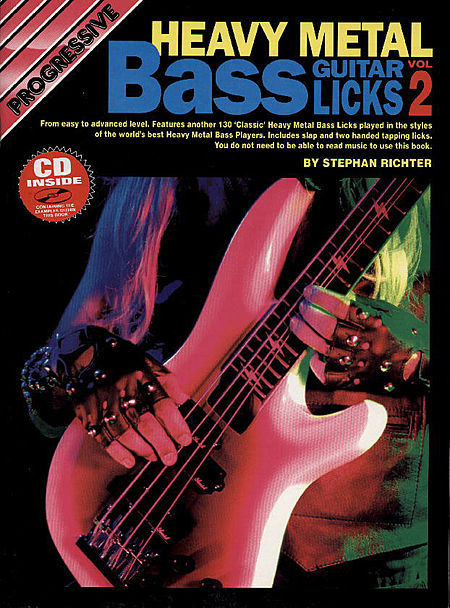
PROGRESSIVE HEAVY METAL BASS LICKS 2. CD TABLATURE

PROGRESSIVE HEAVY METAL BASS LICKS 2. CD TAB.

Prezzo: €19,99
€19,99

PASTORIUS JACO SIGNATURE LICKS LIBRO CD BASS TABLATURE-Bright Size Life-Continuum-Donna Lee

PASTORIUS JACO, SIGNATURE LICKS. CD TABLATURE

LIBRO DI MUSICA, SPARTITI PER CHITARRA BASSO CON CD E TABLATURE. 

Birdland -Bright Size Life -Come On, Come Over -Continuum -Donna Lee -God Must Be A Boogie Man -Kuru -Liberty City -Night Passage -Palladium -Port Of Entry -Portrait Of Tracy -Rockin' In Rhythm -Talk To Me -Teen Town. CD TABLATURE

A Step-by-Step Breakdown of the Styles and Techniques of the World's Greatest Electric Bassist
Series: Signature Licks Bass
Softcover with CD - TAB
Author: Dan Towey
Artist: Jaco Pastorius

Learn the trademark grooves and solos of the man who revolutionized bass guitar. This book/CD pack will help you take a closer look at Jaco's rich body of work through the structural, theoretical, and harmonic analysis of these classic recordings, 56 pages
Birdland
Bright Size Life
Come On, Come Over
Continuum
Donna Lee
God Must Be A Boogie Man
Kuru
Liberty City
Night Passage
Palladium
Port Of Entry
Portrait Of Tracy
Rockin' In Rhythm
Talk To Me
Teen Town

Prezzo: €29,99
€29,99

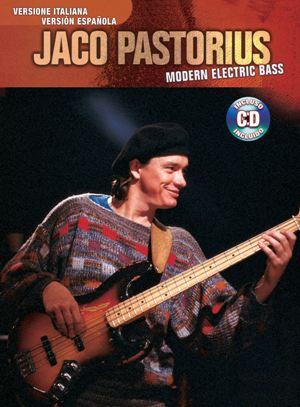
PASTORIUS JACO-MODERN ELECTRIC BASS CD LIBRO METODO PENTAGRAMMA ACCORDI BASSO

PASTORIUS JACO, MODERN ELECTRIC BASS. CD

LIBRO METODO PER BASSO DI MUSICA FUSION, CON CD.  

SPARTITI PER BASSO CON: ACCORDI E PENTAGRAMMA

IN ITALIANO E ESPAGNOLA


L'obiettivo di questo manuale, è quello di rendere i contenuti dell'intervista su video cassetta, Jaco Pastorius, Modem Electric Bass più accessibili al musicista che desidera imparare l'arte del suonare e dell'improvvisare con il basso elettrico. Attraverso i numerosi esempi e gli assolo contenuti nel libro, incomincerete a capire

quanta importanza abbia il pensare, più che il sentire, nel creare
della musica. Sarete quindi in grado di capire ed interpretare ciò
che sentite, oltre ad imparare o re-imparare a suonare il basso elettrico
in modo molto musicale.
Suonare delle note facendo andare le dita "a caso" non richiede
tanto impegno quanto suonare dei pattems specifici. Solo perchè
una frase è stata creata in sedicesimi, non significa che dobbiate
eseguire l'esercizio velocemente. Procedete seguendo la vostra
personale velocità, usando un metronomo durante l'esecuzione
degli esercizi.
La conoscenza della teoria, dell'armonia, della costruzione di scale
e accordi e l'uso di un determinato sistema universale per la
costruzione delle scale, sono passi necessari per rendere più facile
e rapido l'apprendimento del vostro strumento. Includiamo un
breve ripasso, con lo scopo di aiutarvi a memorizzare i patterns 
che derivano dai gradi della scala, dai diversi tipi di accordi, dalla
sequenza degli intervalli ecc. Questo sistema numerico rende più
veloce l'apprendimento, l'esecuzione, la trasposizione in diverse
chiavi di lettura e l'apprendimento dei ritmi differenti, oltre ad
offrire un punto d'appoggio per le vostre idee quando
improvvisate, accompagnate o fate un solo.

Fatevi un favore! Trasportate gli esempi contenuti nel CD e scrivete
in cima a ciascuna nota il grado della scala relativa ed il tipo di
accordo. Sarete sorpresi dal miglioramento del vostro apprendimento
attraverso questo esercizio.Trascrivetevoi stessi gli esempi e
gli assolo cercando di individuare i diversi tipi di pattems. Questo
tipo di lavoro è perfetto per allenare l'orecchio.
Il vostro obbiettivo dovrebbe essere pensare veloce piuttosto che
suonare veloce. Memorizzate i pattems chiedendovi sempre
"come sono composti, il numero di ripetizioni, quale sia la
sequenza, quale la direzione (ascendente o discendente), e cosa
viene dopo?"
 
Quando prendete in mano il vostro strumento, suonate sempre
qualcosa di particolare, come un accordo o un arpeggio, parte di
una scala, una canzone ecc... In altre parole, abbiate qualcosa in
mente (dite a voi stessi cosa fare) ed eseguitelo senza errori e
lentamente. Buona fortuna!
 
E' molto raro che un musicista abbia il genio ed il talento per
rivoluzionare da sè l'impostazione di uno strumento· Jaco è
stato uno dei pochi a farlo. Sono stato fortunato ad aver avuto la
possibilità di studiare e suonare con Jaco sia a Miamiche durante
il tour con l'orchestra di Gil Evans. L'energia ed il modo con cui
Jaco si avvicinava alla musica, attraverso il proprio virtuosismo
e la personalità del suo suono hanno ispirato ciascuno di noi.
Tenete a mente, mentre praticate questi esercizi, che sono il
sentimento e l'energia che mettete in essi a rendere viva la
musica. Utilizzate questo tipo di idea unita alla vostra immaginazione
per sviluppare il vostro personale stile di suonare.
Grazie Jaco, la tua musica continua a vivere nell'universo.
-Mark Egan
 
JACO PASTIORIUS MODERN ELECTRIC BASS
di Jaco Pastorius
e Jerry Jemmott
EDIZIONE AGGIORNATA
 
 
INFORMAZIONI SUL CONTENUTO DEL CD
Introduzione
Intervista
Esempio 1
Esempio 2
Esempio 3
Esempio 4
Esempio 5
Esempio 6
Esempio 7
Esempio 8
Esempio 9
Esempio 10
Esempio 11
Esempio 12
Esempio 13
Esempio 14
Esempio 15
Esempio 16
Intervista
Esempio 17
Esempio 18
Esempio 19
Esempio 20
Esempio 21
Intervista
Esempio 22
Esempio 23
Esempio 24
Esempio 25
Esempio 26
Esempio 27
Esempio 28
"Naima"
 Intervista
 Esempio 29
 "Reggae"
 "Funky Blues"
 "America"
 
Interview and text Jerry Jemmott
Revised edition transcriptions Lincoln Goines
Additional transcriptions and introduction Mark Egan
Initial transcriptions Jerry Jemmott and Kjell Benner
Produced by Manhattan Music
Editor Dan Thress
Cover design and Layout Jack Waltrip
Musie engraving Bob Sherwin
Cover/Inside photographs Ebet Roberts
Traduzione Italiana: Clara Valentina Agosti· In
collaborazione con il Centro Professione Musica di Milano.
Supervisione Della Traduzione
Italiana: Antonello Saviozzi
 
Per imparare l’arte del basso, come esecuzione e improvvisazione, da uno dei più grandi maestri di questo strumento, Jaco Pastorius. Suonando insieme a leggende come Miles Davis, Pat Metheny, Herbie Hancock, Joni Mitchell, Al Di Meola, Jaco ha rivoluzionato il modo di suonare il basso, influenzando generazioni di musicisti e catturando l’attenzione di critici e lettori di tutto il mondo. A questo libro è allegato un CD, che contiene le trascrizioni degli esempi e assoli di Jaco tratti dal suo DVD Modern Electric Bass, un'intervista (in lingua originale inglese) del leggendario Jerry Jammott a Jaco, e una performance in trio di Jaco Pastorius con John Scofield e Kenwood Dennard.
Traduzione italiana di Clara V. Agosti.


Prezzo: €19,99
€19,99

PATITUCCI JOHN, ELECTRIC BASS ITALIANO 2 CD JAZZ WALKING BASS latino-brasiliano-reggae-africano-grooves

PATITUCCI JOHN, ELECTRIC BASS. In italiano e spagnolo. 2 CD 

Tecnica (sul basso a 4 corde: scale/arpeggi, esercizi di picking, hammer on/pull, ...), time/groove, accompagnato da Dave Weckl su Cd, e grooves etnici, inclusi gli stili latino, brasiliano, reggae e africano.


INTRODUZIONE

L'obiettivo di questo libro è quello di aiutarvi a percorrere la strada giusta per diventare un bassista professionista. Non intende essere una guida completa a tutti gli stili musicali, ma piuttosto un buon punto di partenza. Ricordate di eseguire tutti gli esercizi lentamente e con un metronomo, aumentando il tempo gradualmente, suonando in modo pulito e con un buon feeling ed un buon groove. Buona fortuna e mi auguro che vi divertiate.


RINGRAZIAMENTO

Con profonda gratitudine a Gesù Cristo, mio Signore e Salvatore che rappresenta la fonte della mia ispirazione. A Killeen, mia moglie, che mi ha incoraggiato e mi è stata di grande supporto durante le lunghe ore di preparazione. Ai miei genitori, George e Joan Patitucci, ed i miei nonni, John e Rena Fenimore, per tutto il loro amore ed incoraggiamento. A mio fratello, Thomas, mio primo maestro, dal quale non solo ho ricevuto insegnamento ma anche numerose opportunità musicali. Alle mie sorelle, Renee, Joanne e Mary Ellen per il loro incoraggiamento ed interesse. Ai miei insegnanti, Chris Poehler, David Baker, Frank Sumares, Charles Siani, Abe Luboff e Barry Lieberman che hanno contribuito tutti alla formazione del mio stile. A Ron Moss, il mio manager, per aver reso possibile questo progetto e a tutte le persone della Manhattan Music per essere i "migliori." Grazie anche a tutti alla Yamaha, a Roger Sadowsky e a tutte le persone della D'Addario Strings. Questo libro è dedicato, con affetto, alla memoria dei miei nonni Camilo ed Emilia Patitucci..


Contenuto

SEZIONE UNO: TECNICA .

POSIZIONE DELLA MANO

SVILUPPO E SCIOLTEZZA DELLA MANO SINISTRA

IL "RAGNO"

HAMMER ONI PULL OFF

ESERCIZI DI PICKING PER LA MANO DESTRA

SCALE

ARPEGGI

SALTI DI CORDE

SCALE

VIBRATO E DINAMICHE

ARPEGGI

BACH CELLO SUITE NUMERO. I IN SOL MAGGIORE

SEZIONE DUE: TEMPO/GROOVES

JAMES JAMERSON

JERRY JEMMOTT

CHUCK RAINEY

GROWING

SLAPPINGIPOPPING

PAUL JACKSON

FRANCIS ROCCO PRESTIA

ROCK AND ROLL

JAZZ/WALKING BASS

SHUFFLE

SEARCHlNG, FINDING

TRASCRIZIONE DEL SOLO

SEZIONE TRE: LATINO, BRASILIANO,

AFRICANO E REGGAE .

LATINO

BRASILIANO SAMBNBAIÀO

SUD AFRICANO

REGGAE

KINGSTON BLUES


Registrazioni da John Patitucci e On The Corner, per gentile concessione

della GRP Records.


INFORMAZIONI SUL

CONTENUTO DEL CD


CD 1

1. Song Excerpt

2. Posizione della mano

3. Esercizi per la scioltezza della mano sinistra

4. Il "Ragno"

5. Hammer On/Pull Off

6. Hammer On/Pull Off (proseguimento)

7. Mano destra Esercizi di Picking

8. Arpeggi

9. Salti di corde

10. Scale                                           

11. ScalelDiteggiatura #2

12. Vibrato e Dinamiche

13. Arpeggi

14. Bach CelIo Suite NO.1 in Sol Maggiore


CD 2                                                                                                                        

1. JAMES JAMERSON

2. JERRY JEMMOTT

3. CHUCK RAINEY

4. "GROWING"

5. SLAPPING/POPPING

6. PAUL JACKSON

7. FRANCIS ROCCO PRESTIA

8. ROCK AND ROLL

9. JAZZ/WALKING BASS

10. SHUFFLE

11. "SEARCHING, FINDING"

12. LATINO

13. BRASILIANO - SAMBAlBAIAO

14. SUD AFRICANO

15. REGGAE

16. "KINGSTON BLUES"


In alcuni esercizi di questo metodo é stata mantenuta la notazione

internazionale. r.:equivalente italiano è il seguente:

A = La

B = Si

C = Do

D = Re

E = Mi

F = Fa

G = Sol


SEZIONE 2: TEMPO/GROOVES


La cosa più importante sulla quale un bassista deve lavorare è il tempo. E' importante che il vostro tempo sia deciso, sostenuto e facile da suonare. Voi ed il batterista provvederete a creare le basi per qualsiasi gruppo di cui farete parte. Quando vi esercitate con il tempo è importante che lavoriate con un metronomo o con una batteria elettronica e che siate in grado di trasmettere le vostre emozioni per dare vita al groove. Un groove è semplicemente un tempo sentito con emozione, espresso chiaramente e con energia, senza incertezze. Un ottimo modo per imparare a fare un groove è quello di ascoltare registrazioni di bassisti che siano maestri del groove - musicisti che vi facciano venir voglia di ballare ciò che state ascoltando. Ascoltando i diversi stili e le idee musicali di differenti grandi bassisti incomincerete a capire cosa sia il groove.

Il primo groove che Dave ed io suoneremo sulla cassetta è nello stile di Jamcs Jamerson la mia prima grande influenza nel basso. Jamerson era il re del Motown sound, ha suonato su molti dischi degli anni '60, inclusi quelli di Diana Ross e The Supremes, The Temptations, The Jackson Five, Stevie Wonder ...Tutti i grandi artisti del Motown. Questo è un semplice groove stile Motown che ha reso famoso Jamerson.

Jerry Jemmott è un altro dei miei groovers preferiti. Ho ascoltato per la prima volta Jerry su un disco di King Curtis intitolato Memphis Soul Stew.

Prezzo: €32,99
€32,99

PATITUCCI JOHN ULTIMATE PLAY-ALONG FOR BASS LEVEL 1-VOL.1 CD LIBRO SPARTITI BASSO METODO

PATITUCCI JOHN, ULTIMATE PLAY-ALONG FOR BASS, LEVEL 1 VOL.1. CD SHEET MUSIC METHOD BOOK WITH 2 CD. 


LIBRO METODO DI MUSICA FUSION CON 2 CD.

SPARTITI PER BASSO CON:

ACCORDI, PENTAGRAMMA.


CONTENUTO:

STRAIGHT EIGHTHS

SIXTEENTHS

ROCK SHUFFLE

ROCK BALLAD

LATIN

STRAIGHT-AHEAD JAZZ

ROCK 'N' ROLL

Prezzo: €99,99
€99,99

LATIN BASS Guide to Afro-Cuban and Brazilian Styles CD TABLATURE merengue mambo samba partido alto

LATIN BASS, The Essential Guide to Afro-Cuban and Brazilian Styles. G. Lopez. SHEET MUSIC BOOK WITH CD & BASS TABLATURE .

LIBRO DI MUSICA LATINA CON CD.

SPARTITI PER BASSO : 

ACCORDI, PENTAGRAMMA, TABLATURE.

TECNICA, METODO,  


LATIN BASS

The Essential Guide to Afro-Cuban and Brazilian Styles
Private Lessons Series
Series: Musicians Institute Press
Publisher: Musicians Institute Press
Format: Softcover with CD
Composers: George Lopez, David Keif

This must-have manual for all bassists teaches how to play Afro-Cuban and Brazilian styles such as mambo, cha cha cha, bolero, nanigo, songo, merengue, samba, bossa nova, 3/4 bossa nova, baiao, and partido alto. For each style, there is a brief introduction, an example or two of the basic groove, and a play-along song on the accompanying CD – both with and without bass parts. Also includes a list of artists for recommended listening. 

Inventory #HL 00695543

ISBN: 9780634017483
UPC: 073999235067
Width: 9.0"
Length: 12.0"
32 pages


Introduction
As the diverse cultures of the world have continued to blend together, the results have become very apparent in music. Though each ethnic style has distinct characteristics, contemporary musicians combine styles from many cultures as they develop a sound. Much of today's popular music is greatly influenced by Latin music. The general term "Latin music" is used to describe ethnic music which originated from Africa and developed stylistically in Cuba, the Caribbean, and the countries of South America. Each has a very specific bass feel. As a bass player, it is important to become familiar with these feels. Latin Bass gives you this opportunity. Learn the differences between a bossa nova, a mambo and a cha cha chaoFind out how to playa nanigo, and much more. Each style is examined and demonstrated. Get hands-on experience as you play along with the compact disc included in the book.

About This Book
In order to demonstrate a wide spectrum of Latin bass playing, this book covers ten styles. Each style includes a brief introduction, an example or two of the basic groove, and a play-along song. All songs feature a full band on the compact disc. The bass lines are notated just as they are played on the CD. There are two mixes (versions) of each song; the first includes the bass, and the second does not. After you learn the written bass part, you may choose to create your own lines. This is highly encouraged, as it will help in the learning process.
In addition, for each style there is a short list of artists we recommend for listening. This is only a fraction of the available material, but if you want to learn more about Latin, check out these musicians!
The styles are divided into two groups. The first group is Afro-Cuban, traditions coming from the Caribbean and Cuba. These styles are mambo, cha cha, bolero, nanigo, songo, and merengue. The second group is Brazilian, and consists of samba, bossa nova (4/4 and 3/4), baiao, and partido alto. After studying the material from this book, you will have a fundamental understanding of the Latin bass style. Keep in mind that this is only the beginning. These styles evolved from numerous cultures and can only be fully understood by continued study. It is in your best interest to listen to as many recordings as possible to hear the complex variations that the musicians from these cultures use in their music. Keep practicing, listen to the records, and have fun!

About the Authors
George Lopez is one of the most in-demand bass players in the Latin music scene in Los Angeles. He has worked with Tito Puente, Celia Cruz, Poncho Sanchez, EI Chicano, and many others.

David Keif is a successful freelance bass player working in Los Angeles. He is the author of Arpeggios for Bass and Grooves for Electric Bass, both available from Hal Leonard Corporation.


Credits & Acknowledglnents
Music written and arranged by George Lopez, David Keif, and Carlos Campos.
Keyboards and rhythm programming by Carlos Campos.
All bass parts played by George Lopez.
The authors would like to thank Carlos Campos, Maria Martinez, Bruce Buckingham, and
afael Cirne Lima for their knowledge and contributions during the writing of this book.


Table Contents
Introduction .
About This Book .
Part One: Afro-Cuban
Mambo .
Cha Cha Cha .
Bolero
Nanigo
Songo
Merengue

Part 2: Brazilian
Samba
Bossa Nova
3/4 Bossa Nova
Baiao
Partido Alto
Bass Notation Legend


The Essential Guide to Afro-Cuban and Brazilian Styles
• Mambo
• Cha Cha Cha
• Bolero
• Nanigo
• Songo
• Merengue
• Samba
• Bossa Nova
• 3/4 Bossa Nova
• Baiao
• Partido Alto

CD Includes Tracks for Demonstration and Play-Along

ISBN 0-634-01748-9
HL00695543 

Prezzo: €29,99
€29,99

BASS LESSONS WITH THE GREATS BOOK & CD TABLATURE LIBRO SPARTITI BASSO

BASS LESSONS WITH THE GREATS. Prestia, Willis, Wooten, Goines, Jimmy Haslip ( Yellow Jackets ) , Johnson. CD TABLATURE.


LIBRO METODO DI MUSICA FUSION.

SPARTITI PER BASSO CON: 

ACCORDI, PENTAGRAMMA, TABLATURE. 

TECNICA, LESSON, 

Prezzo: €84,99
€84,99

JUMP 'N' BLUES BASS KEITH Rosier LIBRO CD TABLATURE Willie Dixon-Duck Dunn-Tommy Shannon

JUMP 'N' BLUES BASS. Keith Rosier. Esempi da Willie Dixon, Blues Brothers, e tanti altri bassisti blues. 22 play along. CD TABLATURE

LIBRO METODO DI MUSICA BLUES / SWING, CON CD.  

SPARTITI PER CHITARRA BASSO CON:

ACCORDI, PENTAGRAMMA E TABLATURE.

TECNICA, MANUALE, 

Series: Bass Builders
Softcover with CD - TAB
Author: Keith Rosier
Essential jump/swing and modern blues bass lines for electric and upright players. Includes lessons and music in the style of Willie Dixon, Larry Taylor, Edgar Willis, Duck Dunn, Tommy Shannon, and more! The CD includes a lives blues band with over 20 play-along tracks. 56 pages.

Prezzo: €19,99
€19,99

FUNK BASS Liebman LIBRO CD TABLATURE PLAYING Slapping Technique-Popping-BENDING-TRILL-SLIDE

FUNK BASS. Jon Liebman. THE BEST SINGLE SOURCE FOR PLAYING FUNK AND SLAP-STYLE BASS.
SHEET MUSIC BOOK WITH CD & BASS TABLATURE. 


LIBRO METODO PER BASSO CON CD.

SPARTITI PER BASSO : 

ACCORDI, PENTAGRAMMA, TABLATURE. 


Funk Bass

Series: Bass Instruction
Format: Softcover with CD - TAB
Artist: Jon Liebman

FORWARD BY: JOHN PATITUCCI

Critically acclaimed as the best single source for the techniques used to play funk and slap-style bass! Includes a foreword by John Patitucci and is endorsed by Rich Appleman of the Berklee College Of Music, Will Lee, Mark Egan, Stuart Hamm and many others! Features several photos and a special section on equipment and effects. A book for everyone - from beginners to advanced players! Includes a 58-minute audio accompaniment. CD TABLATURE

Inventory #HL 00699348
ISBN: 9780793516209
UPC: 073999993486
Width: 9.0"
Length: 12.0"
96 pages
 

INTRODUCTION
The goal of this book is to introduce the contemporary bassist to the funk style of playing. Many books of this type miss the point of what is required of a bass player. Being able to execute a bunch of fast funk licks may dazzle your friends and relatives, but it won't make your phone ring off the hook from contractors and record producers calling you with work. In the real world, you'll be hired according to how well you understand your role as a bass player and how well you do your job. This book will guide you toward those goals in a logical, step-by-step "real-world" approach.
Chapter I, A Word On Practicing, emphasizes the importance of proper practice habits. It includes discussions on metronomes, drum machines, live drummers, tape recorders, utilizing recordings, attending live concerts and maintaining a music notebook.
Chapter 2 begins illustrating the fundamentals of funk bass playing - how to "slap" and "pop." The emphasis here is on precision and proper execution. The exercises in this chapter are developed into some basic funk patterns in Chapter 3.
Chapter 4 introduces some stylistic elements, such as the "hammer-on," the "pull-off," the slide, the trill, the shake and the bend (no, it's not a dancing lesson!). These are the so-called "tricks of the trade" that will make your playing sound funkier.
The focus in Chapter 5 is on establishing a groove - the most important element of playing the bass. If you're going to get anything at all out of this book, get this: GROOVE IS EVERYTHING, AND EVERYTHING MUST GROOVE! I can't overemphasize the importance of this statement. It holds true for all musicians, but especially for the bass player and the drummer, because they're the ones that really lay down the time and make the music "feel" good.
Once you understand this concept and are comfortable (honestly!) with Chapters 2 through 5 of this book, feel free to have fun with the licks I have included in Chapter 6. They are intended to illustrate different possibilities of the funk style, help you develop your technique and give you ideas for creating your own funk lines. Remember, your job is to groove and support the band. These licks are to be used at your discretion as your taste and musicality dictate. They can work very well as fills within the groove or, of course, for your solos.
It is crucial to be able to play in an keys. Many students of funk bass can really "get down" in one or two keys, but are practically helpless when they have to play for a singer whose song is not in "E" or "A" but in some "weird" key. Because this is so important, I have made sure to include plenty of exercises and licks (and grooves!!!) in all twelve keys. Where other books simply suggest, "try these licks in a few different keys," I felt it was important enough to actually write them out. Of course, you are encouraged to transpose anything in this book into any or all twelve keys. It's good for you! It will help your reading, too.
What's more, the key of"a"is not the same as "J)l.," nor is "Fl" the same as "0," nor "B" the same as "0." By the time you get through this book, you'll be able to read and play in any key. Granted, certain keys (like "E" and "A") lend themselves to greater ease and facility on the bass, because of the nature and tuning of the instrument. Also, some keys may be harder to read, but easier to play in, and vice versa. When you come right down to it, there are no such things as "easy" or "hard" keys, only "familiar" keys and "unfamiliar" keys.
The Appendix, Your Equipment, provides an overview of the equipment common to funk bass players. It includes information on types of basses, strings, amplifiers, speakers and effects. It is intended to "de-mystify" the myriad of products available to musicians today, and offers insights into how to invest carefully in the proper tools that will best suit your needs.
At the end of this book I have included a Discography, which is by no means exhaustive, but offers a cross section of some of the greatest funk bassists in music today. It's important that you listen to as much of this music as possible so you understand just exactly what we're trying to do here. If you get a chance to see any of these guys live, don't you dare miss them!


Chapter 1
A Word On Practicing
"Practice doesn't make perfect. Perfect practice makes perfect."
- Vince Lombardi These words, by the late, internationally renowned coach of the Green Bay Packers, are profoundly true. Whether you're talking about music or football, Mr. Lombardi's philosophy still applies. Even if you spend eight hours a day in the woodshed, you could be wasting your time if you don't have proper practice habits. In this chapter, we'll look at what distinguishes "good" practicing from "bad" practicing, and how to make the most efficient use of the hours you spend honing your funk bass skills.
"Did you say bad practicing?" "Does it really exist?"
Absolutely! Do you ever just "wander" around the bass, aimlessly, playing lick after lick? Do you often find yourself charging ahead through bass lines and solos that you already can play inside out? When you practice a part, do you think only of the bass, without considering the interplay between you and the other musicians (the drummer, for one)? Do you practice without a metronome or a drum machine? Or in front of the TV? If you answered yes to any of these questions, you may be found guilty of "bad practicing" and could be subject to eternal banishment from all that's hip, and forced to tap your toes on "one" and "three" for the rest of your life!
When you practice, it's serious business. Create an environment that's conducive to study. Keep distractions out of sight.
Find a time when you won't be disturbed. Convince yourself that you're not hungry or thirsty, and get in the proper frame of mind.
My teacher used to have me keep a log of my practice sessions, which was a great help. Get a calendar, in which you'll record nothing but your practice schedules. Every day, take into account how many hours you're going to spend practicing and what you need to work on, then budget your time accordingly. Write down, for example, 30 minutes for scales and arpeggios, 20 minutes for sight-reading, etc. When the time alloted for each segment expires, move on to the next one, checking things off as you go. That way you're constantly chipping away at everything every day, and won't have to worry about three weeks going by without playing any Stu Hamm finger taps, or whatever else may be on your agenda.
At the end of the week, take a look at your calendar and see how much practicing you're actually doing, versus how much you think you're doing. The results may surprise you.
"Time is of the essence." I don't know who first uttered those words, but they couldn't hold more truth for bassists.
When you're practicing by yourself, always use a metronome, or, better yet, a drum machine. Remember: they're your friends! Concentrate not only on playing in time, but with a good time feel. A GREAT time feel. So what if you know the right changes to 40,000 tunes? Who cares if you can play eighty-bizillion sixteenth notes a minute, or have the "baddest" setup this side of Osaka. THE MOST IMPORTANT JOB YOU HAVE AS A BASS PLAYER IS TO GROOVE WITH A GREAT TIME FEEL. You may think you're playing in time, but the metronome and drum machine will keep you "honest," so use them.
Another way to work on your time feel is to get together with a good drummer and groove. For hours. Don't just fool around, though. Concentrate on "takin' care0' business." Oh, sure, you can still work on your solo chops, but spend most, if not all, of the time on the time. Pick several grooves that you want to work on, and practice them one at a time, over and over, without stopping. Be sure to play in all twelve keys, too. You may want to have your drummer friend program a few grooves into your drum machine, for you to practice with when you're by yourself.
So far, we've got three friends: a metronome, a drum machine and a real live warm body behind the drums. Let's add one more friend to our list: the tape recorder.
Back we go, once again, to the "honesty" category. You think you know what your playing sounds like? Try laying it down on tape and see (hear) if you're right. "Tape recorders don't lie." Recording your playing may reveal many flaws and bad habits of which you may not have been aware. It lets you really zero in on the attack and release of each note, as well as your sustain, intonation, time feel and overall sound. A tape recorder can be an invaluable practice tool.


ACKNOWLEDGMENTS
Sure, I'd like to take all the credit for writing this book. Truth is, though, I had help. A lot of people went out of their way to help me make this project (and it was a project!) move more smoothly, easily and efficiently. I'd like to take this opportunity to acknowledge these people's generosity.
Thanks to the musicians who took the time to talk with me, read my manuscript and actually come up with good things to say about my book:
- John Patitucci: I don't know where you found the time to hang out, John, but I sure do appreciate it. Even though I did have to sit and watch you rehearse your incredible band while waiting to talk to you, really, I didn't mind! Thanks for putting up with all the trans-global phone calls and faxes (what an age we live in!). Thanks for going so far out of your way to help me. Much luck and continued success to you.
- Rich Appleman: A true pedagogue! Thanks for your support and encouragement. Berklee is lucky to have you.
- Brian Bromberg: Glad the word finally got out about what a great player and writer you are. Hell, I've known that for years! Thanks, man.
- Bob Cranshaw: I admire your meticulous, no-nonsense, down-to-business approach. Thank you.
- Mark Egan: I didn't mind sitting through your rehearsal, either! Thanks.
- Stuart Hamm: I am truly honored to have been the one chosen to transcribe the music for your Hal Leonard book.
Throughout the ordeal, though, you quickly went from being my mentor to my tormentor! Seriously, I appreciate all the time we got to spend working together. Now let's go eat!
- Neil Jason: What can I say, Neil? You helped me make the phone company rich! Thanks for all your suggestions, and thanks for being a great guy!
- Will Lee: You sure are hard to get a hold of, but it was definitely worth the effort! Thank you!
Thanks to all my friends, "consultants" and experts in their respective fields:
- Alexis Sklarevski, Dale Titus and everyone at the Bass Institute of Technology, Hollywood, California
Don Coffman, Director of Jazz Bass at the University of Miami Schoor of Music, Coral Gables, Florida
- Tim Emmons and Todd Ferguson at the Dick Grove School of Music, Van Nuys, California
- Dennis Tini, Matt Michaels, Gary Leach and Dan Pliskow of the Jazz Studies Department at Wayne State University, Detroit
- Sid Beshkin: The world's foremost authority on print technology!
- Steve Carryer, Cliff Cohen and Tom Hollyer: three of the most amazing Macintosh wizards on the planet!
- "Dr. Jazz" of Dr. Jazz Operations, Oak Park, Michigan
- Mike "Friedbaum" Friedman. He's my "Mr. Drummer Friend" (see Chapter 1). Thanks for working out all those grooves with me, dude.
- Abe Laboriel: A great inspiration and a true gentleman (and what a bass player!). Thanks for your help and encouragement.
- Herb Mickman: Hey, Herb. Did you hear the one about...?
- Steve Shepard and everyone at Scorpion Systems Group (the "Sybil" people)
- The staff of the Specs Howard School of Broadcast Arts, Southfield, Michigan
- The staff of PM Productions, Southfield, Michigan
Thanks to my merciless proofreaders: Marty Liebman (yo, Bro!), Tom Profit and Rey Sanchez.
Thanks to John Cerullo, Joff Jones and everyone at Hal Leonard Publishing Corporation.
Thanks to Sammi and Josh.
Special thanks to Rey Sanchez (see merciless proofreaders, above). Actually, I don't know whether to thank him, or to blame him! If it weren't for Rey, it never would have occurred to me to write a book (thanks a lot!). That night in Bogota, Colombia - was it just a suggestion when you said, "Hey, man, you ought to write a book. A funk book. Yeah, that's it. A funk book," or was it a dare? Well anyway, here it is! Thanks for the huge hand you've had in my success - all the gigs, all the tours, all those times in the studio. Thanks for introducing me to Jaco. Thanks for your friendship. Where are we going, next?
 

TABLE OF CONTENTS
Notation Legend .
Foreword by John Patitucci .
Introduction .
Chapter I A Word on Practicing .
Chapter 2 Getting Started .
The Slapping Technique .
The Popping Technique : .
Chapter 3 Some Basic Funk Patterns .
Chapter 4 Style Elements .
The Hammer-on .
The Pull-off .
The Slide .
The Trill .
The Shake .
The Bend .
Chapter 5 Establishing a Groove: .
Chapter 6 Building a Vocabulary For Funk Soloing .
Epilogue .
Appendix: Your Equipment. .
Your Bass .
Your Strings ,
Your Amplifier and Speakers .
Your Effects ,
Discography .
Acknowledgments .
About the Author .
Endorsements .
 

Prezzo: €26,99
€26,99
Condividi contenuti