LIBRO CON CD

TREASURES OF THE SPANISH GUITAR LIBRO CD CHITARRA TABLATURE SPARTITI-TARREGA-SANZ-AGUADO

TREASURES OF THE SPANISH GUITAR. Capricho arabo, e altri 10 brani di Aguado, F. Tarrega, G. Sanz, L. Narvaez. CD TABLATURE

LIBRO DI MUSICA CON CD. SPARTITI PER CHITARRA. PENTAGRAMMA E TABLATURE. 

This fine solo guitar text, written in notation and tablature, offers a brilliant array of music from many centuries. Composers represented (Aguado, Tarrega, Sanz, Angurea, and others) present a colorful spectrum of the melodies, styles, moods, and temperaments that have characterized guitar music of Spain. The instrumentation on the recording is the solo classical guitar. It is a stereo recording, and it does contain every selection in the book. None of the repeats suggested in the printed scores have been taken off or put on the recording. It is up to the discretion of the individual performer to add or delete these as necessary.

Song Title: Composer/Source:
Canarios Gaspar Sanz
Capricho J. De Anguera
Capricho Arabe Francisco Tarrega
El Jaleo De Jeres Arr. George Henry Derwort
Espanoletas Gaspar Sanz
Fantasia Luys De Narvaez
Folias Gaspar Sanz
Marieta Francisco Tarrega
Rondo Brilliante Op 2 No 2 Dionisio Aguado
Rosita Francisco Tarrega
Spanish Fandango Arr. Justin Holland

Prezzo: €29,99
€29,99

THE LEGEND OF HAGOROMO KEIGO FUJII On a melody of H. Yamanoha CD David Russell

THE LEGEND OF HAGOROMO, KEIGO FUJII. On a melody of H. Yamanoha. mini CD

Dedicato a DAVID RUSSELL

Prezzo: €109,99
€109,99

THE MUSIC OF DEBUSSY & FAURE' CARLOS-BARBOSA LIMA GRIGGS CD GUITAR TABLATURE SPARTITI

THE MUSIC OF DEBUSSY & FAURE'. ARRANGED BY CARLOS-BARBOSA LIMA & JOHN GRIGGS. SHEET MUSIC BOOK WITH CD & GUITAR TABLATURE. 

LIBRO DI MUSICA CLASSICA CON CD .

SPARTITI PER CHITARRA CON :

PENTAGRAMMA E TABLATURE. 


LIBRO DI MUSICA CON CD, SPARTITI PER CHITARRA. PENTAGRAMMA E TABLATURE.

Concert solo guitar and lead sheet arrangements of five works by the French Impressionists Debussy and Fauré. The lead sheet arrangements encourage a more in-depth study and understanding of each work. Each piece is written in standard notation and tablature and a CD of each piece performed by Carlos Barbosa-Lima is included.


INCLUDES:

LA PLUS QUE LENTE - THE MORE THAN SLOW - Claude Debussy 

LA PLUS QUE LENTE - THE MORE THAN SLOW - LEAD SHEET

ROMANCE SANS PAROLES N.1 - Gabriel Fauré

ROMANCE SANS PAROLES N.1 - LEAD SHEET

ROMANCE SANS PAROLES N.2 - 

ROMANCE SANS PAROLES N.2 - LEAD SHEET

ROMANCE SANS PAROLES N.3

ROMANCE SANS PAROLES N.3 - LEAD SHEET

DES PAS SUR LA NEIGE - FOOTSTEPS IN THE SNOW - Claude Debussy

DES PAS SUR LA NEIGE - FOOTSTEPS IN THE SNOW - LEAD SHEET

Prezzo: €49,99
€49,99

THE RENAISSANCE GUITAR, FREDERICK NOAD. Music sales CD

THE RENAISSANCE GUITAR, DI FREDERICK NOAD. CD

The first in this book-and-CD anthology of solos, duets and songs covering four centuries of composers for the guitar and lute family. Taken from original sources, and carefully fingered for the modern player, the transcriptions are as faithful as possible to the original while at the same time offering a practical performing score.

Preface

The Frederick Noad Guitar Series is a response to the need of the very large number of players who have mastered basic guitar techniques and want interesting and well written musical selections for further study and enjoyment. There is an enormous amount of music for the guitar, rivaling or surpassing in quantity that for any other instrument. But the quality of both music and fingering varies enormously, and it is probably true that there is more bad or dull music in print for this instrument than for any other.

The reasons for this poor quality are not hard to find. First, few major composers wrote for the guitar since technical difficulties demand that the composer either play the guitar himself or work closely with a player. Second, the many players who wrote music for the guitar were usually poor composers relying on special effects or superficial charm to attract the listener. Third, editors have rarely had the specialized knowledge to recognize a good guitar piece and have printed music for the guitar that would be considered totally inadequate if published for the piano or violin. It is thus difficult for even the accomplished player to find good music. Outlets for guitar scores are usually confined to major cities; the majority of players must shop from catalogs supplied by publishers and invariably have to discard much of what they buy. Anthologies are few, and in many of these the player responsible for fingering has altered the original score to suit his own taste. There does exist, however, much fine music, and I think that such music should be presented in reasonably priced and easily accessible editions. This series attempts to meet this goal. The series is conceived in three parts-Renaissance, Baroque and Classical. The books contain original transcriptions as well as recognized favorites and present much music unavailable elsewhere. In addition, I have put each period in perspective and introduced the major composers, forms, and playing styles of the time. The selections are classified in three levels: basic, intermediate, and advanced. Brief notes are given at points of technical difficulty. It is hoped that the learner will find enjoyment in the early sections and that the seasoned player will find material in the more challenging works. However, at all levels I have tried to maintain a high standard of musical interest. The selections have been carefully transcribed from original sources, either manuscript or first edition, and every effort has been made to respect the composer's intention. These anthologies, however, must inevitably represent the taste of one person. It is impossible to please everyone, but I hope most sincerely that other players will share, at least in part, the pleasure I have found in these selections.

About the Music

In transcribing these pieces for the guitar, I have tried to produce playable and natural versions for the instrument while keeping every possible part of the original. The lowest courses of the lute have had to be transposed an octave, but since they were little used this is not a serious problem. The music for the four-course guitar and vihuela has necessitated no changes of this kind, and the lyra-viol music lies comfortably on the guitar without alteration. It has been necessary to transpose the keys of the lute pieces to adapt to the lower pitch of the guitar. Thus the music is not in its true pitch, but it is in its correct relationship to the open strings. Guitarists may wish to remedy this by putting a capotastro on the third fret, which will result in both the correct key and correct relationship to the open strings. Transposing up by any other means makes the music extremely difficult, if not impossible, to play. The choice of pieces is personal, so there is no particular balance between countries of origin or individual composers. I have invariably preferred to choose music for qualities that appeal to me rather than suffer the restriction of even representation. I have not presumed to correct these excellent composers in any way except in the case of obvious typographical errors. However, I have occasionally dropped a note in a chord where the chord was easy and natural to the lute but difficult and strained on the guitar. This is from a desire to preserve the continuity of a phrase or cadence, which I feel serves the composer's intention better than some technical contortion to save a note. The problem can often be solved by tuning the third string down a semitone, but inexperienced players have such a resistance to doing this that I have in general avoided the expedient. However, two pieces for the advanced player, the fantasias by Dowland and Mudarra, are fingered this way to ease technical problems. In all cases, the suggested fingering is editorial. Although scholarship has its important place, I feel that the main purpose of publishing music is to enable it to be played and listened to with enjoyment. Hence the study notes are directed to the player to assist him in learning the piece, and biographical and musicological references are brief. The player interested in further reading will find material suggested in the notes.

Many of the extended pieces which appear in these books are not particularly suitable for modern performance since they tend to amble on in a quite pleasant but not very striking fashion. However, there are some notable exceptions, particularly Mudarra's "Fantasia," in which he imitates the style of a famous harpist of the day, Ludovico. This is reproduced on p.108.Valdemibano is represented by his "Sonnet" on p.39 which has the charm and feeling of a lullaby. Vocal works include Milan's "Toda mi vida os arne" p.56 , for which two accompaniments are given. Against the simple accompaniment the singer would elaborate the vocal line (hacer garganta), but when the guitarist played the ornamental accompaniment the singer would keep to the written notes (cantar llano). "Morenica de me un beso" p.68 by Juan Vasquez, which is found in Fuenllana's Orphenica lyra, has great charm and gaiety, and his songs in general stand out as the most interesting of the period. The vihuela music in these books is printed in tablature rather than conventional musical notation. The six courses of the vihue1a are each represented by a line, and a number on the line indicates the fret to be played. The time is indicated above the lines.

The example shown is the opening of the pavane by Luis Milan transcribed in full on p.40. Note that the time indications give only the period from one note or chord to the next; the player or editor must decide which notes are held over. The later books used the same form of notation, except that the highest string was represented by the bottom rather than the top line. Milan's arrangement corresponds to French lute tabulature, although the French used letters rather than numbers. The form used by other vihuela composers corresponds to Italian lute tabulature. The example shown from Narvaez's "Guardame las vacas" illustrates the Italian form. The full transcription of this piece appears on p.78 ; it is an interesting and melodious example of the earliest form of theme and variations. 
FREDERICK NOAD


Pavan
This pavan is from El Maestro (1535). Luis Milan was a courtier in the viceregal court of
Germaine de Foix at Valencia, a scene of social and cultural e1egance. He was also the
author of El cortesano, patterned on the Libro del Cortegiano, Castiglione's famous book
of court manners. Milan portrays hirnse1f somewhat favorably as a highly talented
nobleman.
His instruetions state that the pavan should be played with the measure sornewhat fast.
He also indicates that the complete piece may be repeated once or twice, but this suggestion
need not be taken literally. I would suggest a rather grandiose approach with a
tempo about J = 152. m It is a little awkward to sustain the A, but it is worth tfze effort. o Be sure to play the high A loudly enough for it to sustain. A crescendo up to this point
is effective.
Q] This passage should be practiced separately so that tempo is not lost here.

Air (John Dowland)
Almain [Cutting, Francis]
Alman [Johnson, Robert]
As I Went To Walsingham (Anon)
Ballet (Elias Mertel)
Branle De Bourgogne (Adrien Le Roy)
Branle Gay (Jean Baptiste Besard)
Come Heavy Sleep (John Dowland)
Drewrie's Accordes (Anon)
Entree De Luth (Robert Ballad)
Fantasia (Alonso De Mudarra)
Fantasia (Miguel De Fuenllana)
Fantasia [Dowland, John]
Fantasia(Anon)
Galliard (Alfonso De Mudarra)
Galliard (Philop Rosseter)
Galliard To The Flatt Pavin (John Johnson)
Galliard( Anthony Holborne)
Go From My Window (Anon)
Greensleeves (Francis Cutting)
Guardame Las Vacas (Luis De Narvaez)
La Rossignol (Anon)
Lady Hammond's Alman (John Dowland)
Lady Hunsdon's Alman (John Dowland)
Lesson For Two Lutes [Anon]
Melancholy Galliard [Dowland, John]
Morenica Da Me Un Beso (Juan Vasquez)
Mr. Southcote's Pavan (Thomas Ford)
Mrs. Anne Harecourt's Galliard (Francis Pilkington)
Mrs. Taylor's Galliard (Philip Rosseter)
My Love Hath Vowed (Thomas Campion)
Never Weather-beaten Sail [Campion, Thomas]
Of My Complaints Could Passions Move (John Dowland)
Pavan (Luis Milan)
Queen Elizabeth Galliard [Dowland, John]
Recercate Concertante (Francesco Da Milano & Joanne Matelart)
Rest Sweet Nymphs [Pilkington, Francis]
Shall I Come Sweet Love To Thee (Thomas Campion)
Sonnet(Enriquez De Valderrabano)
Spagnoletta (Anon)
Tanz (Georg Fuhrmann)
Tarleton's Resurrection [Dowland, John]
The Cobbler (Anon)
The Flatt Pavin (John Johnson)
The King Of Denmark's Galliard (John Dowland)
The Night Watch (Anthony Holborne)
The Parlement (Anon)
The Round Battle Galliard [Dowland, John]
Toda Mi Bida Os Ame (Luis Milan)
Toy (Francis Cutting)
Toy For Two Lutes (Thomas Robinson)
Volt (Anon)
When From My Love (John Bartlet)
When To Her Lute Corinna Sings (Thomas Campion)
Wilson's Wilde (Anon)

Prezzo: €34,99
€34,99

THE ROMANTIC GUITAR FREDERICK NOAD LIBRO CD TARREGA-ALBENIZ-SOR-Napoleon Costa-Julian Arcas

THE ROMANTIC GUITAR, DI FREDERICK NOAD. LIBRO E CD

LIBRO DI MUSICA PER CHITARRA CLASSICA, CON CD.

SPARTITI PER CHITARRA : PENTAGRAMMA. 

The final volume in Frederick Noad's Guitar Anthology series brings us up to the Romantic period, with works by Jose Ferrer, Napoleon Coste, Francisco Tarrega and many more.

A Ma Mie, Valse De Concert (Alberto Obregon)
Agitao Op.38 No.7 (Napoleon Costa)
Alborada, Capriccio [Tarrega, Francisco]
Allegro Moderato Op.38 No.23 (Napoleon Costa)
An Malvina, 'Bardenklange' Op.13 No.1 (Johann Kaspar Mertz)
Believe Me If All Those Endearing Young Charms (Traditional/Moore/Pratten) PER VOCE E CHITARRA.  
Canzonetta From The String Quartet, Op.12 (Mendelssohn/Tarrega)
Cherry Ripe (Horn/Herrick/Sola) PER VOCE E CHITARRA
El Elegante (Jose Broca)
Estudio Facil Y Brilliante (Jose Costa)
Gavotte [Turk, Daniel Gottlob]
Jota Aragonesa (Julian Arcas)
La Maja De Goya, Tonadilla (Granados/Noad)
Los Panaderos, Bolero (Julian Arcas)
Meditation De Nuit From The Sor/Costa Method
Minuet From 'Pensees Melodiques',Op.38 No.1 (Jose Ferrer)
Minuet From The Serenata, Op.78 (Schubert/Tarrega)
Nocturne Op.4 No.2 (Johann Kaspar Mertz)
Prelude No.1 (Francisco Tarrega)
Prelude No.4 (Francisco Tarrega)
Rosita, Polka (Francisco Tarrega)
Scherzando Op.38 No.8 (Napoleon Costa)
Sevilla, Sevillamas From The Suite Espagnole (Albeniz/Noad)
Sicilienne Op.38 No.4 (Jose Ferrer)
Terpsichore Op.45 (Jose Ferrer)
Theme From The Zarzuela 'Marina' (Arrieta/Arcas)
'tis The Last Rose Of Summer (Traditional/Moore/Pratten) PER VOCE E CHITARRA
Traumerei (Kinderscenen) Op.15 No.7
Troisieme Mazurka
Vals En Mu (Jose Broca)
Your First Guitar Rag

Prezzo: €39,99
€39,99

THE CLASSICAL COLLECTION FOR GUITAR TAB Alexander Gluklikh CD SPARTITI-le quattro stagioni CHITARRA

THE CLASSICAL COLLECTION FOR GUITAR TAB. BOOK WITH CD & GUITA TABLATURE 

LIBRO DI MUSICA CLASSICA, CON CD.

SPARTITI PER CHITARRA CON: 

PENTAGRAMMA E TABLATURE. 

Giochi proibiti -Bach preludio n.1 -Ave Maria (Bach/Gounod) -le quattro stagioni (suite di temi) Estate, Primavera, Autunno, Inverno (Antonio Vivaldi) -greensleeves (Anonymus del 16' secolo) -moonlight sonata (Ludwig Van Beethoven) -the swan (Camille Saint-Seans) -dark eyes (canzone folk Russa). CD TABLATURE

Alexander Gluklikh è nato a RIGA in Lettonia nel 1949, ha incominciato a studiare musica a 12 anni, nella banda militare dell'armata Russa suonava la Balalaika, il corno francese, e la chitarra. Ha fatto tournè da solo e insieme all'orchestra Oleg Lundstrem di Mosca, attraversando l'ex Unione Sovietica. Insegna e vive a Miami.    

Prezzo: €26,99
€26,99

TARREGA FRANCISCO COLLECTION LIBRO CD TABLATURE Adelita-capricho arabe-grand jota TAMBORA

TARREGA FRANCISCO, COLLECTION. SHEET MUSIC BOOK WITH CD AND GUITAR TABLATURE . 

LIBRO DI MUSICA CLASSICA, CON CD.

SPARTITI PER CHITARRA :

PENTAGRAMMA E TABLATURE. 


Paul Henry. Adelita -capricho arabe -gran vals -grand jota (con la tecnica che imita il suono del tamburo, with the tambora, and snare drum effects) -la aldorada -estudio brillante -lagrima -malaguena -Maria -Marita -pavana -prelude -recuerdos de la Alhambra - tango.

Book/CD Pack
Series: Guitar Collection
Softcover with CD - TAB
Artist: Francisco Tárrega

Considered the father of modern classical guitar, Francisco Tárrega revolutionized guitar technique and composed a wealth of music that will be a cornerstone of classical guitar repertoire for centuries to come. This unique book/CD pack features 14 of his most outstanding pieces in standard notation and tab, edited and performed on CD by virtuoso Paul Henry, plus bios of Tárrega and Henry. 64 pages.


FRANCISCO T ARREGA
(b.1852 Villareal, Spain - d.1909 Barcelona, Spain)
The pieces in this collection represent the genius of Francisco Tarrega, the "father" of the modern
classical guitar. Each one of these compositions are classical guitar masterpieces, forming one of
the greatest artistic and technical cornerstones of classical guitar repertoire. They represent the
wide range of style, techniques, musical forms, and timbre that was the mastery of Tarrega. Even
the shorter pieces, such as Lagrima, Pavana, and Prelude, although not technically virtuosic works,
require a thoughtful approach and keen sense of timing to capture the dramatic shadings of the
melodies and accompaniments.
Tarrega's longer pieces, such as Capricho A.rabe, have these same musical challenges yet have
further virtuosic demands. These compositions, as do most of his works, blend traditional Spanish
melodies and rhythms with the Romantic style that was still so popular during Tarrega's time. The
Mazurkas, Maria and Adelita, are reminiscent of the works of Chopin. Besides being a virtuoso
guitarist, Tarrega was also an excellent pianist. Early in his career he often performed half of a
concert on piano and the other half on guitar. This intimacy with the jewels of the piano repertoire
influenced his own work as a composer, and undoubtedly inspired him to transcribe many compositions
for the guitar by composers such as Chopin, Beethoven, Schubert, Mendelssohn, Handel,
Bach, and others. The Maria (Gavota) and Gran Vals are suggestive of some of those composers, in
both spirit and form.
Part of Tarrega's genius was his sophisticated and innovative approach to left hand fingering;
blending melody and accompaniment throughout the fingerboard, thus bringing out the full range
of tone colors and dynamic possibilities of the larger modern day guitar which became popular in
Spain during Tarrega's lifetime.
As with all great composers, the bulk of Tarrega's compositions seem to place musical ideas rather
than technical showmanship in the forefront. However, as exhibited in his Estudio Brillante and La
Alborada (Musicbox), he shows that virtuosity and musical ideas can be best of friends. And, in
the Gran Jota, he takes an extra leap reminiscent of Paganinni by stringing together a collection of
themes and unashamedly displaying nearly every possible guitaristic effect. In perhaps his bestknown
work, Recuerdos de la Alhambra, Tarrega defines his magnificant contribution to classical
guitar repertoire; although using the glimmering tremolo technique, he never allows the technique
itself it to overshadow the absolutely stunning Spanish melody.
Francisco Tarrega - composer, guitarist, pianist, and teacher. He created an artistic legacy that not
only profoundly influenced his contemporaries, but one which has left an indelible mark on each
succeeding generation of guitarists.


PAUL HENRV
Paul Henry is a concert and recording artist based in the Chicago area, and is on the faculty of the Chicago Musical College of Roosevelt University. As a soloist he has concertized throughout the United States and Europe.
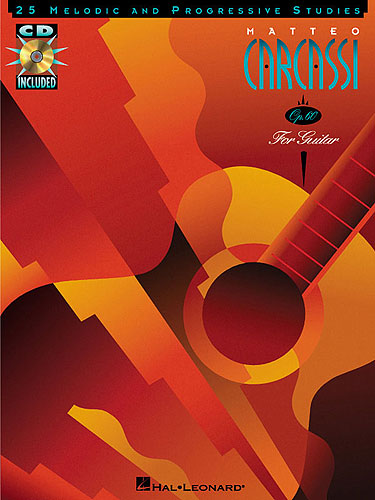
His recording credits include The Virtuoso Guitar of Spain and Latin America (Centaur Records), The Romance of Spain, and Dances and Dreams (Cadenza Classics). Among Paul henry's other contributions are his edition and recording of the Twenty-Five Melodic Etudes, Op. 60 by Mateo Carcassi, and his stunning recording of the prestigious Twenty Studies for Guitar by Fernando Sor,Segovia edition (both available as book/CD packages from Hal Leonard Corporation).

TiTLEs : 

Adelita (Mazurka)
Ave Maria
Capricho Arabe
Estudio Brillante
Gran Jota
Gran Vals
La Alborada
Lagrima
Malaguena
Maria
Marieta
Mazurka
Pavana
Recuerdos de la Alhambra
Tango

Prezzo: €24,99
€24,99

TARREGA IN TABLATURE Ben Bolt BOOK CD GUITAR TABLATURE CHITARRA Recuerdoes De La Alhambra

TARREGA, IN TABLATURE. 25 composizioni per chitarra: Marieta! -Rosita -la mariposa -capricho arabe -recuerdos de la Alhambra, Maria. SHEET MUSIC BOOK WITH CD & GUITAR TABLATURE. 

LIBRO METODO DI MUSICA CLASSICA CON CD .
SPARTITI PER CHITARRA CON:
PENTAGRAMMA E TABLATURE.


By Francisco Tarrega (1852-1909), edited by Ben Bolt. Guitar solo book (includes tablature) for guitar. Text language English, Spanish, French, Japanese. 125 pages. With guitar tablature, standard notation and introductory text.

The importance of Francisco Tarrega in the history of the classic guitar is immeasurable. With his original compositions and transcriptions, Tarrega brought the classical guitar to new heights by giving it a repertoire of its own and consequently influencing virtually every modern day classical guitarist. In this volume, Ben Boldt presents 29 pieces by Tarrega in standard notation and tablature. Text in English, Spanish, French, and Japanese. Titles include:

Contents:
Prelude In E
Prelude In A Minor
Lagrima
Prelude In G Major
Prelude In D Major
Prelude In D Minor
Prelude In D
Prelude (Endecha)
Prelude (Lento)
Prelude (Moderato)
Prelude
Prelude
Prelude
Prelude
Prelude In A
Prelude In A Minor
Prelude In A Major
Danza Mora
Marieta! (Mazurca)
Mazurca En Sol
Maria
Minuetto
Adelita (Mazurca)
Pavana
La Alborada
Capricho Arabe (Serenata)
The Butterfly (La Mariposa)
Rosita
Recuerdoes De La Alhambra

Prezzo: €24,99
€24,99

SANZ GASPAR THE COMPLETE WORKS OF Jerry Willard 2 CD TABLATURE LIBRI CHITARRA BAROCCA

SANZ GASPAR, THE COMPLETE WORKS OF. Jerry WILLARD. SHEET MUSIC BOOKS WITH 2CD & GUITAR TABLATURE . 

LIBRI DI MUSICA CLASSICA CON 2 CD.

SPARTITI PER CHITARRA CON : PENTAGRAMMA E TABLATURE.  

Available here is the complete manuscript of Sanz's legacy, which has been translated into English and the tablature arrangements now include standard music notation. Jerry Willard has also included arrangements for the modern guitar and performs selections from this body of work on both the baroque and modern guitar which can be found on the accompanying CDs. 280 pages.

By Gaspar Sanz. Arranged by Jerry Willard. For Guitar TAB. Renaissance, Medieval. Level: Intermediate-Advanced. Sheet Music and Audio CDs. 280 pages.

Gaspar Sanz was one of the most celebrated guitarists and composers of his time. In 1674 he published a method for the baroque guitar. This method has been lauded by guitar aficinados and serves as a significant historic work. Written in Old Spanish with the tablature system of its day, this method has only been available to the few who would meticulously research and decipher its hidden meanings. Available here is the complete manuscript of Sanz's legacy, which has been translated into English and the tablature arrangements now include standard music notation. Jerry Willard has also included arrangements for the modern guitar and performs selections from this body of work on both the baroque and modern guitar which can be found on the accompanying CDs.

Introduction
Biography
On April 4, 1640, Francisco Bartolome Sanz y Celma
was born in the tiny town of Calanda, near Saragossa,
Spain, into an old and well-to-do family. It was later
that he took the name Gaspar. He was educated at the
University of Salamanca, where he studied literature
and music and received a degree in theology. Sanz was
well traveled and spent much time in Italy, where he
studied guitar with Cristoforo Carisani and Lelio
Colista. He also studied the guitar works of Foscarini
and Corbetta. After returning to Spain, Sanz had
acquired such a great reputation as a guitarist and
composer that he was appointed guitar teacher to Don
Juan of Austria.

Baroque Guitar
The baroque guitar was popular primarily in Spain,
France, and Italy, and has a distinguished history
spanning 150 years, with only minor changes in tuning
and technique. Corbetta, Foscarini, and Montesardo in
Italy, de Visee in France, and Gaspar Sanz and Santiago
de Murcia in Spain championed the baroque guitar.

The baroque guitar was smaller than the modern
classical guitar, with more of an oblong shape, and had
wooden tuning pegs and tied-on gut frets. The
movable frets gave the baroque guitarist more
flexibility in tuning and pitch control.
There were many different tunings in vogue during
Sanz's time, the most popular of which is used and
explained in his method. The first string was single,
the second course (a set of multiple strings played as
one) was doubled unisons, the third course wa
doubled unisons, the fourth course was doubled in
octaves with the high octave on the thumb or bass
side, and the fifth course was doubled unisons an
octave higher than standard (modern) tuning. This
type of tuning, with the high octave on the thumb
or what would be the bass side of the strings,
enabled the guitarist to use the thumb as a melodic
finger, often playing high melody notes with the
thumb and achieving bell-like cross-string passage
called eampanellas.

Tablature
Tablature is a schematic that represents the five strings
of the guitar, with the bottom line representing the
highest string.
The frets are then represented by the numbers 1-9,
with 0 being an open string, and X indicating the
tenth fret. (Ed Note-Although indicated as a fret
marking in the original manuscript, an "X" in
conventional notation represents a muted string. This
edition will conform to conventional notation.) The
dots next to the numbers indicate the left-hand
fingering: one dot=index, two dots=middle, three
dots=ring, four dots=the little finger. Juan Carlo
Amat wrote the earliest publication for baroque guitar
and devised the alphabeto, a series of letters indicating
predetermined chords to be strummed during the
composition or dance. In the tablature, only the fretted
notes were indicated-the open strings were assumed.
(Ed Note- The diagram below illustrates the open
strings in this manner. However, conventional openstring
indications will be observed throughout the
remainder of this edition.) 


Contents:
Allemande La Serenissima
Another Ducal
Another French Saraband
Another Granduque
Another Passacaglia
Another Villano
Ballet
Batalla (Battle)
Bugle From the French King's Musketeers
Canarios (Sanz)
Chaconne
Dance of Mantua
Dance of the Axes
Dance of the Torches
Espa–oleta
Folias
Four Voices and Chromatics
French Ballet
French Saraband
Fugue I
Fugue II
Gallarda
Gallardas
Gigue
Gigue in the English Style
Granduque (Great Duke)
Great Duke of Florence
Jacara From The Coast
Jacaras
Labyrinth
Lantururu (Sanz)
Maricapolos
Mariona (Sanz)
Paradetas (Sanz)
Passacaglia
Passacaglia In A Minor
Passacaglia in E Minor
Passacaglia in F
Passacaglia In G Minor
Passacaglias
Passacaglias in B Flat
Passacaglias in D
Passacaglias in D Minor
Passacaglias in E Minor and B Flat Minor
Passage
Pavane
Pavane In A Minor
Prelude and Fantasy
Promenades in C
Rujero Gaspar Sanz
Saltaren
Tarantela
The Catalonian Mi-ena
The Enfachata of Naples
The French Shellfish
The Garzona
The Knights of Naples With Bugles
The Portuguese Minima
The Return
Torneo
Two Passacaglias
Two Trumpets of the Swedish Queen
Villano

Prezzo: €49,99
€49,99

RENAISSANCE MUSIC FOR FLUTE & GUITAR Allan Alexander Jessica Walsh CD TABLATURE LIBRO CHITARRA FLAUTO

RENAISSANCE MUSIC FOR FLUTE & GUITAR. SHEET MUSIC BOOK with CD & GUITAR TABLATURE .

LIBRO DI MUSICA RINASCIMENTALE PER FLAUTO E CHITARRA CON CD .

SPARTITI PER CHITARRA E FLAUTO : 
PENTAGRAMMA, TABLATURE .


INCLUDING ANCIENT MUSIC FROM IRALAND AND SCOTLAND

Dance of the washerwoman -I serve a worthie ladie -saltarello -a fancy -a merry ronde -a child's ronde -a winter's ronde -ronde -medieval song no.3 -the troubadour song -italiana -medieval song no.1 -the gypsy's lilt -volta no.1 -angelus ad virginem -canaries -blind mary -two medieval dances -adew dundie -the english hunts up -sumer is icumen in -kemp's jig -Out in the meadows -song of the ass, -medieval song no.2, e altre. CD TABLATURE


The Gypsy's Lilt - Anon/Jessica/Allan. This piece is a great example of why you never know what sounds you will find in Renaissance music. The dissonance that the guitar plays over and over is very modem sounding. There is no doubt that this is the chord that was intended, as there are two versions of this piece in the same lute book, and the chord comes up often. It's always written the same way. I love the melody that Jessica wrote for the second section. - Allan

Volta #1- Allan/Jessica. Volta means "turning" in Italian, and this piece reminds me of dancers whirling around. The Volta was actually a very complicated dance which involved a lot of leaping and turning. This tune has the same pedal as the Italiana. - Jessica

Kalenda Maya - Raimbaut de Vaqueiras/Allan • The "Calends of May" is the first of May, or May Day. In Medieval times it was a favorite holiday, filled with flowers, ribbons, and dancing. In Raimbaut's poem "Kalenda Maya" he tells us that none of the beauty of May Day can move him until the lady he loves looks on him also with love. - Jessica

Angelus ad Virginem - Anon/Allan. When I hear this tune I think of the very strident sounds of some of the Medieval wind instruments. The meter changes are especially fun to play and fall very naturally in the piece. - Jessica

Canaries - Skene/Allan. The Skene manuscript is a tremendous source for music of Scottish origin. There are pieces in it for the lute, but the majority of the material is for a smaller, more limited instrument called a mandora. Many of the melodies are delightful though, so I tune one of my instruments as the mandora is tuned, and play through a copy of the manuscript until I find the pieces I want to work with. - Allan

Blind Mary - Carolan/Allan/Jessica. Turlough Carolan lived in Ireland. He, like the girl he wrote about in this tune, was blind. This is a lovely melody - sad and gentle. I think that it is better to let it sing for itself than to say too much about it. - Jessica

Two Medieval Dances - Arbeau/ Allan. I find some of these Renaissance and Medieval melodies very addictive. Because they exist as just one-line melodies, we often have to add many notes to fillthem out, so it can be a surprise to play them for the first time. Often, they sound better when we come back to them, and sometimes we donlt even know how much we will end up liking them. We just have to wait and see. - Allan

Adew Dundie - Skene/Jessica. Dundee (the modem spelling) is a Scottish town that was rarely at peace throughout the Renaissance. It may be that the mandora player who wrote this melody left Dundee becuuse of the beating that his town was taking at the hands of the English. I wonder if he ever saw his home again. - Jessica

Kemp's Jig on lute and Renaissance flute. If you have the CD, you will hear this piece twice. This last time it is played on Renaissance instruments. - Allan & Jessica

Allan Alexander is a guitarist / Lutenist whose love is arranging and composing for both instruments. Allan is continuing to add to the repertoire of both guitar and lute, but is focusing on the flute and guitar repertoire with his performing partner Jessica. He lives in Troy, NY, with his lovely wife, an artist and sculptor. Jessica Walsh is composing, performing, and working on both books and recordings with Allan. She lives in Troy with her husband and their three exuberant children.

"Renaissance Music for Flute & Guitar" by Allan Alexander and Jessica Walsh. There is great music to be found in all times and from all countries. This is what we are always looking for... pieces that surprise us (pleasantly of course), tunes that make us say, "I want to hear that again," and music that we can't stop playing. Allan & Jessica have compiled a tremendous collection of Renaissance and Medieval duos for flute and guitar. If you love playing independent, interesting parts and if you like communicating with your musical partner, this is the book for you.This music captures the feeling of the Medieval and Renaissance times. It comes alive when you play it. During the Renaissance, it was the performers who wrote the music. Often they added variations; they were excited about the melodies. Allan & Jessica bring some of this approach to the music in this book. Good music need not be difficult to play. When doing arrangements, they make sure that the pieces lay well on the instruments. A few of the pieces in this book are composed by Allan & Jessica, because they also love to write. Nothing is more satisfying, nothing gives us greater pleasure than creating a tune that they want to come back to over and over again... and this is truly in the spirit of the Renaissance.

There are almost seventy minutes of music on the CD, and 29 pieces in the book. This book is perfect to take on gigs, or just to play with a friend. The point is, the music is great. You have to play the tunes in this book to appreciate what Allan & Jessica are talking about. The CD will give you insights into the music, and it will be enjoyable to listen to on its own merit.

Songs include Dance of the Washerwoman, I Serve a Worthie Ladie, Saltarello, A Fancy, A Merry Ronde, A Child's Ronde, A Winter's Ronde, Ronde, Medieval Song No. 3, The Troubadour Song, Italiana, Medieval Song No. 1, The English Hunts Up, Sumer is Icumen in, Kemp's Jig, Out in the Meadowe, Song of the Ass, Medieval Song No. 2, Bransle Charlotte, Cantiga de Santa María, Untitled from Rowallan, The Gypsy's Lilt, Volta No. 1, Kalenda Maya, Angelus ad Virginem, Canaries, Blind Mary, Two Medieval Dances, Adew Dundie.

Customer Comment About This Book:
just bought your music issue "Renaissance Music for Flute & Guitar" today. I am a kind of guy that is constantly search for beautiful music, especially guitar, flute, and piano. I have two kids. The older plays guitar and the younger plays flute. They are 14 and 11 but quite good in the instrument. It have been very few times that I bought a tape or book that I felt worth it. Sometimes I even felt waste the money. But this book of yours including the CD is really worth it. I chose 11 songs out of that I like most: Volta No.1, Bransle Charlotte, A Fancy, A Child's Ronde, A Winter's Ronde, Italiana, I serve a Wothie Ladie, Blind Mary, Adew Dundie, Dance of the Washerwoman, and Kemp's Jig. I am training my kids so that someday they will be able to play like you and Jessica. My kid's guitar teacher said guitar & flute make a very good duet. I agree with that. It is beautiful, especially when I listen to your CD. You guys are doing very good.


Author: Allan Alexander and Jessica Walsh

Category: Instrumental Collections

Renaissance Music for Flute and Guitar 


1. Dance of the Washerwoman .
2. I Serve a Worthie Ladie .
3. Saltarello .
4. A Fancy .
5. A Merry Ronde .
6. A Child's Ronde .
7. A Winter's Ronde .
8. Ronde :
9. Medieval Song NO.3 :
10. The Troubadour Song :
11. Italiana 
12. Medieval Song NO.1 
13. The English Hunts Up 
14. Sumer is Icumen in 
15. Kemp's Jig 
16. Out in the Meadowe 
17. Song of the Ass 
18. Medieval Song NO.2 
19. Bransle Charlotte 
20. Cantiga de Santa Maria 
21. Untitled from Rowallan 
22. The Gypsy's Lilt 
23. Volta NO.1 
24. Kalenda Maya 
25. Angelus ad Virginem 
26. Canaries 
27. Blind Mary 
28. Two Medieval Dances
29. Adew Dundie 
Prezzo: €99,99
€99,99
Condividi contenuti