LIBRO CON CD

FINGERBOARD HARMONY FOR BASS Gary Willis BOOK & CD LIBRO METODO SPARTITI BASSO ISBN 0-7935-6043-8

FINGERBOARD HARMONY FOR BASS. Gary Willis, 100 esempi e esercizi; posizione della mano, e molto altro. Con diagrammi. CD

LIBRO METODO DI MUSICA.

SPARTITI PER BASSO CON:

ACCORDI, PENTAGRAMMA, DIAGRAMMA. 

Per basso a 4 corde, 5 corde e 6 corde. Non ha la TABLATURE ma per quasi tutti gli esercizi c'è il disegno della tastiera che la sostituisce e è indicato il valore dell'intervallo armonico dalla fondamentale. Cosa molto utile per memorizzare modelli armonici e per una visualizzazione completa della tastiera.    


FINGERBOARD HARMONY FOR BASS
Series: Bass Instruction
Format: Softcover Audio Online
Author: Gary Willis

A comprehensive source for learning the theory and geometry of the bass fingerboard by one of today's leading players and instructors. Includes: 99 audio examples and exercises, hand positions, key centers, the linear approach, and more! Audio features Gary Willis demonstrating 99 examples and exercises. It's accessed online for download or streaming and includes PLAYBACK+, a multi-functional audio player that allows you to slow down audio without changing pitch, set loop points, change keys, and pan left or right. 

Inventory #HL 00695043
ISBN: 9780793560431
UPC: 073999950434
Width: 9.0"
Length: 12.0"
72 pages


In high school I was always awful at math (I still am), but when the semester on geometry came around, I got straight As, Fortunately, for me, the bass fingerboard is a very consistently geometric instrument. From day one I've always associated any sound on the bass with its corresponding shape. For instance, a major third is a string and a fret away That shape (the diagonal line drawn between the two notes on the fingerboard) will result in a major third from any other note on the neck (as long as you've got a string and a fret left to recreate it). By contrast, a major third on a keyboard can be two white notes, two black notes, a white note then a black note, or a black note then a white note. The fingering combinations (shapes) required to play major thirds on any woodwind instrument are even more varied. My approach to fingerboard harmony has always been based on these symmetric shapes. There are two ways to create harmony on the bass. One way is to play chords. The design and tuning of the bass makes playing and studying chords a fairly inefficient process, even on a 6-string. The other way to create harmony on the bass is to playa series of notes (a line) that reinforce or compliment the sound of the chord. In just about every style of music you're going to need to create a line at some point. Hopefully, this book will give you a consistent way of looking at harmony on the neck so you can play these lines freely. 

How to Use This Book 

The exercises and examples in this book are cumulative. Each idea or concept is based on the previous exercise and example. I wouldn't recommend skipping too far ahead without making sure you can confidently perform ail the previous exercises. It's a very "hands-on" approach. While the exercises may seem easy to understand, be honest with yourself and make sure you can execute them with ease before you're tempted to move on. As with any new concept, it may take a while before this way of looking at harmony becomes "subconscious." At first, be very deliberate and "hyper-conscious" take the time to make sure both your hands and mind understand what's going on with each exercise. Eventually you'll be able to visualize harmony clearly anywhere on the neck


Gary Willis.

After more than a decade of co-leading Tribal Tech with guitarist Scott Henderson, and their eight CDs, GARY WILLIS has launched his solo career with the September I996 release of No Sweat. He has performed with Wayne Shorter, Allan Holdsworth, Hubert Laws,Joe Diorio, Robben Ford, and Wayne Johnson. A Texas native, Willis studied composition and improvisation at North Texas State University. After moving to Los Angeles in 1982 he became a course leader at Musicians Institute in Hollywood and later taught at California Institute of the Arts in Valencia, California. Since Willis' move to Colorado in 1993, he has become one of the instrument's leading educators, releasing three books and one video. In addition to this fingerboard harmony book, Hal Leonard will release his composition/solo book in 1997. He currently lives, writes, teaches, and mountain bikes (not necessarily in that order) with his wife Pamela and their two labrador retrievers, Buster and Jose, in Colorado Springs, Colorado. 


Introduction


How to Use this Book

About the Author


Intervals

Interval Fads

Triads

Second Finger Position

Inversions

Seventh Chords

The Linear Approach

Passing Tones

Chord Tones Instead of Roots

The Minor Thirds Rule

Eighth Notes

Extensions

Review

Hand Positions

Second Finger Position

Fourth Finger Position

The Connection

Choosing a Key Center

Finding More than One Key

The "Three" Chord

The "Four" Chord

Minor

The "Two" Chord

The "Five" Chord

Shifting

Memorizing

Secondary Dominants

Three / Four

Other Chords

Putting It All Together


Special thanks to Mitch Sams, John Flitcraft and David Tyree for their help in the development of this book.


ISBN 0-7935-6043-8


HAL-LEONARD CORPORATION, 7777 W. BLUEMOUND RD. MILWAUKEE, WI 53213

Prezzo: €24,99
€24,99

Basso Elettrico Livello Intermedio Overthrow LIBRO CD TABLATURE GROOVE-MISOLIDIO-SLAP-&-POP

COMPLETE ELECTRIC BASS METHOD, INTERMEDIATE. Overthrow. LIBRO CON CD E TABLATURE
Basso Elettrico Livello Intermedio 

LIBRO METODO PER BASSO, CON CD.

SPARTITI CON: ACCORDI, PENTAGRAMMA, TABLATURE. 

TECNICA, 

IN ITALIANO.

David Overthrow suona e insegna il basso da oltre 20 anni. Ha studiato al Berklee College of Music, ottenendo una Laurea in Musica all’Università del Western Connecticut State.
Dave è stato anche membro della facoltà di basso al National Guitar Summer Workshop per 10 anni, dal
suo esordio nel 1984 al 1994. Al momento è Direttore Musicale e Responsabile Capo degli studi sul
Jazz presso la Canterbury School di New Millford, nel Connecticut. Dave si esibisce regolarmente dal vivo
a New York City e nel Connecticut. Oltre ad essere apparso in diversi CD, in stili che variano dal funk al
rock al reggae, Dave produce anche con il suo gruppo, gli Hippocket.

L’AUTORE .

INTRODUZIONE .

CAPITOLO 1 - Ripasso 
Come Leggere la Musica .
Crome Swingate .
Ritmi in Sedicesimi .
La Scala Maggiore .
Armature di Chiave .
Gli Intervalli .
Le Triadi .
Armonia Diatonica /Le triadi .
Accordi di 7ª .
Armonia Diatonica—Accordi di 7ª .
La Sincope .
Note Stoppate/Il Muting .

CAPITOLO 2 - La Scala Pentatonica Maggiore 
Diteggiature della Scala Pentatonica Maggiore.
I Modi della Pentatonica Maggiore/Le 5 Posizioni della Scala .
Linee di Basso con le Pentatoniche Maggiori .
Dave’s Tune .
Aggiungere la 7 .
Pentatonica Maggiore e il Blues di Dodici Misure .
Major Blues .

CAPITOLO 3-La Scala Pentatonica Minore .
Diteggiature della Scala Pentatonica Minore .
I Modi della Pentatonica Minore / Le Cinque Posizioni della Scala .
Linee di Basso Rock con la Pentatonica Minore .
Altre Linee di Basso .
Groove Funk con le Pentatoniche Minori .

CAPITOLO 4 - La Scala Blues .
Diteggiature della Scala Blues .
Accordi di 5ª .
Gimme 5 .
Play It Straight.
Groove con Crome Swingate nella Scala Blues .
Swing It .
Good Things Come in Threes .
Groove usando la 3ª Maggiore/Minore .
Major Minor Boogie .
Color Me Blues .

CAPITOLO 5—I Modi della Scala Maggiore.
Pensiero Relativo .
Pensiero Parallelo .
I Quattro Tetracordi Modali .
Combinare i Tetracordi per Creare i Modi .
Diteggiature su Due Ottave in Modo Ionico .
Dorico .
Misolidio .
Indice

CAPITOLO 6 - Slap & Pop .
Notazione Slap & Pop .
Tecniche Slap & Pop .
Lo Slap .
Esercizi sullo Slap .
Linee di Basso Slap sulla 3ª e 4ª Corda .
Il Pop .
L’Hammer-on .
Linee di Basso Usando L’Hammer-on .
Note Stoppate - Il Muting .
Il Pull-off .
Linee di Basso Slap & Pop .

CAPITOLO 7-Linee di Walking Bass-Introduz. al Jazz ..
Progressioni Jazz-Blues .
Toniche e 5e. 

 Diggin’ the Roots and 5ths .
 Blues for Charlie .
       Twelve Bars of 3rds and 7ths .
       Mo Better 3rds and 7ths .
Note di Passaggio .
Just Passing Through .
Passing Play .
Indice
Note di Passaggio Cromatiche .
Short Steps.
The Walking Man .
Attività Ritmica .
Get Your Activity Together .
Walk That Way .
Note di Approccio .
Approaching Greatness .
The Cool Approach to Walking .
Conclusione .

CAPITOLO 8 — Le Scale Minori 
Minore Relativa — Minore Naturale .
Minore Armonica .
Minore Melodica .
COSA C’È DOPO 
DISCOGRAFIA 
Blues .
Funk .
Altri Musicisti da Ascoltare .


Con ogni libro di questa serie è allegato un CD. Il suo utilizzo renderà 

l’apprendimento più divertente e le informazioni ricevute più ricche di signifi -
cato. Ciascun CD contiene un’intera sezione ritmica nella maggior parte degli
esempi. È molto importante suonare il più possibile con il CD. Hanno suonato
grandi musicisti, potete suonare con loro senza uscire di casa! Il CD aiuta a
suonare le note giuste, i ritmi e i feel di ciascun esempio. I numeri di traccia
sotto ai simboli corrispondono all’esempio che si vuole ascoltare. La traccia 1
serve per accordarsi. Buon divertimento!!! 

Prezzo: €20,99
€20,99

EXPANDING WALKING BASS LINES Ed Friedland BASS BUILDERS HAL LEONARD CD LIBRO BASSO JAZZ TRIO

EXPANDING WALKING BASS LINES.

LIBRO PER BASSO CON CD

Expanding Walking Bass Lines
BASS BUILDERS

Series: Bass Instruction
ormat: Softcover with CD
Author: Ed Friedland


A follow-up to Building Walking Bass Lines, this book approaches more advanced walking concepts, including model mapping, the two-feel, several 'must know changes,' and other important jazz bass lessons. CD includes a jazz trio for practicing standard tunes.

Inventory #HL 00695026
ISBN: 9780793545865
UPC: 073999950267
Width: 9.0"
Length: 12.0"
56 pages


- PRE-RECORDED JAZZ TRIO FOR PRACTING STANDARD TUNES
- SCALES TONES, CHROMATIC PASSING TONES AND NON-CHORD TONES
- INTERPRETATION OF CHORD SYMBOLS WITH TENSIONS
- PLAYING OVER MODAL TUNES
- PEDAL POINTS 
- EXPANDING THE ''TWO'' FEEL
- RHYTHM ESSENTIALS


Preface
In the first book of this method, Building Walking Bass Lines, we learned many of the basic skills needed to create good, solid lines from a set of chord changes. The techniques discussed were: finding the root motion, adding the fifth, approach techniques (chromatic, dominant and scale), scale wise motion, resolving to chord tones other than the root, arpeggiation, indirect resolution, and chromatic motion.
If you are not familiar with these concepts, I recommend you use Building Walking Bass Lines before attempting to work through the material in this book. It is crucial to your understanding to have a good foundation with the rudiments of walking. The information presented in this book will be most useful to those who have a firm grasp of these basic skills.

Goal Statement
This book will expand on your knowledge of the basics by focusing on some of the finer points of walking bass lines. You will be exposed to some practical concepts to help you become more functional in a jazz rhythm section. We will branch out from the "straight ahead" and learn to stretch the boundaries of tonality.
It is also a goal of this method to provide you with an opportunity to experience some "real world" situations and develop the skills to cope with them.

Acknowledgments
Thanks to my family. Sonia, LeeEllen and Aimee Friedland, and David Taylor. Thanks also to Jim Roberts Bat Bass Player Magazine, Larry Fishman of Fishman Transducers, Bill Brinkley, Michael Merrill, Tom Hamilton, Athena, Lu Ann, Ed Siegfried, Dave Flores, and everyone at Carvin, and GHS strings.

About the Author
Ed Friedland is a graduate of the High School of Music and Art in
New York City, and a former faculty member of Berklee College of
Music and Boston College. He is a frequent contributor to Bass
Player Magazine. His performance credits include Larry Coryell,
Michal Urbaniak, Robben Ford, Mike Metheny, Johnny Adams,
Linda Hopkins, Robert Junior Lockwood, Barrence Whitfield and the
Savages, Martha and the Vandellas, The Drifters, Brook Benton, the
Boston and Tokyo productions of Little Shop of Horrors, the Opera
company of Boston, and the Boston production of A Closer Walk with
Patsy Cline. Ed is involved in producing and arranging with Bass
Station Music. He has a M.Ed. from Cambridge College, Cambridge,
Massachusetts. He uses Carvin basses, GHS strings and Fishman
transducers. Ed resides in Tucson, Arizon. Photo: Jean Hangarter


Using the Audio
The audio portion of this method is of equal importance to the text, since learning to walk without the
opportunity to hear the lines is an incomplete experience. In view of the scarcity of clubs around the world
where you can go sit in and experiment, I have provided an alternative. However, if you have the opportunity
to play at a jam session, or do a jazz gig, by all means take it. There is no replacement for the actual experience
of playing in a live rhythm section. I hope you will get to play with players as great as the ones I hired for this recording, Brad Hatfield on piano and Jim Lattini on drums.
This method's audio uses a split-stereo mix with piano and drums on the left channel, and bass and drums on the right channel. This configuration will allow you to turn off the bass track and play with the piano and drums. It will also make it easier to hear the bass track when learning the lines by ear, and transcription.
The examples in the book marked with a CD.
icon have a number that corresponds to the number on the audio. The example number is given and then counted off with a click. The click is a two measure count off, two half notes, and three quarter notes, leaving beat four of measure two blank. For example: 1. .. 2 ... 1, 2, 3, ... (play).
There are many opportunities in the book to create your own lines. These are the examples with chord symbols and slashes without a specific written bass line. It is more common for the bass player to encounter this type of reading in the real world, so these examples are very important. The bass lines for these examples are not written in the book, so they provide an excellent opportunity to practice learning by ear. Go the extra mile and transcribe these bass lines. Writing music on paper is one of the best ways to improve your ability to read music. Remember, you can use any of the chord progressions presented to practice any technique learned. If you want to practice fingered triplets with a progression from another part of the book, go ahead.
The last section of the book, the Appendix, includes ten jazz progressions. The last three progressions have no chord changes written. These "mystery tunes" are included to provide you with the challenge of learning a song completely by ear, with no prior iMormation given. As difficult as this may seem, thousands of bassists do it all the time. "Faking" tunes is an important skill that bass players must have to survive in the real world. It is not my intention to have this book become a full-scale primer of all the background information one needs to develop this skill; that comes from years of experience. There are suggestions given to help you develop an awareness of the process, things to listen for, hints about form, but nothing concrete.
This process is more like sorcery than science.
This book will not guarantee your ability to swim when you're thrown into the deep end of the pool, but it may save you from drowning! Stick with it, give it time, and keep your ears open!


Table of Contents
Preface .
Goal Statement .
Acknowledgements .
About the Author .
Using the Audio .
Fine Tuning Your Time Feel .

Part One
Overview .
A Disclaimer .
Introducing Rhythms .
Eighth Note Triplets .
Rests .
Combining Rhythms and Rests .
Adding Rhythmic Embellishment .
More Practice with Skips ,
Skips with Dead Notes .
Lift-off Dead Notes ,
Putting It Together .
Using Triplets .
Even More Triplets .
Triplets with Dead Notes .
Expanding the "Two" Feel .

Part Two
Overview .
Targeting Non-chord Tones .
U sing Scale Tones as Targets .
U sing Chromatic Passing Tones as Targets .
Interpreting Chord Symbols with Tensions .
Playing Over Modal Tunes .
Create Your Own Modal Map .
Pedal Points .
A Listening Assignment .
Walking Open: The Art of Implied Harmony .
A Closing Word .

Appendix
U sing the Appendix .
Tune 1: ABAC form .
Tune 2: "Rhythm Changes" A section .
Tune 3: Several Key Centers in A section .
Tune 4: "Expanded Two Feel" .
Tune 5: Modal .
Tune 6: Bridge Modulations .
Tune 7: Repetitive A section .
Three Mystery Tunes .
Things to Consider .
Things You Should Know .
Things You Can Do .
Notation Legend .
 

Prezzo: €22,99
€22,99

BLUES AND RHYTHM & BLUES BASS TECHNIQUES The mastery-Soul-Funk styles Jerry Jemmott book CD TABLATURE

BLUES AND RHYTHM & BLUES BASS TECHNIQUES. The mastery of Blues, Soul, and Funk styles. Jerry Jemmott. CD TABLATURE

LIBRO PER BASSO CON CD E TABLATURE


JEMMOTT JERRY, BLUES AND RHYTHM & BLUES BASS TECHNIQUE

Series: Bass Builders
Softcover with CD - TAB
Author: Jerry Jemmott

Jerry Jemmott wrote the book on R&B bass, and here it is! This book/CD pack examines Jerry's personal philosophy of music and teaches the secrets to mastering blues, soul and funk bass. Includes a CD with new compositions that demonstrate the techniques he used with legendary performers such as Aretha Franklin, King Curtis, B.B. King and Freddie King. Includes note-for-note transcriptions, comprehensive perfor-mance notes, an in-depth bio, and rare photos. 80 pages

JERRY JEMMOTT wrote the book oh rhythm & Blues bass -and here it is !

Share his personal philosophy of music and learn the secrets to mastering blues, soul, and funk bass.

- CD WITH NEW COMPOSITIONS 

- NOTE FOR NOTE TRANSCRIPTIONS IN STANDARD NOTATION & TABLATURE

- COMPREHENSIVE PERFORMANCE NOTES, IN DEPTH BIOGRAPHY, RARE PHOTOS

- GROOVE ALONG IN THE STYLE OF THE GREATEST HITS OF ARETHA FRANKLIN, KING CURTIS, B.B. KING, FREDDIE KING.


In collaboration with Dave Rubin

Jerry Jemmott has had the singular experience of playing with a veritable Who's WHO of blues and Rhythm & Blues illuminaries. Here are a selection of his candid memories from this all-star group:

ARETHA FRANKLIN: "Being exposed to her creative process has had a profound effect on my writing, producing and playing. Performing with her and King Curtis at the same time has to be among the greatest of good fortunes that I have encountered. Her combining of gospel and jazz to form a Rhythm & Blues style really locked with my jazz and Rhythm & Blues styles. My style came out of playing dance music and jazz. I guess I h;1(jthe groove and the beat from playing dance music, and she had that soul and e1.'Pressionfrom playing gospel and jazz. It was quite an experience playing together, like lightening striking.
We met when King Curtis had me come down, with my bass, to be a paid observer at her sessions for Atlantic Records in New York in 1968. I sat in the control room and watched the Muscle Schoals rhythm section Gimmy Johnson, guitar, Tommy Cogbill, bass and Roger Hawkins, drums) play tills one song over and over. As soon as I heard it, I fclt the groove was a country kind of thing, you know, a country "two" feel. They went all around the world with different things, and never really hit that particular groove. They took a break, and when they carne back producer Jerry Wexler told me to go in the studio and take a shot.
Two takes later "Think" was finished.
In 1971 I was on the road with the King Curtis band backing up Aretha. After being out a while, the band had developed a thing of trying to outdo each other. We had really gotten tight in three months and we used to see how far we could push Aretha, because we loved playing with her, and she would always rise to the occflsioll, even if she was sick. One time in Paris things got so intense that Aretha almost passed out onstage."

KING CURTIS: "Starting at the Pine Grill in Buffalo, New York in 1967, the interplay between Curtis and myself was very personal. I never experienced that before or since. It was almost like two people feeding each other and never dropping a crumb of food. He hClda lot of faith and confidence in my style of playing.
That made me feel free to do whatever I wflnted to do, which helped me to grow quite a bit, and which he himself enjoyed.
He was a tough bandleader, particularly in regard to guitarists and drummers. He had trouble with Jimi Hendrix when he was in ills band, but he did not have a problem with me. The only problem I had with rum was when he would not give me the recording work I thought I should have! That's when I left the band from 1967 to 1971. But then he recognized that I wanted to stay in the studio, so he would just call on me to make records. However, when he got a good tour, like the one with Aretha, he would call me. At firstT did not want to do thflt one, but after thinking about it for a couple of days, I said okay, I'll do it, because I liked working with both of them. I actually tried to rationalize why I should stay in New York, where I had plenty of studio jobs, but then I thought I should do it for the fun of it. Billy Preston was going to be there, along with Cornell Dupree and Bernard Purdie, so it was going to be a great band.
The audiences were fantastic. Every place was sold out. The Fillmore West was something else! There were no seats in the place! They took all the chairs out and everybody stood up for two hours. I had never seen anything like that, because usually you have seats in a concert hall. Everybody stood right up against the stage as there was no barrier to keep them back. Their heads were right at stage level.


Istant groove
When the spirit of King Curtis appeared in my kitchen the morning after his death, I became a believer in the existence of a higher power. This power had been a force in my life all along, but I had never acknowledged it. The "instant groove" or "God is talking to you" is that phenomenon that reveals itself, thus enabling you to rf'cognize in a micro-second the true essence and direction of what could possibly happen.
You can then deal with the situation at that moment to achieve a positive result when you come into
the presence of another person, place or thing.
All through my life I have experienced many "instant grooves." These include coming in contact with the mllsir of P,lUJ C:hamhers along with all the other great musicians, singers, artists and philosophers who have affected me. Also, my introduction to Nichiren Shoshu Buddhism (Nam Myoho Renge Kyo) and the love and support of my mother, father, sister and my children Jeanine, Tishiro and Isis. Another time was my refusal to give Lionel ("Hey Gates") Hampton my place in line for the bathroom at the Pazant brothers home in Bufford, South Carolina. This resulted in "Gates" firing me, thereby sending me back to New York to begin my studio career full time in 1968. Lastly, there was the return of my dream girl, Miss Constance Bailey, back into my life after a twenty-three year absence to become my fiancee.
You've got to "recognize" and make it happen with courage, confidence and conviction. You rarely get a second chance unless, as they say in Egypt, "Insha-AllaJ1," which means "If God wills it."


Michael Bloomfield: "A great guitarist. We developed a friendship after meeting at the Fillmore East. I had already known his buddy Al Kooper from the "Well" session of B.B. King's Live and Well (1969). I arranged a telephone conversation between Michael and Cornell Dupree (who Michael was anxious to meet) when Michael and I were working together at My Father's Place on Long Island. I got to do a few more gigs with him just before he died. He was an incredible player."

DUANE ALLMAN : "Another great player, innovative, a real hard worker. He was very personable and we got along well together. Being with Duane was the first time I had played with a slide guitarist. This occurred on the Aretha Franklin sessions when she did a cover of "The Weight" by the Band.
The last time I saw him he was going home to start a band with his brother Greg. The Allman Brothers Band was formed and the next thing I remember was travelling through Georgia on the way to a gig and hearing about the accident on the radio." (Note: Duane Allman died in a motorcycle crash on October 29, 1971, in Macon, Georgia.)

FREDDIE KING : "He was great to work with and could really play and sing. Curtis brought Freddie to the Atlantic studios to record and that was the first time I heard him. He was really something. He knew what he wanted and we would just follow him. Freddie King IsA Blues Master(l969) gave us a chance to spice up some of his old instrumentals. Also, it was the first time that I got to record "Get Out Of My Life, Woman," (Allen Toussant), which I had played all my Rhythm & Blues life. My Feeling For The Blues (1970) had more traditional blues on it.
Freddie was from Texas, like Curtis, and he could play in a big way. He had a good set of chops and he had a very lyrical way of playing, almost like he was singing. I have heard that Freddie was also influenced by Louis Jordan, just like Curtis."

Robeta Flack and the jingle scene: "Another woman who played piano and sang. A different style
than Aretha, more of a jazz piano player. She was very similar to ina Simone, her whole persona and playing. I grew up listening to Nina Simone and had the good fortune to record with her, so playing with Roberta Flack was just one more extension of that experience, to a great degree.
She only worked on weekends because that's where the money was. During the week she took care of her dogs, cats, mother and her music business. She wouldn't do any recording then, and she took her time about doing stuff. She had it so she only worked on weekends, gigs at venues that held 20,000 or more people. The small group that backed her had Terry Plumeri, Eric Gale, Ralph MacDonald and Grady Tate. I loved working with Grady. We used to do a lot of jingles together with Herbie Hancock, with maybe Vincent Bell or Eric Gale on guitar. One company, Grant and Murtaugh, would hire the three of us a lot. The thing about it was that if you couldn't get one of us, you could get another. It was rare that we could guarantee all three of us showing up together at the same time. If I couldn't make it, Ron Carter would be there; if Grady wasn't there maybe Ed Shaughnessy or Herb Lovelle would be there. If Herbie couldn't make it, Dick Hyman or Keith Jarrett would be there. They would also use all the hip horn players like Hubert Laws, George Coleman, Jon Faddis, Joe Newman, Seldon Powell, Ernie Royal, Snooky Young, Heywood Henry, nothing but the best, the cream of the crop. It was like looking at Count Basie's Band and Duke Ellington's Orchestra all at once. I had come up with hom players and big bands, so I was in heaven!"

Wilson PIckett: '''The Wicked Pickett,' a piece of work, so to speak. I had always admired him, but did not get a chance to work with him until around January, 1968, at Atlantic studios in ew York. The bassist they had booked for the session did not show up so they called me at my house to come down. It ....


PREFACE
I want to let you in on a little secret. I was not born in Macon, Georgia, with a bass inIllYhands, as King Curtis once stated, butIllYpredilection to create hip, funky bass lines led him and others to think so. I was actually born in the South Bronx, New York, and after I heard Paul Chambers play I could not keep the bass out of my hands!
In addition to this secret, for those who want to know, a "few" choruses of biography follow to set the record straight, and a "few" Jines about my experiences with the extraordinary artists I have had the good fortune to record and/or perform with over the last five decades.
For you who want to groove, within these pages and on the accompanying CD there is a detailed account of what I do and the techniques I lise to do it. With the permission of Reel Souler Energy Music Publishing, I have written a set of music similar to the records I made with Aretha Frankl in, King Curtis, RB. King and Freddie King. I hope you enjoy playing them as much as I enjoyed creating them for you.

Jerry Jemmott
It has never been easy being Gerald Joseph Stenhouse Jemmott. I would like to acknowledge the love and support I have received along the way from my Higher Power, family and friends: Richard Davis, Fred Paterno, the Pazant brothers, Richard Otto, Agnes Hall, King Curtis, Cornell Dupree, Paul Gaulden, Don Covay, Arlen Roth, Constance Bailey, Paul Conway, Yoko Yamabe, MerrH Roberts, Daisy White, James Bailey, Rebecca Thomas, Robert Bailey, Gwendolyn Jones, Z Cookie, Mercer Ellington, my students, Seldon Powell, Paul Griffin, B. R King, Stewart Moore, Sam Leon, Alfie Wade, Herb Lavelle, Richard Dubin, Brent Owens, Kirk urock, Bill "Junior" Linton, George Naha, Chuck Raney, Phil Coco, Gordon Edwards, Roy Hicks, Joan White, Al Fontaine, Frankie Paris, Michael Moore, Bill Dawson, Dr. Janet Moses, Bob Moses, Miriam Citron, Dr. Joel Beddard, Charlie Kellam. Shad Polier. Abe Rivera, ESP, Vantage, Murphy's Music, Andre-audio-tronics, Carl Thompson, P Vine Non Stop Records and Hot Licks Tapes and Videos.


PAGE CD TRACK

What is "Instant Groove"
Preface and Acknowledgements
Foreward
Biography
My Biggest Influence
Jerry Remembers
Playing in a Big Band Versus an R&B Combo
Getting Down and Going Deeper
You Too, Will Groove
The Different Aspects of My Bass Technique

Recordings
TRANSCRIPTIONS WITH PERFORMANCE NOTES
In the Moonlight
Until The Day I Die
Big Maybelle
Sweet Mr. Soul
Sweet Trippin' 
In Every Way He Treats Me Right
Jubilee Jam One on One
My Papa Always Treats Me Right
You Know I Know 
Sableline 
Ooh Scooby Doo
Good Cookin'
Always on the Way
Love Light in the Daylight
Jerry's Bass Equipment
Jerry Jemmott Selected discography
CD Production Credits
Bass Notation Legend 

Prezzo: €21,99
€21,99

BUILDING WALKING BASS LINES Ed Friedland CD LIBRO SPARTITI METODO BASSO ACCORDI LATIN

BUILDINDG WALKING BASS LINES. LIBRO CD CD

LIBRO DI MUSICA, METODO PER CHITARRA BASSO CON CD.
ACCORDI E PENTAGRAMMA.

Building Walking Bass Lines

Series: Bass Instruction
Format: Softcover with CD
Author: Ed Friedland

A walking bass line is the most common approach to jazz bass playing, but it is also used in rock music, blues, rockabilly, R&B, gospel, Latin, country and many other types of music. The term 'walking' is used to describe the moving feeling that quarter notes create in the bass part. The specific goal of this book is to familiarize players with the techniques used to build walking bass lines and to make them aware of how the process works. Through the use of 90-minutes' worth of recorded rhythm tracks, players will have the opportunity to put the new learning directly into action. This book literally gives bassists the tools they need to build their own walking bass lines.

Inventory #HL 00695008
ISBN: 9780793542048
UPC: 073999950083
Width: 9.0"
Length: 12.0"
64 pages

Prezzo: €26,99
€26,99

BERKLEE PRACTICE METHOD BASS CD TABLATURE JOHN REPUCCI GET YOUR BAND TOGETHER comping-improvisation-rhythm

BERKLEE PRACTICE METHOD: BASS. GET YOUR BAND TOGETHER. CD TABLATURE

Berklee Practice Method: Bass
Series: Berklee Methods
Publisher: Berklee Press Publications
Format: Softcover with CD - TAB
Author: John Repucci
Author: Rich Appleman

Make your band better, or prepare yourself to join one! This sensational series lets you improve your intuitive sense of timing and improvisation, develop your technique and reading ability, and master your role in the groove. Play along with a Berklee faculty band on the accompanying CD, then play with your own band!

Inventory #HL 50449427
ISBN: 9780634006500
UPC: 073999494273
Width: 9.0"
Length: 12.0"
176 pages


Foreword
Berklee College of Music has been training musicians for over fifty years. Our graduates go onto successful careers in the music business, and many have found their way to the very top of the industry, producing hit records, receiving the highest awards, and sharing their music with millions of people.
An important reason why Berklee is so successful is that our curriculum stresses the practical application of musical principles. Our students spend a lot of time playing together in bands. When you play with other musicians, you learn things that are impossible to learn in any other way. Teachers are invaluable, practicing by yourself is critical, but performing in a band is the most valuable experience of all. That's what is so special about this series: it gives you the theory you need, but also prepares you to play in a band.
The goal of the Berklee Practice Method is to present some of Berklee's teaching strategies in book and audio form. The chairs of each of our instrumental departments-guitar, bass, keyboard, percussion, woodwind, brass, string, and voice-have gotten together and discussed the best ways to teach you how to play in a band.
They teamed with some of our best faculty and produced a set of books with play-along audio tracks that uniquely prepares its readers to play with other musicians.
Students who want to study at Berklee come from a variety of backgrounds. Some have great technique, but have never improvised. Some have incredible ears, but need more work on their reading skills. Some have a very creative, intuitive sense of music, but their technical skills aren't strong enough, yet, to articulate their ideas.
The Berklee Practice Method teaches many of these different aspects of musicianship. It is the material that
our faculty wishes all Berklee freshmen could master before arriving on our doorstep.
When you work through this book, don't just read it. You've got to play through every example, along with the recording. Better yet, play them with your own band.
Playing music with other people is how you will learn the most. This series will help you master the skills you need to become a creative, expressive, and supportive musician that anyone would want to have in their band.
Gary Burton
Executive Vice President,
Berklee College of Music


Preface
Thank you for choosing the Berklee Practice Method for bass. This book/CD package, developed by the faculty of Berklee College of Music, is part of the Berklee Practice Method series-the instrumental method that teaches how to play in a band.
The recording included with this method provides an instant band you can play along with, featuring great players from Berklee's performance faculty. Each tune has exercises and practice tracks that will help prepare you to play it. Rock, blues, and funk are just some of the styles you will perform.
The lessons in this book will guide you through developing reading skills and playing basic grooves, walking bass lines, and other standard bass techniques. This book is for bass players who are just beginning lessons with their teacher, though players learning on their own will also find it invaluable. You should have some knowledge of fingering on the low part of the neck and a sense for how to play the bass notes. These are reviewed in the "Basics" chapter.
Most importantly, you will learn the skills you need to play bass in a band. Play along with the recording, and play with your friends. This series coordinates methods for many different instruments, and all are based on the same tunes, in the same keys. If you know a drummer, guitarist, hom player, etc., have them pick up the Berklee Practice Method for their own instruments, and then you can jam together.
Work hard, make music, have fun!
Rich Appleman
Chair of the Bass Department
Berklee College of Music
John Repucci
Assistant Chair of the Bass Department
Berklee College of Music


This series coordinates methods for many different
instruments, and all are based on the same tunes, in the same
keys. !fyou know a guitarist, drummer, keyboardist, vocalist,
horn player, etc., have them pick up the Berklee Practice
method for their own instrument, and jam together!

Lessons throughout this book guide you through playing basic
grooves, walking bass lines, and other standard bass
techniques. Daily practice routines are designed for practicing
by yourself or with other musicians. The accompanying CD
features outstanding Berklee players and covers a variety of
styles including rock, funk, jazz, blues, swing, and bossa nova.

Get Your Band Together
This is the first-ever method that teaches you how to play in a
rock band. learn what all the great musicians seem to know
intuitively-how to listen, interact and respond, improvise, and
become part of the groove. The book and play-along CDwill help
improve your timing, technique, and reading ability. Become the
great player that everyone wants to have in their band.

Topics include:
• learning by ear
• theory and technique
• rhythmic interpretation
• improvisation
• comping
• reading
• song form
• interpreting lead sheets

"THE BEST WAY TO LAUNCH YOUR PLAYING TO THE NEXT LEVEL IS BY PERFORMING REAL TUNES WITH SEASONED MUSICIANS. THIS BOOK/CD COMBO PROVIDES THAT KIND OF EXPERIENCE FOR ASPIRING BASSISTS, ALONG WITH A TREASURY OF MUSIC-THEORY KNOWLEDGE AND PRACTICAL INSIGHTS."
RICHARD JOHNSTON, EDITOR, BASS PlAYER MAGAZINE

"By FAR THE MOST INFORMATIVE BOOK I'VE EVER SEEN. GREAT FOR BASSISTS OF BEGINNER OR ADVANCED STAGES. FROM TUNING AND HOLDING THE BASS, TO TRANSPOSING AND IMPROVISING BASS LINES, IT COVERS EVERYTHING. THE WAY THAT THE DIFFERENT BASS
STYLES ARE THOROUGHLY BROKEN DOWN ALONG WITH DIFFERENT PRACTICE TIPS IS FANTASTIC. " CHRISTIAN McBRIDE

"AN EFFECTIVE WAY FOR YOU TO READ CHARTS AND PLAY ALONG WITH OTHER MUSICIANS IN A REAL-TIME PLAYING ENVIRONMENT. THE BOOK WIll KEEP YOUR NOSE IN THE MUSIC AND THE CD WIll KEEP YOUR EARS OPEN TO THE GOINGS-ON OF THE OTHER MUSICIANS WHO ARE PLAYING. HAVE FUN, PRACTICE REGULARLY, ANO ENJOY THIS FINE BOOK."
JEFF BERLIN

"TRUE TO THE TRADITION OF BERKLEE COLLEGE OF MUSIC TO THOROUGHLY TRAIN STUDENTS TO BE PROFESSIONAL MUSICIANS, THIS METHOD IS A GREAT WORKOUT. AN EXCELLENT PRACTICE BOOK COVERING MANY STYLES, WHICH WIll HELP YOU LEAR THE NECESSITIES OF WORKING IN THE RHYTHM SECTION CREATIVELY. "
CAROL KAYE, BASS RECORDING LEGEND, PIONEER IN AUTHORING TUTORS FOR THE ELECTRIC BASS, EDUCATOR AT THE HENRY MANCINI INSTITUTE-UCLA

"THE PRACTICE METHOD RULES! IT's A GREAT WAY TO LEARN RIFFS, LATCH ONTO SOME BASIC SONG STRUCTURES, AND SEE HOW TUNES ARE PUT TOGETHER. THIS LETS YOU FOCUS ON PLAYING IN A BAND, AND ON CREATING YOUR OWN INTERPRETATIONS IN ANY STYLE. "
JOE STUMP, SHRED GUITAR MASTER, ASSISTANT PROFESSOR, BERKLEE COLLEGE OF MUSIC

Berklee Practice Method is also available for:
• drum set • alto sax
• guitar • tenor sax
• Keyboard • trombone
• voice • trumpet
• Vibraphone ·violin

"TEACHERS ARE INVALUABLE, PRACTICING BY YOURSELF IS CRITICAL, BUT PERFORMING IN A BAND IS THE MOST VALUABLE EXPERIENCE OF ALL. THAT's WHAT IS SO SPECIAL ABOUT IS SERIES: IT GIVES YOU THE THEORY YOU NEED, BUT ALSO PREPARES YOU TO PLAY IN A BAND.
THIS SERIES WILL HElP YOU MASTER THE SKILLS YOU NEED TO BECOME A CREATIVE, EXPRESSIVE, AND SUPPORTIVE MUSICIAN THAT ANYONE WOULD WANT TO HAVE IN THEIR BAND."
GARY BURTON, EXECUTIVE VICE PRESIDENT, BERKLEE COLLEGE OF MUSIC

Berklee Press, a publishing activity of Berklee College of Music, is a not-for-profit educational publisher. Available proceeds from the sales of our products are contributed to the scholarship funds of the college.
Cover design: mooremoscowitz
Berklee Press


Contents
CD Tracks
Foreword
Preface
Basics .
Chapter I. Playing Rock ("Sweet") .
Lesson 1. Technique/Theory .
Lesson 2. Learning the Groove .
Lesson 3. Improvisation .
Lesson 4. Reading .
Daily Practice Routine .
Chapter II. Playing Blues ("Do It Now") .
Lesson 5. TechniquelTheory .
Lesson 6. Learning the Groove .
Lesson 7. Improvisation .
Lesson 8. Reading .
Daily Practice Routine .
Chapter III. Playing Blues Swing ("I Just Wanna Be With You") .
Lesson 9. Technique/Theory .
Lesson 10. Learning the Groove .
Lesson 11. Improvisation .
Lesson 12. Reading .
Daily Practice Routine .
Chapter IV. Playing Funk ("Leave Me Alone") .
Lesson 13. TechniquelTheory .
Lesson 14. Learning the Groove .
Lesson 15. Improvisation .
Lesson 16. Reading .
Daily Practice Routine .


Chapter V. Playing Light Funk ("Affordable") .
Lesson 17. Technique/Theory .
Lesson 18. Learning the Groove
Lesson 19. Improvisation .
Lesson 20. Reading .
Daily Practice Routine .
Chapter VI. Playing Hard Rock ("Don't Look Down") .
Lesson 21. Technique/Theory .
Lesson 22. Learning the Groove .
Lesson 23. Improvisation .
Lesson 24. Reading .
Daily Practice Routine .
Chapter VII. Playing Bossa Nova ("Take Your Time") .
Lesson 25. Technique/Theory .
Lesson 26. Learning the Groove .
Lesson 27. Improvisation .
Lesson 28. Reading .
Daily Practice Routine .
Chapter VIII. Playing Stop Time ("Stop It") .
Lesson 29. Technique/Theory .
Lesson 30. Learning the Groove .
Lesson 31. Improvisation .
Lesson 32. Reading .
Daily Practice Routine .
Final Remarks .


Prezzo: €16,00
€16,00

BASS MASTER CLASS, GLENN LETSCH'S. CD TABLATURE

BASS MASTER CLASS, GLENN LETSCH'S. 5 Lessons from Jaco, Prestia, Mike Chapman, ecc. CD TAB.

Prezzo: €29,99
€29,99

THRASH GUITAR METHOD TROY STETINA BOOK & CD TABLATURE LIBRO METODO SPARTITI CHITARRA

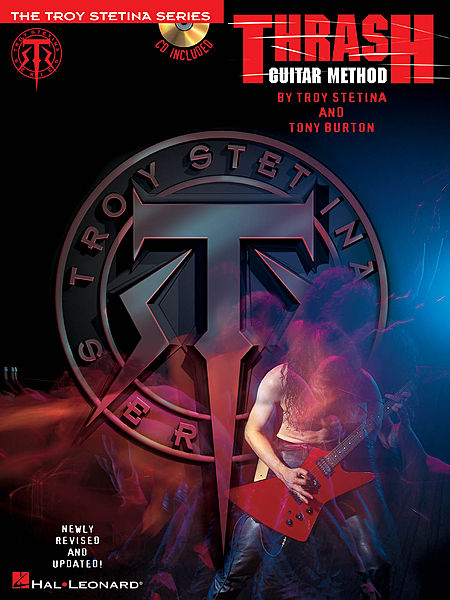
THRASH GUITAR METHOD. Per ritmi precisi, un cucchiaino di Stetina tutti i giorni. SHEET MUSIC BOOK WITH CD & GUITAR TABLATURE.

LIBRO METODO DI MUSICA METAL, CON CD. 

SPARTITI PER CHITARRA CON: 

ACCORDI, TABLATURE. 

TECNICA, 

Series: Stylistic Method
Medium: Softcover with CD
Author: Troy Stetina

Let the mosh begin! Learn the techniques and principles used by today's heaviest bands including Metallica, Anthrax, Testament, and others. This truly radical method book takes you from slow grinding metal up to the fastest thrashing. Syncopation, shifting accents, thrash theory, progressions, chromatic 'ear-twisting ' melodic dissonances, shifting time signatures, harmony, and more. CD features bull band accompaniment for all musical examples so that you can play along with the band. Fully transcribed in tablature! 64 pages

Anvil Head (Stetina/Burton)
Bug Guts (Stetina/Burton)
Megadirt (Stetina/Burton)


Thrash Guitar Method

1 "Bug Guts" 3:06

2 "Megadirt" 3:00

3 "Anvilhead" 3:59

4 Chapter1 - Tuning Notes 0:43

5 The Beat 1:01

6 Muting 0:35

7 Accenting Chords 1:30

8 Syncopation and Upbeats 2:46

9 Shifting Accents 2:01

10 "All things Repulsive" 2:17

11 Chapter2 - Alternate Picking 1:05

12 Gallop and Reverse Gallop 2:57

13 Syncopation and Offbeats 0:54

14 Triplets 1:45

15 "Worm Juice and Bat's Heads" 3:15

16 Chapter3 - Common Scales 1:43

17 Chord Progressions and Riffs 0:14

18 Melodic Principles 1:35

19 Harmony 2:49

20 Time Signatures 2:35

21 Shifting Time Signatures 1:44

22 "The Sound of Music!!" 1:53

Prezzo: €29,99
€29,99

10 MINUTE GUITAR WORKOUT MEAD CD LIBRO TABLATURE SPARTITI METODO ACCORDI SCALE TECNICA

10 MINUTE GUITAR WORKOUT. D. Mead. CD TABLATURE


LIBRO DI MUSICA CON CD, SPARTITI PER CHITARRA. ACCORDI, PENTAGRAMMA E TABLATURE.

Description
This method formulates a condensed practice schedule for students to learn in the shortest possible time and still see a satisfying result from their labour. This method includes 3 major parts:
Frequently Asked Questions
The guitar Gym
Further Study
About Chords
About Scales
Includes a CD

Prezzo: €29,99
€29,99

ROCK GUITAR STYLES MIKE iHDE BERKLEE CD LIBRO SPARTITI CHITARRA ACCORDI MUSICA METODO

ROCK GUITAR STYLES. BERKLEE, Mike Ihde.

LIBRO METODO PER CHITARRA SOLISTA E RITMICA, DI MUSICA HARD ROCK, METAL, FUNK, BLUES, ECC.  CON CD.

SPARTITI PER CHITARRA CON ACCORDI E PENTAGRAMMA.

Mike Ihde, Guitar
Peter Olson, Bass
Bob Harsen, Drums


FOREWORD
This book is written for all guitarists, professional or not, who realize the importance of being versatile on their instrument. If you plan to make a living as a working guitarist, sooner or later whether you like it or not, you'll be called upon to play some kind of Rock and Roll. This is why I've tried to cover what I think are the most valuable and enduring styles of rock. There may be only an example or two for each topic, but if you can play it exactly as written, with the right sound or gadget, I know you'll sound authentic. Hopefully, you'll find this book to be a short cut in learning rock lead or rhythm. You will need a certain amount of reading skills to handle it all, but I'm sure the results of your practice will be worth the struggle. Not all of the examples are recorded, but each one I chose demonstrates a particular technique that you must be able to imitate. All examples that have been recorded are indicated by a large star"* . I've been teaching the styles shown in this book in my Rock Guitar Styles Workshop at Berklee over the past few years with excellent results. Start anywhere in the book you want, but learn each style completely before going on. Most of all, try to learn why each style is different from the other, this way you'll be able to create your own licks instead of copying someone elses. The recordings are included because no matter how well you read, you won't be able to achieve the right feel unless you hear it

H. RIGHT HAND HAMMERING
Here's a new twist on bending that will add a great deal to the licks you already know. You know how to playa hammer when using your left hand. Well, this technique is the same except for the fact that the hammer is done with your right hand .. Use your right hand's middle finger and sharply nail it down anywhere on a string. You should hear a note just as you would have had you done it with your left hand.
It will definitely take a while to build up the strength and accuracy necessary for this technique but it'll be worth it. Now, try a bend with your left hand. Let's say G to A on the second string. While the note is bent up to A, hammer on your right hand's middle finger on the 13th fret. This will produce the note D. Now, keep your right hand's D helci.down while you release the bend in your left hand. You should hear that D go down to C. All right hand hammers are indicated with a star*.

Standard Notation
The string bending notation is my own, but the following notations are standard in all forms of music. THE SLUR: A curved line connecting two notes of different pitch, tells you not to attack the second note. For a horn player this would mean not to tongue the second note. For the guitar player it means not to pick the second note. The only way this can be done is by hammering on or pulling off . Beat one of measure one uses a hammer on. Pick only the first note(E~) and drop your third finger sharply on the string to produce the F. Between the "and" of three and beat four, pick only the F and ...

Early Rock
Ballads and Up Tempo Styles When rhythm and blues was discovered by white artists like Elvis, and mixed with the country music of the day, the result was Rock and Roll. In July of 1955 when "Rock around the clock" hit the number one spot on Billboards top 40 charts, a new era of music began. In 1956, Dean Martin and Nelson Riddle were riding high on the charts when Elvis released "Heartbreak Hotel". In the same year he had four more No.1 hits with "Hound Dog", "Don't be Cruel", "Love Me Tender" and "Any Way You Want Me". From then on, rock and roll was in full swing. Because of the roots rock had in country and blues, the chord progressions were always simple. The old "three chord special" was the rule in almost all the hits. This simplicity was probably the main·reason that thousands of kids decided to take up guitar and bass. Almost anybody could figure out a C, F and G chord on the guitar. Soon, every town had at least five or ten bands trying to get gigs at the high school dances. (Ah yes, I remember it well!) Most tunes were either slow ballads or fast rock and roll. For slow tunes, a typical rhythm would look like this:


Table of Contents
Foreword
Notation for string bending
Standard notation
Notation for rhythm guitar

CHAPTER ONE ROCK RHYTHM GUITAR
Early rock, ballads and up tempo styles
Cha Cha
Soft rock
Folk rock
Acid rock
Hard rock
Pop rock, fast and slow
Heavy metal!
NewWave
Blues
Soul & Funk
Funk
Jazz Rock

CHAPTER TWO ROCK LEAD GUITAR
Early rock and roll, ballads and up tempo styles
Soft rock
Folk rock
Acid rock
Hard rock
Pop rock, fast and slow
Heavy metal!
New Wave
Blues
Soul & Funk
Jazz Rock

CHAPTER THREE ELECTRONIC DEVICES FOR THE ROCK GUITARIST
Distortion & Fuzz
Phase Shifter & Hanger
WaWa & Envelope Follower
Octave Divider
Echo
Compressor & Limiter
Chorus & Double Tracking
Volume Pedal
Guitar Synthesizer
The Harmonizer

CHAPTER FOUR ARRANGEMENTS FOR LEAD GUITAR, RHYTHM GUITAR, BASS and DRUMS
Notation for rhythm guitar, bass and drums
Basic technique for arranging the rhythm section
Full length examples
1. "St;::eplechase", rock style
2. "Bent Over Backwards", country rock style
3. "Slightly Out", jazz rock style
4. "Funky Chicken Pickin"', funky country style
5. "After two very dry Martinos", fusion style 

Prezzo: €44,99
€44,99
Condividi contenuti